Category: Arbitration

  • Upcoming Event – How Arbitration Friendly is Kazakhstan?

    Upcoming Event – How Arbitration Friendly is Kazakhstan?

    Rashid Gaissin will be co-moderating the “How Arbitration Friendly is Kazakhstan?” event, hosted by Latham & Watkins in association with the CIArb London Branch and the British-Kazakh Law Association.

    This event will bring together leading practitioners to discuss the evolving arbitration landscape in Kazakhstan and its attractiveness as a dispute resolution hub. It promises to offer valuable insights for professionals involved in international arbitration and cross-border disputes.

    Invitation document on Linkedin

  • Azerbaijan Arbitration Days 2025 And The Baku Arbitration Centre Inauguration

    Azerbaijan Arbitration Days 2025 And The Baku Arbitration Centre Inauguration

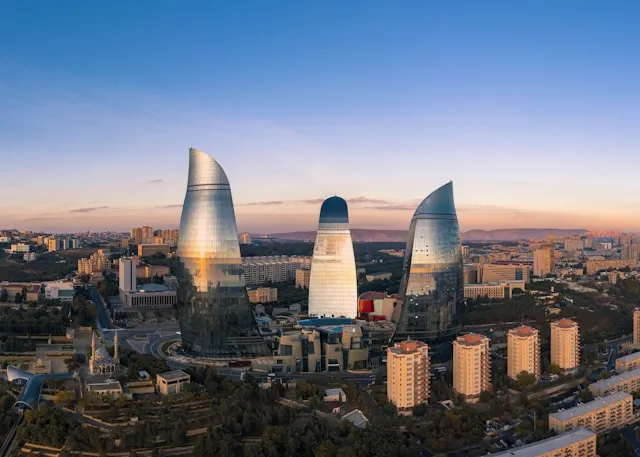
    A strong sense of motion defines modern Azerbaijan. Known as the land of fire and ice, the country is enjoying stability in terms of commerce and the rule of law. Nowhere does progress echo more loudly than in Baku, where old stone meets glass, and aspiration is as bright as the Flame Towers at dusk.

    The inauguration of the Baku Arbitration Centre (BAC) was neatly folded into the wider spectacle of the Azerbaijan Arbitration Days 2025. This was not simply a regional conference. To myself and Waleed, it signalled a significant shift: from hydrocarbons to commercial hubs, from handshake deals to robust legal rules written for an international age.

    Our observations were that neutrality, transparency, and fairness run through the BAC. This shows in the new rules, the leadership, and the inclusive bilingual approach. Chief Justice Karimov and Justice Minister Ahmadov delivered the centrepiece speech in excellent English, reflecting Azerbaijan’s readiness to engage in international trade and commerce. The BAC opens the door to locally resolved, internationally respected commercial disputes.

    Inclusion and accessibility matter. BAC’s publications and training initiatives support a new generation of lawyers keen to shape the future of Eurasian law.

    What are Azerbaijan’s primary industries?

    This land has always traded in contrasts. In the twenty-first century, energy stands at the centre, with oil and gas bankrolling infrastructure and social change. GDP is climbing steadily. Foreign investment follows suit, turbocharged by pipeline deals and new gas fields that stretch Azerbaijan’s reach as far as Israel.

    In addition, progress on the Zangezur Corridor is moving swiftly. Speaking at the 7th Consultative Meeting of Central Asian Heads of State in Tashkent, President Aliyev stated:

    “The construction of the Zangezur Corridor on the territory of Azerbaijan is nearing completion. With an initial throughput capacity of 15 million tons, this railway will become an important artery of the Middle Corridor,” he said, adding the highway that will form part of the multi-modal corridor is also close to finalization.

    Everything in Baku whispers of progress while retaining a sense of history; the old city walls and the sweep of modern boulevards bear this out.

    Arbitration Days 2025

    The BAC’s debut attracted over 600 delegates, including judges, lawyers, policymakers, and business chiefs, from seventy countries. Just shy of 100 speakers covered everything from procedural reform to digital transformation in dispute resolution.

    Outside the formal stage, events hosted by the Turkic Arbitration Association reminded guests of the region’s spirit for partnership.

    Looking towards the future

    The BAC’s launch rests on the shoulders of reforming judges and a business community eager for regional solutions. Clarity and predictability in dispute resolution attract investment and secure growth.

    Arbitration Days 2026 promises an even broader canvas, drawing in legal minds from across Europe, Central Asia, and the Middle East. For any lawyer or business with an eye on the Caucasus, it’s a date for the diary.

    Concluding comments

    Azerbaijan has written a new chapter in law and commerce. The BAC stands as a work in progress and a promise, an institution invested in fairness, clarity, and progress. As dialogue with neighbouring states edges toward peace and as infrastructure projects tie the region ever closer, the rule of law becomes increasingly important. If business, trust, and cooperation matter, Baku seems ready to set the terms.

    FAQs

    What is the Baku Arbitration Centre?

    A specialist institution for commercial arbitration, designed to meet international standards and offer solutions to businesses in Azerbaijan and beyond.

    What made Arbitration Days 2025 stand out?

    An impressive roster: speakers from nearly 100 countries, a government-backed launch, and a genuine sense that Azerbaijan is open for global business.

    Why does the Middle Corridor matter?

    It places Azerbaijan at the centre of trans-Eurasian trade, making efficient legal solutions crucial for investment and growth.

    How does arbitration in Baku help business?

    It brings speed, neutrality, and local expertise to the table, qualities that investors and trading partners seek.

    Will BAC handle cross-border cases?

    Absolutely. International and regional disputes alike are at the heart of its mission.

    To discuss any points raised in this article, please call us on +44 (0) 203972 8469 or email us at mail@eldwicklaw.com.

    This article does not constitute legal advice. For further information, please contact our London office.

  • Uzbekistan And Kazakhstan International Disputes: The Role Of London-Based Arbitration In 2025

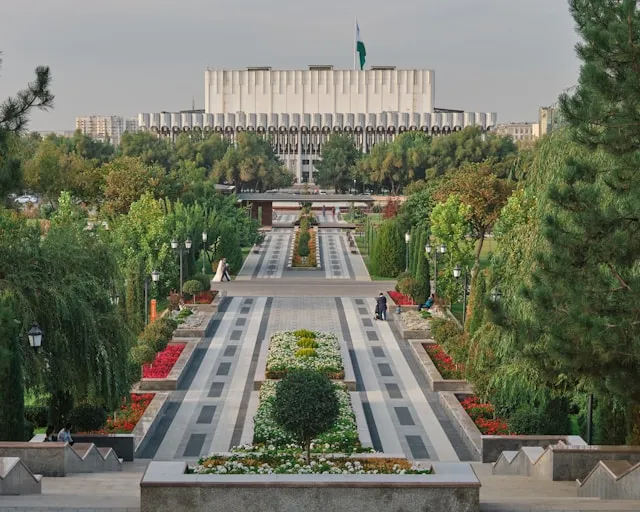
    Uzbekistan And Kazakhstan International Disputes: The Role Of London-Based Arbitration In 2025

    Cross-border commercial disputes involving Uzbekistan and Kazakhstan increasingly call for the strategic use of international arbitration. Both countries have modernised their legal systems to attract investors and offer transparent and efficient dispute resolution options. Yet, many large-scale disputes still look to London as the trusted seat or court for complex, high-value cases.

    In this article, I examine the latest arbitration developments in Uzbekistan and Kazakhstan, common dispute types, and London’s continued place in resolving complex international disputes erupting within Central Asia.

    Arbitration Reform and Institutional Growth in Uzbekistan and Kazakhstan

    Both Uzbekistan and Kazakhstan have made major advances in arbitration reform in recent years, aiming to align with international standards and enhance investor confidence.

    Uzbekistan Arbitration Reforms

    The Astana International Financial Centre (AIFC) is Kazakhstan’s flagship financial centre in Astana, operating under a distinctive legal framework, with English as the primary language. Modelled on the English common law system, with an independent AIFC Court and International Arbitration Centre, the AIFC aims to position Astana as a regional gateway for capital and investment across Central Asia.

    The AIFC Court has produced 205 judgments in its history with 100% enforcement rate.

    The Tashkent International Arbitration Centre (TIAC), established in 2018, has quickly gained international recognition. By early 2025, its caseload had tripled compared to the previous year, with disputes involving parties from Europe, the Middle East, China, and South Asia. TIAC now handles a wide range of cases, including commercial contracts, joint ventures, and technology disputes such as blockchain.

    In addition, the proposed Tashkent International Commercial Court (TICC) will create an opportunity for foreign investors to apply to the courts in Uzbekistan on the basis of international common law.

    Common Disputes in Uzbekistan and Kazakhstan Arbitration

    Arbitration cases in Central Asia are often linked to large-scale energy, mining, and construction projects.

    One of the largest examples is the Kashagan oilfield arbitration, involving KazMunayGas, Eni, Shell, ExxonMobil, TotalEnergies, CNPC, and INPEX. The dispute, seated in Geneva under the Permanent Court of Arbitration (PCA), concerns claims exceeding $150 billion and is expected to continue until 2028. Kazakhstan is also pursuing related domestic proceedings, highlighting the interplay between international arbitration and local enforcement.

    Similarly, the Karachaganak gas-condensate dispute before the Stockholm Chamber of Commerce (SCC) involves Shell, Eni, Chevron, and KazMunayGas. It centres on profit-sharing and cost recovery, illustrating the complexity of Kazakhstan arbitration and the need to coordinate international and domestic legal strategies.

    Why London Remains a Leading Arbitration Seat

    Although Tashkent and Astana arbitration centres are developing rapidly, London continues to often be the preferred choice for arbitration concerning high-value disputes.

    Older contracts often specify London, Geneva, or Stockholm as the seat of arbitration, reflecting long-standing trust in these established jurisdictions. London offers experienced and independent arbitrators and reliable enforcement under the New York Convention. These factors make London particularly attractive for energy and infrastructure disputes involving Uzbek and Kazakh entities.

    The Role of Chinese and Middle Eastern Investors

    The rise of Chinese and Middle Eastern investors in Central Asia is changing regional arbitration preferences. These investors often favour venues such as Dubai (DIAC), Singapore (SIAC), Hong Kong (HKIAC), and the Astana International Arbitration Centre (IAC).

    These arbitration seats frequently blend English law principles with regional rules and offer flexible dispute resolution mechanisms. For projects linked to China’s Belt and Road Initiative, mediation is often integrated into arbitration procedures.

    Wrapping up

    For small and medium international disputes, it is now possible to have them resolved in the region. However, London is still a highly relevant arbitration seat for complex, high-value international commercial disputes, especially those involving Russian sanctions, attempts to enforce Russian jurisdiction under Article 248.1 of the Russian Arbitrazh (Commercial) Procedural Code APC, and corresponding anti-suit injunctions.

    Frequently Asked Questions

    What arbitration institutions are active in Uzbekistan and Kazakhstan?

    Uzbekistan’s main institution is the Tashkent International Arbitration Centre (TIAC), while Kazakhstan’s key bodies are the AIFC Court and the International Arbitration Centre (IAC) in Astana.

    Why is London still the leading arbitration seat for Central Asia disputes?

    London offers neutrality, expert arbitrators, and strong enforcement under the New York Convention, making it ideal for Uzbekistan and Kazakhstan arbitration cases.

    How does the AIFC Court differ from Kazakhstan’s national courts?

    The AIFC Court applies English common law principles and operates entirely independently from Kazakhstan’s domestic judiciary.

    Which sectors generate the most arbitration cases in Central Asia?

    Energy, mining, and construction are the dominant industries, often involving complex, multi-party contracts.

    How do Chinese and Middle Eastern arbitration seats influence Central Asia dispute resolution?

    Venues such as Dubai, Singapore, and Hong Kong combine English law with regional practices, offering greater flexibility for investors and contractors operating across Central Asia.

    To discuss any points raised in this article, please call us on +44 (0) 203972 8469 or email us at mail@eldwicklaw.com.

    This article does not constitute legal advice. For further information, please contact our London office.