
Category: Blog

Our opinions on recent trends and the latest legal news

  • DIFC Companies – What Investors Need to Know

    DIFC Companies – What Investors Need to Know

    The Dubai International Financial Centre (DIFC) is now considered one of the world’s top financial hubs, attracting multinational corporations, startups, family offices, and professional service firms from across the globe. The centre is home to major global banks, insurance firms, asset managers, fintech pioneers, law firms, and professional service providers. The DIFC now has over 6,150 active registered companies employing more than 43,800 professionals. As a specialist UAE dispute resolution firm with multilingual practitioners experienced in common law jurisdictions, we regularly act for clients in complex, high-value DIFC-related matters. In this article, we will explain why investors are choosing Dubai and the main legal factors to consider when setting up a DIFC company.

    Why investors choose the DIFC

    The DIFC has become a real international hotspot for commercial transactions. It operates as an independent free zone within the UAE that is governed by its own rules and overseen by its own regulator, the Dubai Financial Services Authority (DFSA). This means DIFC companies operate under a separate legal and regulatory framework (not the civil law system) of mainland UAE, but English common law principles.

    Unlike mainland UAE, which often requires a local sponsor or partner, DIFC permits 100% foreign ownership. Foreign investors retain full control of their company without a local equity requirement. Profits and capital can be repatriated without restriction.

    Companies incorporated in DIFC benefit from a 50-year guarantee of zero tax on corporate income and profits. There is no capital gains tax, no withholding tax on dividends or interest, and no personal income tax for employees.

    The DIFC also places no restrictions on repatriating earnings or capital, meaning that profits, dividends, and returns can be moved freely outside the UAE without additional government charges. This is important for multinational firms and investment funds managing capital across multiple jurisdictions. The UAE maintains an extensive network of double taxation treaties with countries across Asia, Europe, the Middle East, and Africa. This, combined with DIFC’s zero-tax, allows investors to structure easy and transparent cross-border investments. For family offices, asset managers, and holding companies, this creates considerable opportunities for tax-efficient wealth management and investment.

    Other benefits include:

    • Geography – Dubai’s geography makes it a natural point for doing business across the Middle East, Africa, and South Asia. Many investors use a DIFC company as a regional operating base rather than conducting all activities within the free zone itself. DIFC entities often serve as the coordinating hub, holding regional assets and managing cross-border transactions.
    • Banking – DIFC companies also typically have fewer obstacles opening accounts with international banks compared to entities in less-regulated jurisdictions. Banks recognise DFSA oversight as meeting their compliance standards. This matters practically for firms that need reliable international banking relationships.
    • Property – DIFC has a separate property law framework. Investors can hold real estate directly (office space, warehouses, investment properties) with transparent ownership rules and straightforward transfer processes. Mortgages and financing operate as in other common law jurisdictions. Alternatively, DIFC Real Estate Investment Trusts allow indirect property investment through a regulated structure.
    • Digital assets – The DIFC has developed regulatory frameworks for digital assets, tokenisation, and blockchain-based investment vehicles. Firms operating in these sectors can establish licensed operations with defined rules.

    The legal framework in the DIFC

    The DIFC Courts apply English common law principles and conduct proceedings in English. This means companies and investors familiar with English law find themselves on familiar ground when it comes to precedents, contracts, and dispute resolution. Indeed, the DIFC Courts have now become a preferred venue for complex cross-border disputes because of their pro-enforcement stance.

    In terms of regulatory oversight, the DFSA is the DIFC’s independent regulatory authority. All authorised financial services firms in DIFC are required to meet strict corporate governance standards, undergo regular supervision, and maintain robust systems and controls. This benefits all investors by ensuring stakeholders, service providers, and fund managers operating in DIFC are subject to robust regulations.

    Licensing frameworks in the DIFC

    The DIFC does not apply the same regulatory rules to every business. A holding company structure, for example, faces lighter oversight than a bank that manages client money and takes on credit risk. The regulator calibrates its approach based on what the business actually does and the risks that come with it. Examples of the different DIFC regulatory models include:

    Licence Type

    What it covers

    Banking

    Taking deposits, lending money, and providing core banking services

    Investment / Dealing in Investments

    Arranging, advising on, or trading shares, bonds, derivatives, and similar products

    Asset Management

    Managing investment portfolios for clients

    Fund Management

    Setting up and running investment funds

    Financial Advisory / Wealth Management

    Giving advice on investments and financial products

    Insurance / Reinsurance

    Providing insurance, reinsurance, or insurance intermediation services

    Brokerage

    Executing trades on behalf of clients

    Custody

    Holding and safeguarding client assets such as securities

    Islamic Finance

    Offering Sharia-compliant financial services

    Final words

    While there are many benefits of investing in the DIFC, establishing in this region requires careful planning in terms of business structure, licensing category, regulatory requirements, and ongoing compliance. These all depend on your specific business model and investment goals. Professional guidance from legal advisors familiar with DIFC law, tax specialists, and regulatory consultants is essential to maximise the benefits and avoid potential pitfalls.

    Eldwick Law advises on DIFC and UAE disputes, including cross-border enforcement, recognition of judgments and arbitral awards, freezing injunctions, and commercial litigation across the region’s financial centres. As a specialist dispute resolution firm with multilingual practitioners experienced in common law jurisdictions, we regularly act for clients in complex, high-value DIFC-related matters. If you are involved in a dispute connected to DIFC or require guidance on structuring investments in the UAE’s financial centres, contact our team.

    Frequently Asked Questions

    Do I need a local partner to establish a DIFC company?

    No, one of DIFC’s key advantages is that it allows 100% foreign ownership without requiring a local UAE sponsor or partner. This is different from mainland UAE, where many business activities require a local partner or agent.

    How long does it take to incorporate a DIFC company?

    The process typically takes 5 to 10 business days. For some entities like prescribed companies or innovation licenses, incorporation can be even faster. The exact amount of time depends on the license type, completeness of documentation, and any regulatory approvals required. Your corporate service provider or legal advisor can give you a precise estimate based on your business model.

    What are the minimum capital requirements for a DIFC company?

    Capital requirements vary by license type. For many general business licenses, there is no set minimum capital requirement. However, financial services licenses (banking, insurance, asset management) typically require capital deposits often in the range of AED 50,000 – 500,000 or more. Prescribed Companies have very low capital requirements.

    Can I operate my DIFC company from outside the UAE?

    The DIFC companies can be managed and owned by non-residents, and many international firms operate DIFC entities while conducting business from multiple jurisdictions. However, certain licenses (particularly financial services licenses) may have physical presence requirements or require office facilities within DIFC. Non-financial firms typically have more flexibility.

    How is a DIFC company taxed if I have operations in other countries?

    The DIFC itself imposes no corporate tax. However, your home country or any jurisdiction where you conduct business may tax you on worldwide income or branch profits. DIFC is not a tax haven in the sense of providing secrecy; it simply does not impose its own corporate tax. Tax planning should involve a specialist advisor familiar with your personal tax residency and the jurisdictions in which you operate.

    To discuss any points raised in this article, please call us on +44 (0) 203972 8469 or email us at mail@eldwicklaw.com.

    This article does not constitute legal advice. For further information, please contact our London office.

  • Deadlock, Valuation and Director Misconduct Disputes

    Deadlock, Valuation and Director Misconduct Disputes

    1. Deadlock and stalemate disputes

    Deadlock happens when equal shareholders cannot agree on key decisions, paralysing business operations. Disputes can arise in relation to major decisions, such as whether to pursue expansion, hire key personnel, approve significant expenditure, or sell the business. Without a controlling shareholder, day-to-day operations grind to a halt as neither party can force through their preferred strategy. In 50:50 joint ventures, neither party commands the 75% majority required for special resolutions, creating gridlock that can destroy company value.

    Possible resolution mechanisms

    Shareholders agreements often anticipate deadlock and provide contractual mechanisms to break the impasse.

    • Casting vote provisions grant the chairman a pre-determined casting vote in tied decisions.
    • Independent arbitration allows the shareholders to appoint a neutral expert to resolve specific disputes.
    • Russian Roulette clauses enable one shareholder to offer to purchase the other’s shares at a set price, with the receiving shareholder able to reverse the transaction and buy the offering shareholder’s stake at the same per-share price, ensuring the offer is fair.
    • Texas Shootout involves sealed bids from both shareholders, with the highest bidder acquiring the company at that price.

    Where no contractual mechanism exists or both parties reject settlement, shareholders can petition for just and equitable winding up under section 122(1)(g) Insolvency Act 1986. The courts will dissolve a solvent company with deadlocked ownership, allowing an independent liquidator to distribute proceeds according to shareholding. However, courts treat winding up as a last resort and will refuse the petition if alternative remedies exist or the petitioner has acted unreasonably. Additionally, the petitioner must have held shares for at least 18 months.

    2. Breaches of shareholder agreement disputes

    Shareholders agreements set out the ground rules for how shares can be transferred, how voting decisions are made, and what happens when a shareholder wants to exit. Breaches typically involve selling shares without offering them to existing shareholders first, voting against agreed terms, or ignoring agreed exit procedures.

    Pre-emption rights require that shares be first offered to existing shareholders before any external sale. Breach occurs when a shareholder attempts to sell to a competitor or outsider without following this procedure. Voting covenant violations arise when a shareholder votes against agreed reserved matters, such as major capital expenditures or changes to the business plan. Exit procedure failures occur when shareholders attempt to exit without following contractually-mandated timelines or negotiation steps.

    Possible resolution mechanisms

    • Damages – i.e. monetary compensation for quantifiable losses
    • Injunctions – preventing threatened breaches or compelling specific performance
    • Forced share transfer – if the breach has the potential to destroy the working relationship
    • Without prejudice negotiations – settlement discussions to avoid litigation costs

    It is important to bear in mind that pre-action protocols require parties to exchange letters of claim, documents, and consider mediation before starting court proceedings.

    Share valuation disputes

    When shareholders cannot agree on what their shares are worth, disputes can quickly become expensive and adversarial. The disagreement often centres on which valuation method should apply and whether the shares should be discounted because they represent a minority stake.

    The courts recognise several valuation approaches depending on the company’s circumstances. Discounted cash flow (DCF) values a business based on its projected future earnings, making it suitable for profitable companies with steady cash flows. EBITDA multiples compare the company to similar businesses that have recently sold or are publicly traded. Net asset valuation simply adds up what the company owns minus what it owes, which works best for property-holding or investment companies. Fair market value represents what a willing buyer would pay a willing seller in an arm’s-length transaction.

    Resolving valuation disputes

    In recent years, we have observed that parties are increasingly opting for expert determination rather than court battles. An independent accountant or valuer examines the company’s finances and provides a binding valuation, usually within weeks rather than months or years. This approach saves substantial legal costs and maintains greater confidentiality than public court proceedings. Courts increasingly favour expert determination over adversarial expert evidence as it provides faster, more cost-effective resolution.

    Director misconduct disputes

    Directors owe several statutory duties under the Companies Act 2006, including the fundamental obligation to promote the success of the company. When directors breach these duties, shareholders often seek remedies ranging from removal to financial compensation. Misconduct takes many forms:

    • Misuse of company assets occurs when directors divert business opportunities or funds to personal benefit, such as self-dealing transactions or competing ventures.
    • Breach of fiduciary duties happens when directors act in conflicts of interest without proper disclosure to the board or shareholders.
    • Fraudulent or wrongful trading involves continuing to trade the company while insolvent or with intent to defraud creditors, a particularly serious breach.
    • Poor governance includes failure to exercise reasonable care, diligence, and skill in decision-making.

    Possible resolution mechanisms

    Shareholders have multiple options for addressing director misconduct. The simplest and most direct is removal by ordinary resolution (51% vote) under section 168 Companies Act 2006. This requires no court involvement, a shareholder resolution at a general meeting can remove a director immediately, though the director is entitled to speak in their own defence.

    Beyond removal, shareholders can pursue damages claims, recovering losses suffered by the company or individual shareholders. These claims require proof of the breach and quantifiable loss, making them more complex than removal votes. Injunctions prevent directors from continuing wrongful conduct, such as misusing company assets or pursuing competing business ventures. For more serious breaches affecting the company as a whole, shareholders can also bring derivative claims on behalf of the company to recover losses.

    Final Words

    Shareholder disputes rarely resolve quickly or cheaply. The sooner you seek legal advice when warning signs emerge such as unresolved disagreements, breaches of agreement, or unexplained director conduct, the better the outcome is likely to be. Most disputes that reach commercial litigation could have been settled at a fraction of the cost through early negotiation or mediation. If litigation becomes unavoidable, understanding which remedy applies to your circumstances allows you to pursue the most efficient resolution. Well-drafted shareholders agreements with clear deadlock provisions, pre-emption rights, and exit mechanisms prevent many disputes from arising in the first place.

    FAQs

    What is the cheapest way to resolve a shareholder dispute?

    Early negotiation and mediation is almost always the cheapest and fastest way to resolve a shareholder dispute. Pre-action protocols require ADR consideration anyway. For valuation disputes, an independent expert can provide a binding decision in weeks rather than months of court cases.

    Can I force a director out without going to court?

    Yes, you can remove a director by ordinary resolution (51% shareholder vote) at a general meeting under section 168 Companies Act 2006. This requires no court involvement, though the director is entitled to speak in their own defence before the vote.

    What happens if I breach a shareholders agreement?

    The other party can seek damages for losses, obtain court injunctions forcing compliance, or pursue forced share transfer if the breach is serious enough. Courts enforce shareholders agreements as binding contracts. You will also be required to engage in pre-action mediation, and failure to do so results in cost sanctions against you in any subsequent litigation.

    To discuss any points raised in this article, please call us on +44 (0) 203972 8469 or email us at mail@eldwicklaw.com.

    This article does not constitute legal advice. For further information, please contact our London office.

  • When the Oil Sanctions Hit Home

    When the Oil Sanctions Hit Home

    How Sanctions Work in Three Moves

    The coordinated sanctions offensive operates across three dimensions, each carrying distinct legal implications.

    The first move is the direct designation of oil producers. When Lukoil was designated on 15 October 2025, any UK person or entity became prohibited from dealing with frozen Lukoil assets without specific authorisation from OFSI. The US followed on 22 October with OFAC blocking sanctions, whilst the EU imposed transaction bans. Wind-down general licences provided breathing room, but these have now expired (although some specific, tailored general licenses have been issued or extended for certain operations (e.g., specific oil projects, non-Russian retail stations, and certain EU-based subsidiaries) and these remain active into 2026 and, in some cases, beyond). December’s designation of Tatneft and other mid-tier producers extended the sanctions net further, signalling systematic targeting of Russia’s entire oil export infrastructure.

    The second move weaponises market access. The January 2026 refining loophole ban prohibits the import of refined petroleum products from any refinery that processes Russian crude oil. Indian refiners have become major buyers of Russian crude since 2022, purchasing at steep discounts and exporting refined products to Europe. The ban presents these refiners with a binary choice: continue processing Russian crude and lose European markets or abandon Russian supply chains to preserve EU and UK access.

    The third move targets logistics. Over six months, the UK has sanctioned 133 oil tankers that form Russia’s shadow fleet, the largest such action in Europe. Without access to insurance, port services, and mainstream maritime infrastructure, Russia’s export capacity is constrained by physical limitations.

    Together, these measures create what one analyst described as a “strategic vice.” Direct company sanctions cut demand. The refining ban closes third-country workarounds. Maritime sanctions restrict physical transport. For Russian oil producers, the result is seaborne storage of stranded crude, discounts of $25 or more per barrel against the Brent benchmark, and potential shut-ins of 1.6 to 2.8 million barrels per day.

    When Contracts Collide with Sanctions

    The High Court’s decision in Litasco SA v Der Mond Oil and Gas Ltd [2023] EWHC 2866 (Comm) provides a starting point in relation to contractual disputes, though the case predates Lukoil’s own designation. Litasco, a Swiss oil trading company wholly owned by Lukoil, sued Der Mond for non-payment under an oil supply contract. Der Mond invoked sanctions and force majeure defences, arguing that Litasco should be treated as an extension of its designated parent.

    The court rejected this reasoning. Mere ownership by a designated person does not, by itself, render a subsidiary designated by extension. There must be evidence that the designated person exercises routine control over the use of funds. This became known as the “control test.”

    Now that Lukoil itself is designated, the calculus shifts. Subsidiaries fall squarely within the asset freeze provisions unless covered by a specific general licence. OFSI has issued such licences for certain Lukoil entities: one covering Lukoil’s Bulgarian subsidiaries (valid for three months and renewable), and another for Lukoil International GmbH and its subsidiaries. These licences permit “continuation of business as normal” regarding UK financial sanctions, providing temporary relief whilst sales negotiations proceed.

    Yet the licences create their own complications. The three-month validity period introduces uncertainty. Parties negotiating long-term supply contracts face the risk that licences will expire mid-transaction. Renewal is not automatic. Each OFSI quarterly renewal decision becomes a pressure point.

    Wind-down licences have expired. Transactions initiated under those licences but not completed before expiry dates now require specific OFSI authorisation. This has left “stranded contracts,” agreements caught mid-performance when licences lapsed.

    Force majeure clauses face immediate pressure. Suppliers refuse delivery, citing illegality or sanctions-related impossibility. Buyers refuse payment, claiming sanctions prohibit processing payments to designated entities. The legal analysis turns on the precise wording of the clause and whether sanctions render performance illegal or merely more difficult and expensive.

    Price adjustment provisions are being tested with equal intensity. Many long-term oil supply contracts link pricing to benchmark rates, typically Brent crude. With Russian Urals crude trading at discounts of more than $25 per barrel to Brent, existing contracts are under severe pressure. Material adverse change clauses, renegotiation provisions, and hardship doctrines are all invoked.

    Arbitration Becomes the Terrain of Conflict

    Dubai Arbitration Week 2025 featured extensive discussion of how major oil company designations reshape arbitration strategy. Tribunals seated in Dubai can hear both sides, maintain procedural integrity, and preserve potential enforceability whilst dealing with sanctions restrictions that might complicate access to London or Paris seats.

    Yet UK practitioners must recognise that a Dubai seat does not eliminate UK sanctions risks. If a UK national serves as an Arbitrator or if a UK law firm represents a party, a UK nexus arises. The Arbitration Costs General Licence permits payments up to £500,000 per arbitration for Arbitrator and institution fees involving designated persons, but it does not cover legal services costs. These are governed by a separate “Legal Services” cap (often £1 million or a percentage of the dispute value), beyond which a specific OFSI licence is mandatory.

    The £500,000 cap creates planning challenges. Complex energy disputes routinely exceed this threshold in terms of costs. Once reached, parties require specific OFSI licences for additional payments.

    Barclays Bank plc v VEB.RF [2024] EWHC 2981 (Comm) illustrates how enforcement can be challenged. Barclays obtained an LCIA arbitration award against VEB.RF, a Russian state development bank, for $147.7 million. However, VEB.RF was designated under UK sanctions, so Barclays could not collect. VEB.RF subsequently breached the Arbitration Agreement by pursuing parallel Russian court proceedings.

    Sanctioned Russian entities, facing arbitration awards they cannot satisfy due to frozen assets, increasingly resort to Russian court proceedings in defiance of Arbitration Agreements. Russia’s Article 248.1 of the Arbitration Procedural Code claims exclusive jurisdiction over disputes involving Russian entities subject to “unfriendly state” sanctions.

    In Linde GmbH v RusChemAlliance LLC [2023] HKCFI 2409 and Renaissance Securities (Cyprus) Ltd v PJSC Prominvestbank [2023] EWHC 2816 (Comm), the courts upheld the Arbitration agreements and granted anti-suit injunctions restraining Russian court proceedings. For practitioners, when a sanctioned counterparty threatens or initiates Russian court proceedings in breach of an arbitration clause, the best route is to seek anti-suit injunctions promptly in arbitration-friendly jurisdictions.

    The Refining Ban and Cascade Disputes

    The January 2026 refining loophole ban introduces disputes rooted not in direct designation but in market exclusion. Indian refiners like Bharat Petroleum, Indian Oil Corporation, and Reliance Industries became significant buyers of Russian crude after 2022. The refining ban disrupts this equilibrium. Refiners importing refined products into the EU or UK must certify that the products were not derived from Russian crude oil.

    Supply contracts with Russian oil exporters are at risk of termination or renegotiation. Force majeure provisions are invoked, with refiners claiming that EU and UK bans constitute supervening events preventing performance. Russian exporters counter that the bans target refinery operations, not crude oil purchases.

    Buyers of refined products may pursue claims based on misrepresentation or breach of origin warranties. Trade finance disputes will follow: letters of credit involving misrepresented cargo origins, insurance claims, and documentary credit discrepancies will all lead to arbitration and/or litigation.

    Sanctions analysts predict that Russian oil exporters will attempt to disguise the origin of their oil through ship-to-ship transfers, forged documentation, and complex trading chains. Disputes over certificates of origin, cargo inspection reports, and chain-of-custody documentation will proliferate.

    Pricing disputes add another layer. With Russian Urals crude trading at discounts of more than $25 per barrel to Brent, existing long-term contracts are under pressure. Sellers receiving Urals-linked prices argue that the spread represents market reality. Buyers resist price adjustments, pointing to contractual terms.

    What Practitioners Must Do Now

    • Due diligence now extends beyond direct counterparties to entire supply chains. Lawyers must screen against the OFAC Specially Designated Nationals List, the EU Consolidated List, and the UK OFSI Consolidated List. For energy transactions, it is vital to examine shippers, insurers, refiners, and storage providers.
    • For existing contracts, sanctions clauses must address the designation of counterparties themselves, not merely underlying transactions. Build in payment alternatives, recognising that traditional USD-denominated, SWIFT-routed payments may become unavailable.
    • Arbitration clauses demand fresh analysis. Seat selection carries sanctions implications. Dubai offers procedural accessibility but may complicate enforcement in Western jurisdictions. London provides robust enforcement mechanisms but introduces UK sanctions compliance obligations.
    • For existing disputes, verify whether wind-down licences have been applied and confirm their expiry dates. If a counterparty is Lukoil or Tatneft, check whether specific general licences exist. These provide temporary safe harbours but introduce quarterly uncertainty.

    The October and December 2025 designations, combined with the January 2026 refining ban, mark a shift in enforcement strategy. Previous sanctions targeted specific transactions or individuals. Current measures dismantle the infrastructure of the Russian oil trade itself. For dispute resolution practitioners, this is not a future risk. The instructions are arriving now, reflecting contract breakdowns, arbitration triggers, and enforcement challenges across jurisdictions. Understanding the interplay between asset freezes, general licences, arbitration frameworks, and enforcement strategies has become an essential practice.

  • How to Enforce an Arbitration Award and Sanctions Law

    How to Enforce an Arbitration Award and Sanctions Law

    Recognition and Enforcement of an Arbitration Award

    The New York Convention (the “Convention”) has been widely adopted by most countries in the world. The Convention sought to ensure that arbitration was a viable international commercial dispute resolution mechanism. Article III of the Convention obligates contracting states to recognise and enforce foreign arbitral awards. This enabled successful parties in an international commercial arbitration to pursue the assets of the other party held in jurisdictions outside of the arbitration seat, thereby ensuring that recovery could occur. For a party to have their award recognised and enforced all they must do is to apply to the relevant court and obtain an order in their favour. For example, in England and Wales, Section 66 of the Arbitration Act 1996 permits an award to be enforced like a judgement or order.

    Although the Convention has significantly streamlined the ability to enforce awards in foreign jurisdictions, that still does not mean recognition and enforcement of an award is guaranteed. Article V(1) of the Convention allows domestic courts to refuse recognition and enforcement on various grounds. These includes problems with the original arbitration agreement, due process failures, the tribunal going beyond its mandate, irregular composition of the tribunal or that the award had been set aside by the court of the seat. Additionally, Article V(2) grants a discretion to the enforcing state as awards can be refused if it is not arbitrable within the country or contrary to its public policy. Therefore, even when an award is obtained, winning parties should remain cautious and diligent when proceeding to ensure that recovery can be eventually made.

    Enforcement and Sanctions Law: A Case Study

    We now turn our attention to the recent U.S. District Court decision by Judge Beryl A. Howell in which she recognised and allowed enforcement of three ICAC arbitral awards totaling almost $14 million. The awards had been made in favour of a sanctioned Russian media company which transferred its interests in the awards to a UAE based consultancy prior to its designation. This was recognised by the court as suspicious because it could have been done in anticipation of the company being sanctioned. Therefore, the primary question put to Judge Howell was whether the award could be set aside on public policy grounds. On this question, the Judge Howell deferred to the US DOJ, which did not take a position, and in those circumstances, the award was recognised. The question of sanctions was deferred to the Office of Foreign Assets Control (OFAC) to determine, at a future date, as to whether there any part of the enforcement would breach US sanctions.

    The recognition of the awards by Judge Howell reflects the general pro-enforcement attitude of not just U.S. courts but courts who are subject to Article III of the Convention. The public policy exception to recognising and enforcing awards is often construed narrowly meaning even politically sensitive, sanctions-related cases may not be sufficient in having an award set aside. Parties who have awards but are concerned regarding sanctions-related issues should remain confident regarding their prospects of receiving recognition from courts. However, they must remain vigilant during enforcement stages to ensure that they do not run afoul of sanctions and should seek guidance.

    Conclusion

    Arbitration can be a long and expensive process, so the final receipt of an award is often a satisfying one. However, recognition and enforcement of the award is not often a straightforward process. While the New York Convention has created a general rule in favour of enforcement, exceptions exist that can allow courts to refuse enforcement. The added dimension of sanctions only serves to further create confusion and uncertainty. Parties should therefore remain attentive and cautious while seeking further advice when enforcing their awards to ensure that recovery can occur.

  • Insights On Dubai Arbitration Week 2025

    Insights On Dubai Arbitration Week 2025

    Dubai Arbitration Week 2025 started as a community project in 2014 and has grown into a significant event on the international arbitration calendar. Every November, specialists gather in Dubai for technical sessions, strategy talks and social events that showcase the city’s capability as a global forum for cross-border disputes. The programme is curated by a community committee and supported by the Dubai International Arbitration Centre (DIAC), regional institutions, and international, regional and local law firms.

    Dubai Arbitration Week 2025 followed the familiar format but delivered a larger, more ambitious edition. Conference rooms and hotel spaces filled with debates about global disputes, enforcement strategy, and the shifting patterns of international arbitration. Many discussions continued long after the formal sessions ended, reflecting the sense that Dubai has become a genuine meeting point for practitioners from every major arbitration jurisdiction.

    Dubai Arbitration Week 2025 in numbers

    The 2025 edition brought together more than 1,000 delegates. More than 140 events took place between 10 and 14 November. Commercial arbitration, investor–state disputes, construction and energy cases, and enforcement matters dominated the programme.

    Dubai’s role as an international arbitration hub mirrors the movement of trade and investment across the region. Disputes connected with the Middle East, Russia,  Africa, and Central and South Asia often find their way to Dubai. Parties regard it as a practical, neutral seat with dependable procedures and a legal system comfortable with complex cross-border cases. For practitioners, Dubai Arbitration Week 2025 offered an opportunity to understand how different regional groups approach these disputes and how institutions are adapting to global tensions and economic challenges, such as rising national debts and cost-of-living pressures.

    Sanctions, Russian parties and DIAC arbitration

    Sanctions were one of the most prominent themes of Dubai Arbitration Week 2025. Dubai remains a venue where sanctioned companies and Russian lawyers can attend public events and share their views with a global audience. Their presence in 2025 was significant, shaping several sessions on energy disputes and enforcement risks.

    Panels focusing on oil and gas disputes examined sanctions affecting projects in Iraq and other regions, including the recent designation of a major Russian oil company, Lukoil, and the resulting impact on contract performance, arbitration clauses, and enforcement strategy. The discussion showed why DIAC arbitration and other Dubai-seated arbitration proceedings continue to appeal to sanctions-affected parties. Tribunals can still hear both sides, maintain proper procedure and preserve enforceability while dealing with restrictions that might block access to other seats.

    African arbitration and alternative perspectives

    Africa’s growing influence in international arbitration was evident throughout the week. “Africa Day” and several dedicated sessions highlighted the increasing number of disputes involving African energy, infrastructure and technology projects. Speakers emphasised the strength of African institutions and the expertise of African practitioners.

    GCC arbitration centres and regional competition

    Gulf Cooperation Council (GCC) arbitration centres were highly active during Dubai Arbitration Week 2025. Institutions from Saudi Arabia, Qatar, Bahrain and other Gulf states hosted sessions to highlight new rules, state-of-the-art hearing facilities and improved enforcement performance. Their message reflected a regional ambition to retain more disputes and offer strong alternatives to global centres.

    A reception hosted by the Bahrain Chamber for Dispute Resolution at the top of the Burj Khalifa captured this sense of ambition. It highlighted the speed at which the Gulf has built the infrastructure needed for high-value arbitration. This competition benefits users, as DIAC and other Gulf institutions continue to refine their rules, improve services and raise the overall standard of arbitration across the region.

    English law, English practitioners and DIAC arbitration rules

    English law continued to play a significant role during Dubai Arbitration Week 2025. Many regional contracts continue to choose English law for predictability and commercial familiarity. English barristers and solicitors remain active in Dubai, advising on drafting, seat selection and advocacy.

    What has changed is the assumption that English courts or the LCIA must always be the default. Many parties now select Dubai as the seat while keeping English law as the governing law. DIAC arbitration rules offer a modern and efficient framework that suits English-law-governed disputes. This blended approach appears to be gaining momentum, especially among parties seeking predictable procedures combined with regional convenience.

    Future outlook for Dubai as an international arbitration hub

    By the end of Dubai Arbitration Week 2025, a clear picture had emerged. Dubai is no longer seen as an alternative seat. For many, it is already a first choice for disputes involving sanctioned entities, multi-regional supply chains and counterparties from MENA, the FSU, Africa and South Asia. DIAC arbitration continues to grow in influence and offers users confidence in awards seated in Dubai.

    Competition remains strong. Gulf centres and Asian and African hubs such as Singapore, Hong Kong, Cairo, Kigali and Lagos are investing heavily in their arbitration offerings and enforcement systems. The next decade will be shaped by how these centres position themselves and how users distribute their cases.

    FAQs

    What is Dubai Arbitration Week 2025?

    Dubai Arbitration Week 2025 was a five-day programme of international arbitration events held in November. It brought together global practitioners for sessions on commercial disputes, sanctions, Africa-focused arbitration and GCC developments. The week reinforced Dubai’s status as a leading venue for cross-border arbitration.

    Why is Dubai a critical international arbitration hub?

    Parties value Dubai’s neutrality, strong infrastructure, and supportive courts. DIAC arbitration offers a modern, efficient framework that helps make Dubai a preferred seat for high-value international arbitration.

    How did sanctions shape discussions in 2025?

    Sanctions featured prominently throughout the week. Dubai remains one of the few places where sanctioned parties and Russian lawyers can participate openly. Sessions explored how sanctions affect contract performance, arbitration clauses and enforcement. DIAC arbitration was highlighted as a workable option for sanctions-heavy disputes.

    Why was African arbitration so visible this year?

    Africa-focused sessions reflected the growing number of disputes linked to energy, infrastructure and digital projects across the continent. Dubai appeals to many African parties because it is accessible, neutral and familiar with African legal systems. Speakers noted a shift towards resolving more disputes within Global South arbitration hubs.

    What role did English law play in Dubai-seated arbitration?

    English law continues to govern many commercial contracts in the region. Parties increasingly retain English law while choosing Dubai as the seat of arbitration. The DIAC arbitration rules support English law-governed disputes, and English barristers and solicitors remain active in drafting, advising, and advocating in Dubai.

    To discuss any points raised in this article, please call us on +44 (0) 203972 8469 or email us at mail@eldwicklaw.com.

    This article does not constitute legal advice. For further information, please contact our London office.

  • Can the British Government force Abramovich to transfer money to Ukraine?

    Can the British Government force Abramovich to transfer money to Ukraine?

    Waleed interview audio

    Waleed’s Interview at LBC News

    A clip of Waleed’s interview at
    LBC News with John Stratford.
    The full episode can be found here.

    What happened this week

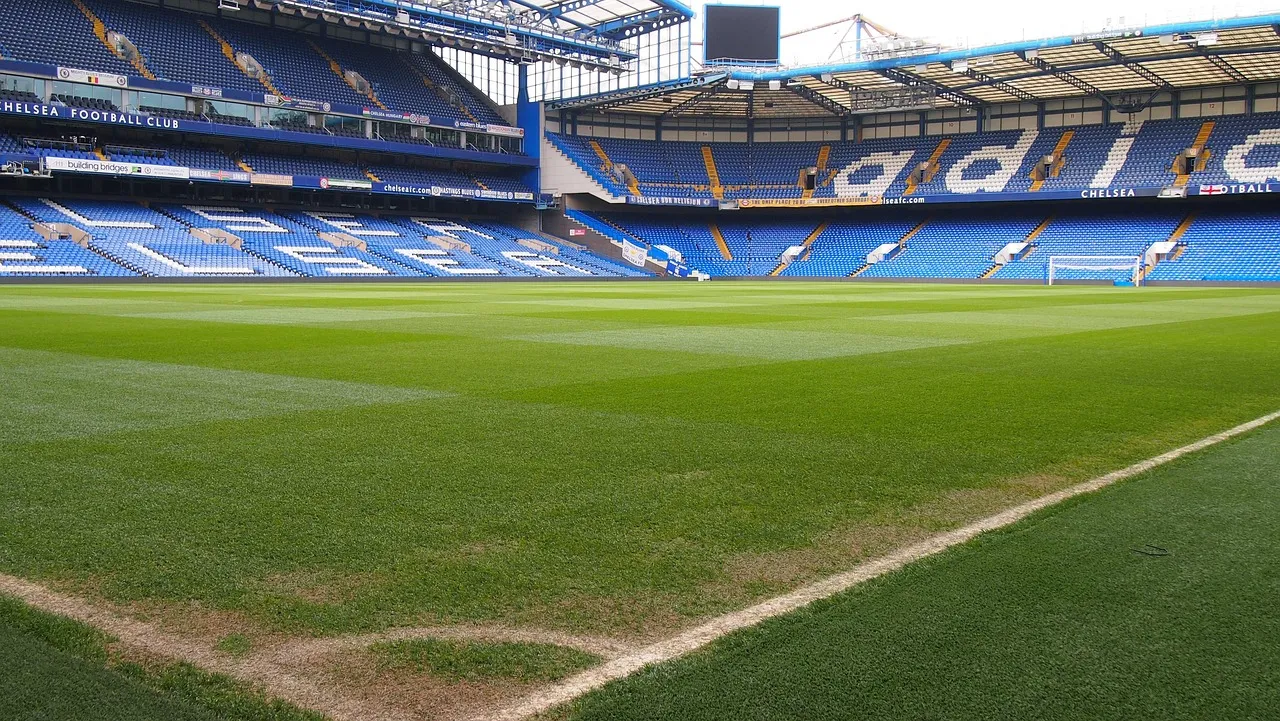
    The money sits in a British bank account like a sealed room that everyone can point to, and nobody can enter. More than £2.5bn, raised when Mr Roman Abramovich sold Chelsea Football Club in 2022, has remained frozen ever since, caught between sanctions law, diplomacy, and a promise that never turned into a transfer.​

    This week, the government decided to change the tempo. In a press release, the Chancellor and the Foreign Secretary issued Mr Abramovich a final opportunity to release the funds for humanitarian causes in Ukraine, warning that the UK is prepared to pursue court action if he fails to act.

    Prime Minister, Keir Starmer said:

    “The clock is ticking on Roman Abramovich to honour the commitment he made when Chelsea FC was sold and transfer the £2.5 billion to a humanitarian cause for Ukraine.

    This government is prepared to enforce it through the courts so that every penny reaches those whose lives have been torn apart by Putin’s illegal war.”

    Can the British Government force Mr Abramovich to hand over the money from the Chelsea sale?

    The mechanism matters. The government says an OFSI licence has been issued to permit the transfer of the proceeds, once a charitable foundation is established to receive and distribute them. Under the licence terms described by ministers, the proceeds must go to humanitarian causes in Ukraine. Any future gains earned by the foundation could support victims of conflict worldwide, but the money cannot benefit Abramovich or any other sanctioned person.

    Behind the brisk language sits a dispute about meaning as much as money. Abramovich pledged the sale proceeds would help “all victims” of the war. The government has held the line that this means humanitarian support inside Ukraine. Several outlets also note the legal awkwardness: freezing is straightforward, forcing a sanctioned owner to direct property in a particular way is much harder. As I told LBC Radio, the key question is “what was agreed between Mr Abramovich between the short time he was designated under UK sanctions law in March 2022, and the sale of Chelsea Football Club in May of the same year?”

    Why does the British Government want Mr Abramovich’s funds released?

    The Government’s case rests on both urgency and principle. The press release cites UN estimates that 12.7 million people in Ukraine need humanitarian support, and notes a 2025 UN and partners appeal of $3.32bn for humanitarian and refugee response plans.

    There is another tension, quieter but significant. Reporting suggests the full £2.5bn may not be cleanly available once historic loans connected to Abramovich’s Chelsea ownership are accounted for. Even if a foundation forms quickly, the amount available for it could be considerably reduced.​

    I told LBC Radio that the Government is likely well aware its legal position regarding forcing Mr Abramovich to transfer the money to the charitable foundation is shaky. This is primarily because the UK sanctions regime is coercive but does not provide powers to confiscate property, unlike the Proceeds of Crime Act 2022 (POCA). Assets can be frozen, but they remain ultimately the property of the owner.

    Final words

    The question of whether the Government can force Mr Abramovich to transfer the funds from the Chelsea Football Club sale to a foundation to help Ukrainian people who have suffered due to the ongoing war with Russia depends on the terms of the licence and the agreement made at the time of the sale. Although the Ukrainian people’s need for humanitarian aid is critical, any measures to deal with Mr Abramavich’s assets must comply with the sanctions regime and property law, and must maintain the integrity of the rule of law itself.

    FAQs

    What did the UK government actually do this week?

    It issued an OFSI licence intended to allow the transfer of Chelsea sale proceeds to a new charitable foundation for humanitarian support in Ukraine. It warned of court action if Mr Abramovich does not co-operate.

    Why has the money been frozen since 2022?

    Mr Abramovich was sanctioned after Russia’s full-scale invasion of Ukraine, and the proceeds from the Chelsea sale have remained in a frozen UK bank account under the sanctions regime.​

    Why does the government insist the funds must be spent in Ukraine?

    Ministers say the licence requires the proceeds to go to humanitarian causes in Ukraine and frame this as fulfilling the 2022 agreement around the sale and the pledge attached to it.​

    What happens if Mr Abramovich refuses?

    The government says it will consider all options, including pursuing the matter in court, though reporting notes uncertainty about how such a case would operate in practice.​

    Is it definitely £2.5bn that would reach Ukraine?

    Not necessarily. Reporting suggests corporate loans linked to Abramovich-era Chelsea structures could affect what is immediately available, even though the headline proceeds figure remains £2.5bn.​

    To discuss any points raised in this article, please call us on +44 (0) 203972 8469 or email us at mail@eldwicklaw.com.

    This article does not constitute legal advice. For further information, please contact our London office.

  • Azerbaijan Arbitration Days 2025 And The Baku Arbitration Centre Inauguration

    Azerbaijan Arbitration Days 2025 And The Baku Arbitration Centre Inauguration

    A strong sense of motion defines modern Azerbaijan. Known as the land of fire and ice, the country is enjoying stability in terms of commerce and the rule of law. Nowhere does progress echo more loudly than in Baku, where old stone meets glass, and aspiration is as bright as the Flame Towers at dusk.

    The inauguration of the Baku Arbitration Centre (BAC) was neatly folded into the wider spectacle of the Azerbaijan Arbitration Days 2025. This was not simply a regional conference. To myself and Waleed, it signalled a significant shift: from hydrocarbons to commercial hubs, from handshake deals to robust legal rules written for an international age.

    Our observations were that neutrality, transparency, and fairness run through the BAC. This shows in the new rules, the leadership, and the inclusive bilingual approach. Chief Justice Karimov and Justice Minister Ahmadov delivered the centrepiece speech in excellent English, reflecting Azerbaijan’s readiness to engage in international trade and commerce. The BAC opens the door to locally resolved, internationally respected commercial disputes.

    Inclusion and accessibility matter. BAC’s publications and training initiatives support a new generation of lawyers keen to shape the future of Eurasian law.

    What are Azerbaijan’s primary industries?

    This land has always traded in contrasts. In the twenty-first century, energy stands at the centre, with oil and gas bankrolling infrastructure and social change. GDP is climbing steadily. Foreign investment follows suit, turbocharged by pipeline deals and new gas fields that stretch Azerbaijan’s reach as far as Israel.

    In addition, progress on the Zangezur Corridor is moving swiftly. Speaking at the 7th Consultative Meeting of Central Asian Heads of State in Tashkent, President Aliyev stated:

    “The construction of the Zangezur Corridor on the territory of Azerbaijan is nearing completion. With an initial throughput capacity of 15 million tons, this railway will become an important artery of the Middle Corridor,” he said, adding the highway that will form part of the multi-modal corridor is also close to finalization.

    Everything in Baku whispers of progress while retaining a sense of history; the old city walls and the sweep of modern boulevards bear this out.

    Arbitration Days 2025

    The BAC’s debut attracted over 600 delegates, including judges, lawyers, policymakers, and business chiefs, from seventy countries. Just shy of 100 speakers covered everything from procedural reform to digital transformation in dispute resolution.

    Outside the formal stage, events hosted by the Turkic Arbitration Association reminded guests of the region’s spirit for partnership.

    Looking towards the future

    The BAC’s launch rests on the shoulders of reforming judges and a business community eager for regional solutions. Clarity and predictability in dispute resolution attract investment and secure growth.

    Arbitration Days 2026 promises an even broader canvas, drawing in legal minds from across Europe, Central Asia, and the Middle East. For any lawyer or business with an eye on the Caucasus, it’s a date for the diary.

    Concluding comments

    Azerbaijan has written a new chapter in law and commerce. The BAC stands as a work in progress and a promise, an institution invested in fairness, clarity, and progress. As dialogue with neighbouring states edges toward peace and as infrastructure projects tie the region ever closer, the rule of law becomes increasingly important. If business, trust, and cooperation matter, Baku seems ready to set the terms.

    FAQs

    What is the Baku Arbitration Centre?

    A specialist institution for commercial arbitration, designed to meet international standards and offer solutions to businesses in Azerbaijan and beyond.

    What made Arbitration Days 2025 stand out?

    An impressive roster: speakers from nearly 100 countries, a government-backed launch, and a genuine sense that Azerbaijan is open for global business.

    Why does the Middle Corridor matter?

    It places Azerbaijan at the centre of trans-Eurasian trade, making efficient legal solutions crucial for investment and growth.

    How does arbitration in Baku help business?

    It brings speed, neutrality, and local expertise to the table, qualities that investors and trading partners seek.

    Will BAC handle cross-border cases?

    Absolutely. International and regional disputes alike are at the heart of its mission.

    To discuss any points raised in this article, please call us on +44 (0) 203972 8469 or email us at mail@eldwicklaw.com.

    This article does not constitute legal advice. For further information, please contact our London office.
  • Countering Russian Trade Sanctions Evasion: OTSI Guidance for the Freight and Shipping Industry

    Countering Russian Trade Sanctions Evasion: OTSI Guidance for the Freight and Shipping Industry

    Background

    Following Russia’s invasion of Ukraine in February of 2022, the UK has implemented an extensive regime of sanctions and export controls, restricting Russia’s access to goods required to sustain its military operation. In response, Russia has taken increasingly complex steps in an effort to evade sanctions by the UK and its partners.

    Under Regulation 55 of The Russia (Sanctions)(EU Exit) Regulations 2019, knowing participation in direct or indirect circumvention of the UK’s prohibitions is a criminal offence.

    Given the UK’s extensive financial footprint and involvement in global supply chains, the shipping and freight industry is particularly vulnerable. The Guidance is therefore addressed to “freight forwarders, carriers, hauliers, customs intermediaries, postal and express operators, and other companies facilitating the movement of goods.”

    Means of Circumvention

    The Guidance highlights a number of such complex means of evasion potentially being employed. Key modes of circumvention identified by the Guidance include:

    • Third countries: shipments to neighbouring third countries may facilitate Russia’s access to sanctioned goods. Additional due diligence should be employed particularly where the destination country borders Russia, and has not imposed sanctions against them. The use of unreasonably complex shipping routes, or the avoidance of established ports is another potential indicator.
    • Use of Shell Companies: Procurement entities may attempt to use a shell company as a purchasing front for sanctioned goods. Companies should therefore be wary of unusual customers, transactions that inexplicably involve multiple parties based in third countries, and unsolicited approaches to ship goods from the UK. Financial inconsistencies such as dubious modes of payment should also be investigated.
    • Deceptive labelling and side-stepping customs: concealing the consignment may be a means of attempting to evade sanctions. This may be done through false or incomplete descriptions of goods, or shipping parts of a product in smaller quantities that fall under export control limits. Businesses should be wary of unusual or inconsistent shipment quantities and vague descriptions.

    Steps Advised for Compliance

    Businesses within the industry are expected to take pro-active measures to combat attempts to evade sanctions. A holistic assessment of each transaction should be conducted, which can include the following:

    • Due diligence: businesses are advised to conduct enhanced due-diligence of consignments, customers, and transactions where indicators of evasion are found. This involves pre-screening of customers, screening consignments and accompanying paper work, and conducting regular checks even with established trading partners. While any one of the above warning signs is not concrete evidence of circumvention, the Guidance sets out the expectation of independent research and prompt steps to address a sanctions risk.
    • Policy revisions to mitigate risk: Postal and express deliveries are advised to publish a ‘sanctioned goods policy’. Businesses across the shipping and freight sector would benefit from adding sanction-specific clauses to the terms and conditions, and any contracts of carriage.   
    • Supply chain investigation: shipping and freight businesses should clarify the role and involvement of suspicious third-parties. They should ensure that intermediaries and brokers have no involvement in prohibited activities.

    Implications

    The Guidance sets out a clear expectation for businesses in the shipping and freight industry to remain wary of circumvention red flags, and investigate such transactions promptly. Businesses should remain familiar with any amendments to the UK’s Consolidated Sanctions List, and the Russia (Sanctions)(EU Exit) Regulations 2019. Breach of trade sanctions may result in enforcement actions including criminal prosecution or civil monetary penalties.

    The Guidance can be found here: Countering Russian sanctions evasion: guidance for the freight and shipping sector – GOV.UK

  • Uzbekistan And Kazakhstan International Disputes: The Role Of London-Based Arbitration In 2025

    Uzbekistan And Kazakhstan International Disputes: The Role Of London-Based Arbitration In 2025

    Cross-border commercial disputes involving Uzbekistan and Kazakhstan increasingly call for the strategic use of international arbitration. Both countries have modernised their legal systems to attract investors and offer transparent and efficient dispute resolution options. Yet, many large-scale disputes still look to London as the trusted seat or court for complex, high-value cases.

    In this article, I examine the latest arbitration developments in Uzbekistan and Kazakhstan, common dispute types, and London’s continued place in resolving complex international disputes erupting within Central Asia.

    Arbitration Reform and Institutional Growth in Uzbekistan and Kazakhstan

    Both Uzbekistan and Kazakhstan have made major advances in arbitration reform in recent years, aiming to align with international standards and enhance investor confidence.

    Uzbekistan Arbitration Reforms

    The Astana International Financial Centre (AIFC) is Kazakhstan’s flagship financial centre in Astana, operating under a distinctive legal framework, with English as the primary language. Modelled on the English common law system, with an independent AIFC Court and International Arbitration Centre, the AIFC aims to position Astana as a regional gateway for capital and investment across Central Asia.

    The AIFC Court has produced 205 judgments in its history with 100% enforcement rate.

    The Tashkent International Arbitration Centre (TIAC), established in 2018, has quickly gained international recognition. By early 2025, its caseload had tripled compared to the previous year, with disputes involving parties from Europe, the Middle East, China, and South Asia. TIAC now handles a wide range of cases, including commercial contracts, joint ventures, and technology disputes such as blockchain.

    In addition, the proposed Tashkent International Commercial Court (TICC) will create an opportunity for foreign investors to apply to the courts in Uzbekistan on the basis of international common law.

    Common Disputes in Uzbekistan and Kazakhstan Arbitration

    Arbitration cases in Central Asia are often linked to large-scale energy, mining, and construction projects.

    One of the largest examples is the Kashagan oilfield arbitration, involving KazMunayGas, Eni, Shell, ExxonMobil, TotalEnergies, CNPC, and INPEX. The dispute, seated in Geneva under the Permanent Court of Arbitration (PCA), concerns claims exceeding $150 billion and is expected to continue until 2028. Kazakhstan is also pursuing related domestic proceedings, highlighting the interplay between international arbitration and local enforcement.

    Similarly, the Karachaganak gas-condensate dispute before the Stockholm Chamber of Commerce (SCC) involves Shell, Eni, Chevron, and KazMunayGas. It centres on profit-sharing and cost recovery, illustrating the complexity of Kazakhstan arbitration and the need to coordinate international and domestic legal strategies.

    Why London Remains a Leading Arbitration Seat

    Although Tashkent and Astana arbitration centres are developing rapidly, London continues to often be the preferred choice for arbitration concerning high-value disputes.

    Older contracts often specify London, Geneva, or Stockholm as the seat of arbitration, reflecting long-standing trust in these established jurisdictions. London offers experienced and independent arbitrators and reliable enforcement under the New York Convention. These factors make London particularly attractive for energy and infrastructure disputes involving Uzbek and Kazakh entities.

    The Role of Chinese and Middle Eastern Investors

    The rise of Chinese and Middle Eastern investors in Central Asia is changing regional arbitration preferences. These investors often favour venues such as Dubai (DIAC), Singapore (SIAC), Hong Kong (HKIAC), and the Astana International Arbitration Centre (IAC).

    These arbitration seats frequently blend English law principles with regional rules and offer flexible dispute resolution mechanisms. For projects linked to China’s Belt and Road Initiative, mediation is often integrated into arbitration procedures.

    Wrapping up

    For small and medium international disputes, it is now possible to have them resolved in the region. However, London is still a highly relevant arbitration seat for complex, high-value international commercial disputes, especially those involving Russian sanctions, attempts to enforce Russian jurisdiction under Article 248.1 of the Russian Arbitrazh (Commercial) Procedural Code APC, and corresponding anti-suit injunctions.

    Frequently Asked Questions

    What arbitration institutions are active in Uzbekistan and Kazakhstan?

    Uzbekistan’s main institution is the Tashkent International Arbitration Centre (TIAC), while Kazakhstan’s key bodies are the AIFC Court and the International Arbitration Centre (IAC) in Astana.

    Why is London still the leading arbitration seat for Central Asia disputes?

    London offers neutrality, expert arbitrators, and strong enforcement under the New York Convention, making it ideal for Uzbekistan and Kazakhstan arbitration cases.

    How does the AIFC Court differ from Kazakhstan’s national courts?

    The AIFC Court applies English common law principles and operates entirely independently from Kazakhstan’s domestic judiciary.

    Which sectors generate the most arbitration cases in Central Asia?

    Energy, mining, and construction are the dominant industries, often involving complex, multi-party contracts.

    How do Chinese and Middle Eastern arbitration seats influence Central Asia dispute resolution?

    Venues such as Dubai, Singapore, and Hong Kong combine English law with regional practices, offering greater flexibility for investors and contractors operating across Central Asia.

    To discuss any points raised in this article, please call us on +44 (0) 203972 8469 or email us at mail@eldwicklaw.com.

    This article does not constitute legal advice. For further information, please contact our London office.

  • Can A Company Withhold  Documents From Investors In A Civil Fraud Claim?

    Can A Company Withhold  Documents From Investors In A Civil Fraud Claim?

    The High Court has ordered that Standard Chartered, the high-profile global bank, must hand over documents related to communications with US and Singaporean regulators. In doing so, it dismissed the company’s argument that it faced criminal prosecution if it disclosed the information to investors.

    Standard Chartered is currently embroiled in a £1.5 billion claim. Investors accused it of concealing critical information concerning sanctions breaches involving Iran. At issue were crucial regulatory disclosures and whether they were misleading or incomplete.

    Why does this matter? Because clear, accurate disclosure underpins investor rights, market integrity, and confidence in financial markets. Therefore, the ruling in Various Claimants v Standard Chartered PLC ordering disclosure provides clarity for investors in England and Wales who have investments in companies caught up in allegations of breaching UK, US, EU, or UN sanctions.

    Background: The Standard Chartered Sanctions Scandal

    Standard Chartered has made headlines in recent years for breaching Iran sanctions, prompting hefty fines from US and UK regulators. The bank was penalised for processing transactions that violated anti-money-laundering rules tied to Iranian interests. These incidents severely damaged its reputation and triggered internal regulatory overhauls.

    Between 2007 and 2019, StanChart issued investor communications, including prospectuses, that glossed over the real extent of its sanctions exposures. Those documents formed the backbone of investor expectations and are now the basis of legal claims.

    The Claimants and Their Allegations

    The claimants represent a coalition of more than 200 institutional investors, totalling around 1,400 funds. Their case is straightforward but far-reaching: they allege that Standard Chartered issued prospectuses and other disclosures that were untrue or misleading, failing to disclose regulatory breaches and thereby distorting investor understanding.

    The essence of the claim is based on “common reliance” or “fraud on the market” theory. In short, this doctrine provides that if a company makes a false or misleading statement that affects its share price, investors who bought or sold shares during that time can bring a civil claim against the company. Critically, the investors do not have to have read the documents containing the misleading statement themselves to claim reliance. What matters is that the misleading statement influenced the share value.

    Standard Chartered’s legal arguments

    Standard Chartered resisted disclosure at every turn, arguing that giving up certain documents would breach confidentiality duties and expose it to prosecution in the US and Singapore. Among the most sensitive materials were internal regulatory reports and communications with foreign authorities.

    The Civil Procedure Rules, Part 31, however, sets a firm test for disclosure. Documents are disclosable if they are relevant, in the party’s control, and not protected by privilege or confidentiality, such that non-disclosure would be just. The question for the court was – did legitimate privilege exist, or was this a shield against presenting inconvenient evidence?

    Judge Green’s Analysis and Ruling

    Judge Green delivered a firm answer. The asserted risk of prosecution abroad was found exaggerated, and there was no credible threat in the US or Singapore that could justify non-disclosure. The judge concluded that public policy favours disclosure in the interest of justice and the effective conduct of civil litigation.

    Ultimately, the court ordered full disclosure of the documents at issue, rejecting confidentiality claims in this context. The ruling underscores that confidentiality cannot be used to avoid presenting documents if, under the Civil Procedure Rules, transparency is clearly warranted.

    What does the decision in Various Claimants v Standard Chartered PLC mean in practice?

    This case marks a critical moment for common reliance or fraud on the market claims in England and Wales. Unlike the US, where such claims are well established, English courts have traditionally been cautious. The StanChart ruling gives new credibility to such claims, making them more viable and reinforcing investor protection.

    Previously, StanChart unsuccessfully attempted to strike out nearly half the claimants’ cases, which the court rejected. That decision showed the English courts’ willingness to allow such group claims to proceed.

    The potential liability for Standard Chartered is enormous, as a £1.5 billion claim is not merely symbolic. Prior fines and reputational damage leave the bank in a highly precarious position.

    The ruling sends a clear message to regulators and boards: transparency matters, and failure to secure it can result in both financial cost and erosion of market trust.

    What Happens Next?

    With disclosure ordered, the case moves into a crucial phase: reviewing the revealed documents, testing their impact, and preparing for trial. Standard Chartered may still seek an appeal, though its narrow window of confidentiality exception has been severely curtailed.

    Conclusion

    This case is a powerful reminder that transparency and accountability are not optional. The courts have taken a firm stand that excuses cannot justify withholding critical information in a civil fraud claim. For investors, it offers renewed hope that legal recourse remains alive where misstatements or omissions occur.

    FAQs

    What is a “common reliance” or “fraud on the market” claim?

    A legal theory where investors sue on the grounds they relied on public statements that were misleading. They need not prove personal reliance if the statements inflated the market as a whole.

    Why did Standard Chartered want to withhold documents?

    The bank claimed confidentiality and risk of foreign prosecution, particularly in the US and Singapore, as reasons not to disclose internal and regulatory materials.

    What did Judge Green decide about confidentiality?

    He ruled that the alleged prosecution risk was exaggerated and that confidentiality did not outweigh the importance of disclosure in civil justice.

    What does this mean for future investor litigation in England and Wales?

    It strengthens the standing of group investor claims, particularly those based on omissions or misleading disclosures, opening a door for broader securities litigation.

    How should financial institutions respond?

    They should review and enhance disclosure controls, ensuring investor communications are accurate, complete, and defensible, especially in multi-jurisdictional claims.

    To discuss any points raised in this article, please call us on +44 (0) 203972 8469 or email us at mail@eldwicklaw.com.

    Note: This article does not constitute legal advice. For further information, please contact our London office.