
Tag: Arbitration

  • Can You Enforce a DIAC Award Through the DIFC Courts?

    Can You Enforce a DIAC Award Through the DIFC Courts?

    You can enforce a DIAC arbitral award through the DIFC Courts, and for many creditors this is an increasingly attractive route. An award that cannot be realised against assets has little commercial value. The DIFC Courts have positioned themselves as a preferred forum for international enforcement: proceedings are conducted in English, procedures are familiar to common law practitioners, and the judiciary is experienced in complex cross-border disputes.

    DIAC itself has expanded rapidly. In 2023, it registered 355 cases, including 323 arbitrations, spanning construction, real estate, and a wide range of commercial disputes involving parties from across multiple jurisdictions.

    The framework has, however, become more nuanced. Dubai Decree No. 29 of 2024 established the CJT to resolve jurisdictional conflicts between the DIFC Courts and the Dubai Courts, and Dubai Law No. 2 of 2025 expanded the DIFC Courts’ jurisdiction. Against that backdrop, understanding both the advantges of the DIFC route and its emerging limits is essential.

    Why Award Creditors Use the DIFC Courts

    A DIAC award can be enforced through the DIFC Courts, and the route is often built into enforcement strategy from the outset of high-value transactions. Its key feature is the “conduit” function.

    Dubai Law No. 2 of 2025 expressly preserves this conduit function in Article 32, allowing DIFC-recognised judgments to be enforced onshore even where the debtor holds no DIFC assets. For creditors familiar with English or Singaporean court practice, the procedural feel is recognisable. That familiarity matters when speed is a commercial priority.

    A creditor can seek recognition in the DIFC even where neither party has any connection to it and even where the arbitration was seated elsewhere. Once recognised, the award becomes a DIFC judgment, which can then be transferred to the Dubai Courts for enforcement against onshore assets under Article 7 of the Judicial Authority Law.

    At that stage, the Dubai Execution Judge does not revisit the merits. Enforcement becomes procedural, which is precisely what makes the route efficient.

    Dubai Law No. 2 of 2025 confirms that DIFC-recognised judgments can be enforced onshore even without DIFC assets. For international parties, the procedural familiarity of the DIFC Courts, often compared to English or Singaporean courts, adds further appeal, particularly where speed is critical.

    How the Three Legal Regimes Fit Together

    Three regimes govern enforcement, each performing a distinct role.

    UAE Federal Arbitration Law (2018) governs onshore enforcement. Its refusal grounds mirror the New York Convention and are interpreted narrowly, although application can vary in practice.

    DIFC Arbitration Law (2008) governs recognition within the DIFC. Articles 42 and 43 allow enforcement of arbitral awards, including certain interim or partial awards. In Neal v Nadir, the DIFC Court of Appeal confirmed that “finality” is interpreted flexibly, allowing enforcement of awards that are substantively decisive even if not formally final.

    The New York Convention underpins both regimes and reinforces the pro-enforcement approach. In Obert v Ondray, the DIFC Courts confirmed that public policy challenges cannot be used to revisit the merits and are construed narrowly.

    The Enforcement Process

    Enforcement begins with a recognition application in the DIFC Courts, typically by Part 8 claim for  support by the arbitral award, the arbitration agreement, and certified translations where required.

    Preparation is critical. Translation errors, incomplete bundles, and inconsistent documentation are common sources of delay and are readily avoidable.

    The DIFC Courts do not reconsider the merits. Their role is limited to assessing whether any refusal grounds under Article 44 of the DIFC Arbitration Law apply.

    Once recognised, the award becomes a DIFC judgment. The creditor then proceeds to Dubai Courts for execution, submitting the DIFC judgment, a certified Arabic translation, and an enforcement letter from the DIFC Registry.

    Execution measures include bank account attachment, property seizure, garnishment, and travel bans. The Execution Judge does not search for assets, making prior asset identification essential.

    The CJT Risk After Serene v Energen

    The CJT, established in 2024, resolves jurisdictional conflicts between the DIFC and Dubai Courts. Its 2025 decision in Serene v Energen has introduced a significant constraint on the conduit route.

    In that case, the creditor sought DIFC recognition of an arbitral award. The debtor responded by filing annulment proceedings in the Dubai Courts and applying to the CJT. The CJT held that: (i) neither party had a DIFC connection, (ii) there was no opt-in to DIFC jurisdiction, (iii) no assets were located in the DIFC, and (iv) the proceedings were closely linked.

    It therefore directed the DIFC Courts to suspend enforcement and designated the Dubai Courts as the proper forum.

    The practical consequence is clear: where a debtor initiates onshore annulment proceedings and there is no DIFC nexus, DIFC enforcement may be halted. This creates unresolved tension with the New York Convention, which generally allows enforcement to proceed despite pending annulment actions.

    Recurring Defences and How to Handle Them

    Jurisdictional objections, arguing that the DIFC Courts lack sufficient nexus to hear the claim, are regularly raised. They are often unsuccessful, but they delay proceedings when not addressed at the outset. Post-Serene v Energen, respondents with no DIFC connection who are willing to file onshore annulment proceedings have a more credible basis for those challenges than they did before September 2025.

    Parallel proceedings should be used tactically. A respondent who files an annulment application onshore before DIFC enforcement is sought can, on the current CJT analysis, create a genuine jurisdictional contest. Timing matters: where the CJT risk is real, moving before the respondent can establish competing onshore proceedings is a material tactical consideration.

    As to the merits, Obert v Ondray confirms that public policy objections will not be allowed to function as a back-door appeal. Administrative failures, meaning incomplete bundles, uncertified copies, and inconsistent translations, generate delays out of all proportion to the actual difficulty. They are preparation problems that should not arise.

    Practical Guidance for Award Creditors

    Asset mapping is essential. The Dubai Execution Court does not identify assets, so creditors must locate bank accounts, property, shareholdings, or receivables in advance.

    Seat selection matters. A DIFC seat places the arbitration within the DIFC Courts’ supervisory jurisdiction and reduces the risk of jurisdictional conflict.

    Arbitration clauses should be clearly drafted and up to date. Institutional changes, including the consolidation of DIFC-LCIA cases into DIAC, should be reflected in new agreements.

    Early engagement of counsel improves outcomes. Enforcement requires coordinated preparation, including documentation, translations, and risk assessment.

    Final Words

    Used effectively, the DIFC route is one of the most effective enforcement mechanisms available to international creditors across the region. The process is fast, the framework is creditor-friendly, and the onshore tools give you genuine leverage over a debtor’s assets. Getting there smoothly is not a legal problem. It is a preparation problem, and preparation is entirely within your control.
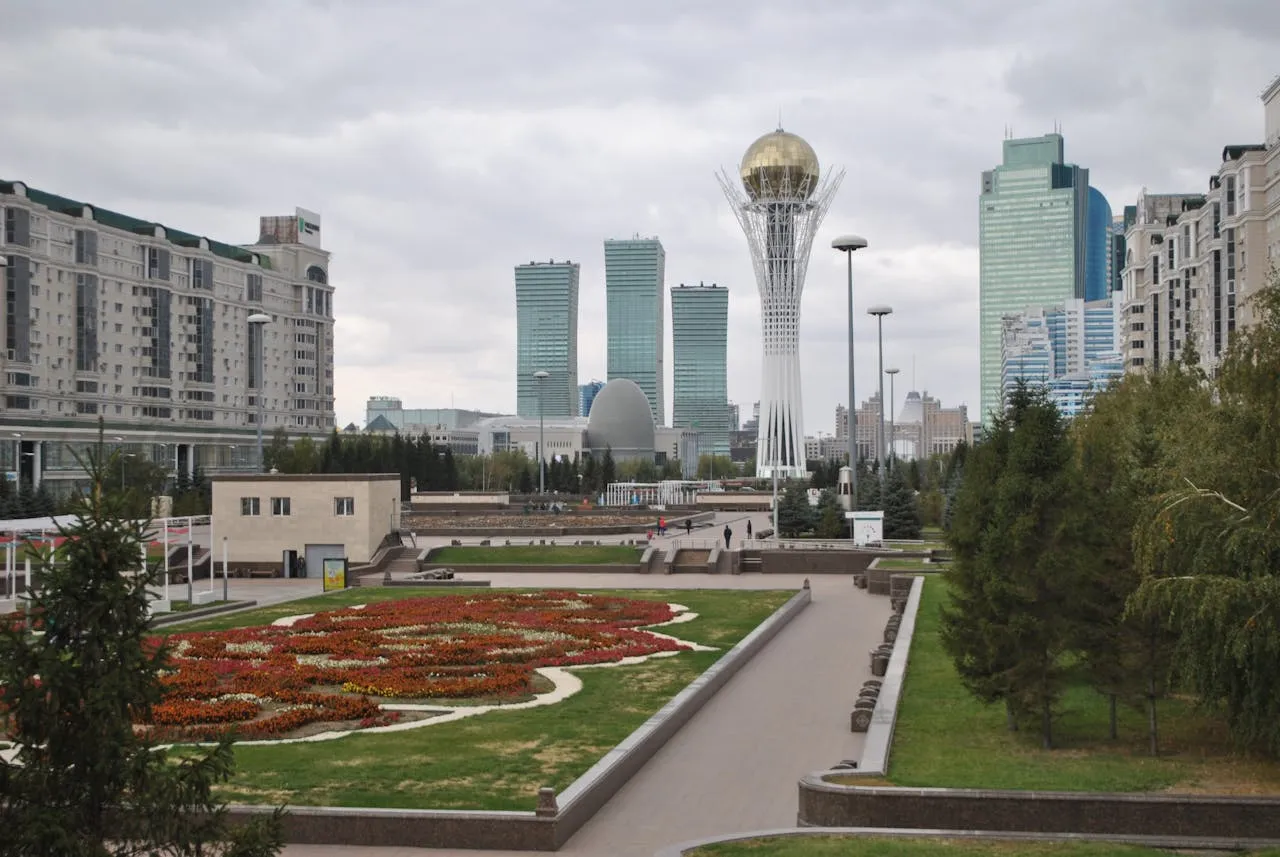

  • Kazakhstan Is Becoming The Go-To Arbitration Destination

    Kazakhstan Is Becoming The Go-To Arbitration Destination

    Kazakhstan is a serious player in international arbitration. The Astana International Financial Centre (AIFC) has built an independent court and arbitration centre that has genuinely attracted international business from across Central Asia, the Middle East, and China.

    I have been advising clients on commercial disputes in Kazakhstan and the surrounding regions for many years, and the pace of change at the AIFC has been striking. When the centre launched in 2018, it was an ambitious project. Today, the International Arbitration Centre (“IAC”) has handled nearly 5,000 cases, with around 90% of those cases having no direct connection to the AIFC itself. This means parties are actively choosing Astana as their arbitration seat.

    This article sets out how the AIFC arbitration framework works, what the interim measures regime looks like in practice, and the practical issues any legal adviser working on Kazakhstan disputes should understand before proceeding.

    The AIFC Framework in Brief

    The AIFC Constitutional Statute gives the AIFC Court exclusive jurisdiction over disputes between AIFC participants, disputes governed by AIFC law, and any commercial dispute that the parties agree to refer. That last category matters. Any two parties, regardless of whether they have any connection to the AIFC, can opt into the AIFC Court and IAC by contract. It is a deliberate feature of the system, designed to attract international business.

    The AIFC Court and IAC operate entirely in English. Proceedings are conducted under English common law principles, and where a moot point arises, the AIFC reverts to English law as its primary source of law. Most of the judges on the court have trained in English law, and that is the tradition they work within. The court will also take account of the law of other common law jurisdictions, including decisions from Singapore, Hong Kong, and Australia, which makes the AIFC’s jurisprudence genuinely familiar to international practitioners.

    The interest in English law is real and growing. Kazakhstan’s legal community has invested substantially in understanding it. This gives UK lawyers acting for parties in the region a practical advantage, as the procedural rules are the same or very similar.

    Availability of interim measures

    The AIFC Arbitration Regulations 2017 (the “Regulations”) contain an unusually clear and well-structured interim measures regime. Under Article 17, it is expressly stated to be compatible with an Arbitration Agreement for a party to apply to the AIFC Court for interim relief, before or during arbitral proceedings. The Tribunal’s constitution does not need to be complete before a party can seek protection from the Court. That is a meaningful difference from many domestic systems.

    Article 27 of the Regulations grants the Arbitral Tribunal the power to order interim measures. Those measures can cover four purposes:

    • Maintaining or restoring the status quo pending the outcome of the dispute
    • Preserving assets from which a future award might be satisfied
    • Taking action to prevent harm to a party or to the arbitral process itself
    • Preserving evidence relevant to resolving the dispute

    Where the Tribunal has already issued an interim order, a party can apply to the AIFC Court of First Instance to enforce it, provided that the Tribunal has given its written permission. Under AIFC Rules 27.30 and 27.31, the application must be made by Arbitration Claim Form, and the Court will not grant enforcement unless the applicant files written evidence of that permission. This is a sensible safeguard against parties using the court to bypass the Tribunal’s authority.

    In practice, the AIFC Court’s interim measures regime compares favourably with Kazakhstan’s domestic civil procedure rules. Under standard domestic practice, interim relief can only be obtained after proceedings have commenced, and a freezing order, once granted, may remain in place for six to eight months with little prospect of the respondent obtaining a discharge before then. The AIFC Court takes a different approach: it is required to schedule a review hearing at the point of granting relief, so the respondent’s position receives prompt consideration.

    The AIFC has developed a body of case law on interim measures. Cases include JSC Astana International Financial Centre Authority v Onyx Heavy Machinery Ltd (AIFC-C/CFI/2020/0004), Metallinvestatyrau LLP v Aksaystroy-2020 LLP (AIFC-C/CFI/2021/0013), LLP “TEMIR ZAT” v Joint Venture “Alaygyr” LLP (AIFC-C/CFI/2023/0046), and, most recently, Caspian Holding FZ-LLC v Gazexport Limited (AIFC-C/CFI/2025/0018). The 2025 energy sector case is particularly telling; it shows that the court is willing to grant relief in commercially sensitive disputes involving gas export arrangements.

    Enforcing Arbitration Awards In Kazakhstan

    The AIFC Court itself has an excellent enforcement record: 205 judgments delivered, with a 100% enforcement rate at the time of writing. AIFC Court orders carry the same legal force as judgments from Kazakhstan’s general jurisdiction courts. For disputes resolved within the AIFC system, enforcement has been reliable.

    The picture is more complicated when it comes to enforcing foreign arbitral awards in Kazakhstan’s domestic courts. Kazakhstan has acceded to the New York Convention on the Recognition and Enforcement of Foreign Arbitral Awards, which in principle means that awards made in other Convention states are enforceable in Kazakhstan. In practice, the position is more nuanced. A significant practical rule applies: in general, Kazakh courts will not enforce a foreign arbitration award if the debtor lacks an address or registered presence in Kazakhstan. Enforcement has occurred in some cases, but it is the exception rather than the standard outcome.

    There is also a structural tension in how the New York Convention operates in Kazakhstan. Kazakhstan joined the Convention by Presidential Decree in 1995 rather than by parliamentary ratification, and some Kazakh lawyers argue this means it does not automatically take priority over domestic law under the Kazakh Constitution. Others take the view that the decree still incorporates the Convention into national legislation, and it applies directly.

    Some argue that the mandatory public policy ground for refusal under Article 52(2) of the Law on Arbitration can be applied more broadly than the Convention’s permissive wording allows. From an international law perspective, Kazakhstan is bound by its accession obligations. From the perspective of a creditor trying to enforce in a Kazakh domestic court, that theoretical obligation may offer limited comfort.

    The AIFC is a genuine option for commercial dispute resolution, and for cross-border disputes with a Central Asian focus, it is increasingly the most practical one. The alignment with English law makes it accessible to UK-trained practitioners. The court’s independence, its interim measures framework, and its track record give clients reasonable grounds for confidence.

    That said, the domestic enforcement environment in Kazakhstan remains a distinct issue from AIFC enforcement. If a client’s strategy depends on recovering against a debtor whose assets are in Kazakhstan but who has no registered address there, the enforcement route will need careful planning. There is no automatic path from an arbitral award to a satisfied judgment.

    A few practical points worth keeping in mind:

    • Check whether the AIFC or IAC is specified in the contract. If it is, the AIFC Court’s jurisdiction and the arbitration framework apply directly.
    • For urgent asset protection, an application to the AIFC Court for interim relief before the tribunal is constituted has procedural advantages over domestic Kazakh courts.
    • If enforcement against a debtor in Kazakhstan is needed, investigate the debtor’s registered presence at an early stage. This will significantly shape the enforcement strategy.
    • Any matter involving Russian entities or judgments routed through Kazakhstan requires sanctions law review before any steps are taken.
    • The AIFC’s openness to other common law authorities means that English law arguments, properly framed, will be heard and understood.

    Kazakhstan’s Role in Enforcing Russian Judgments

    One development that deserves close attention is the volume of Russian judgments now being enforced in Kazakhstan. Since the imposition of Western sanctions following Russia’s invasion of Ukraine, Russian entities have found themselves unable to enforce judgments in most European jurisdictions. Kazakhstan has become a practical alternative. Russian companies with commercial relationships in Central Asia or with assets in the region have been seeking enforcement in Kazakh courts.

    For UK-based advisers, this creates a set of questions that require careful thought. Acting in connection with the enforcement of a Russian judgment can raise sanctions compliance issues depending on the identity of the parties, the nature of the underlying contract, and whether any relevant general licences or OFSI authorisations apply. The potential for conflict between Kazakhstan’s openness to Russian enforcement and the UK’s sanctions regime is an area where specialist legal advice is genuinely necessary.

    At Eldwick Law, we advise clients on exactly these types of cases: Kazakhstan arbitration procedure, AIFC enforcement strategy, and the sanctions law questions that often arise alongside them. If you are handling a matter involving Russian entities and Central Asian assets, or if you are instructed in a dispute where Kazakhstan is the enforcement jurisdiction, please do get in touch.

    Where Is Kazakhstan Headed?

    The IAC has signed 125 memoranda of understanding with arbitration institutions across Central Asia, the Middle East, China, and internationally. Those agreements are the mechanism through which the IAC is building the recognition and reciprocal enforcement relationships that give arbitration seats their long-term credibility. The direction of travel is clear.

    For the highest-value energy and infrastructure disputes, London, Geneva, and Stockholm remain the seats specified in legacy contracts, and they continue to attract the most complex cases. For example, the Kashagan oilfield arbitration, with claims now exceeding $160 billion, is registered with the Permanent Court of Arbitration and is being heard by a tribunal in Geneva, with hearings expected to continue into 2028. Kazakhstan also recently won the Karachaganak gas condensate arbitration before the Stockholm Chamber of Commerce, with the consortium of Eni, Shell, Chevron, and Lukoil potentially facing a payout of up to $4 billion.

    The disputes mentioned above concerned older contracts. New agreements, particularly those involving Chinese and Middle Eastern investors in the region, are increasingly selecting the IAC, DIAC, SIAC, or HKIAC. As the AIFC Court’s jurisprudence develops and its reputation outside Central Asia grows, there is every reason to expect the IAC’s share of mid-market and complex regional disputes to increase.

    Get in Touch

    If you are involved in a dispute with a Kazakhstan element, or if you are advising a client on a contract that may give rise to one, I am happy to discuss the legal and procedural options with you. You can reach the team at Eldwick Law by calling +44 (0) 203 972 8469 or emailing mail@eldwicklaw.com. We advise on AIFC arbitration, interim measures applications, enforcement strategy, and the sanctions law issues that frequently arise in Central Asian commercial disputes.

    Frequently Asked Questions

    Can any party use the AIFC Court, or is it restricted to AIFC members?

    Any party can opt into the AIFC Court by agreement, regardless of whether they have any connection to the AIFC or Kazakhstan. Article 13(4) of the AIFC Constitutional Statute expressly allows parties to transfer disputes to the AIFC Court by consent, making it accessible to international commercial parties as a chosen seat.

    How does the AIFC interim measures regime differ from domestic Kazakh courts?

    The AIFC Court allows a party to apply for interim relief before arbitral proceedings have even started, and it schedules a review hearing at the point of granting relief. Under the AIFC Arbitration Regulations 2017, Articles 17 and 27, this dual-track system is expressly preserved. Domestic Kazakh courts can only grant interim measures after proceedings commence, and freezing orders can remain in place for up to six to eight months without readily available discharge.

    Will a foreign arbitral award be enforced in Kazakhstan?

    Kazakhstan is a party to the New York Convention, so foreign arbitral awards are in principle enforceable. In practice, Kazakh courts generally require the debtor to have a registered address or presence in Kazakhstan before granting enforcement. This has been the prevailing approach, though enforcement has been achieved in some cases without it. The position should be assessed carefully based on the facts.

    What law does the AIFC Court apply?

    The AIFC Court applies English common law as its primary reference point. Where a legal question is not resolved by AIFC legislation or rules, the court turns to English law. It will also take into account decisions from other common law jurisdictions, including Singapore, Hong Kong, and Australia. Full details of the court’s legal framework are available at court.aifc.kz.

    How does the enforcement of Russian judgments in Kazakhstan affect sanctions compliance?

    Russian entities unable to enforce in European courts have been seeking enforcement in Kazakhstan. If a UK-based adviser or party is involved in such proceedings, they need to assess whether acting in connection with the Russian judgment or entity raises issues under the UK sanctions regime. Whether a relevant OFSI licence is required will depend on the specific facts, the identity of the parties, and the nature of the underlying transaction. OFSI guidance is available at gov.uk/ofsi.

  • Insights On Dubai Arbitration Week 2025

    Insights On Dubai Arbitration Week 2025

    Dubai Arbitration Week 2025 started as a community project in 2014 and has grown into a significant event on the international arbitration calendar. Every November, specialists gather in Dubai for technical sessions, strategy talks and social events that showcase the city’s capability as a global forum for cross-border disputes. The programme is curated by a community committee and supported by the Dubai International Arbitration Centre (DIAC), regional institutions, and international, regional and local law firms.

    Dubai Arbitration Week 2025 followed the familiar format but delivered a larger, more ambitious edition. Conference rooms and hotel spaces filled with debates about global disputes, enforcement strategy, and the shifting patterns of international arbitration. Many discussions continued long after the formal sessions ended, reflecting the sense that Dubai has become a genuine meeting point for practitioners from every major arbitration jurisdiction.

    Dubai Arbitration Week 2025 in numbers

    The 2025 edition brought together more than 1,000 delegates. More than 140 events took place between 10 and 14 November. Commercial arbitration, investor–state disputes, construction and energy cases, and enforcement matters dominated the programme.

    Dubai’s role as an international arbitration hub mirrors the movement of trade and investment across the region. Disputes connected with the Middle East, Russia,  Africa, and Central and South Asia often find their way to Dubai. Parties regard it as a practical, neutral seat with dependable procedures and a legal system comfortable with complex cross-border cases. For practitioners, Dubai Arbitration Week 2025 offered an opportunity to understand how different regional groups approach these disputes and how institutions are adapting to global tensions and economic challenges, such as rising national debts and cost-of-living pressures.

    Sanctions, Russian parties and DIAC arbitration

    Sanctions were one of the most prominent themes of Dubai Arbitration Week 2025. Dubai remains a venue where sanctioned companies and Russian lawyers can attend public events and share their views with a global audience. Their presence in 2025 was significant, shaping several sessions on energy disputes and enforcement risks.

    Panels focusing on oil and gas disputes examined sanctions affecting projects in Iraq and other regions, including the recent designation of a major Russian oil company, Lukoil, and the resulting impact on contract performance, arbitration clauses, and enforcement strategy. The discussion showed why DIAC arbitration and other Dubai-seated arbitration proceedings continue to appeal to sanctions-affected parties. Tribunals can still hear both sides, maintain proper procedure and preserve enforceability while dealing with restrictions that might block access to other seats.

    African arbitration and alternative perspectives

    Africa’s growing influence in international arbitration was evident throughout the week. “Africa Day” and several dedicated sessions highlighted the increasing number of disputes involving African energy, infrastructure and technology projects. Speakers emphasised the strength of African institutions and the expertise of African practitioners.

    GCC arbitration centres and regional competition

    Gulf Cooperation Council (GCC) arbitration centres were highly active during Dubai Arbitration Week 2025. Institutions from Saudi Arabia, Qatar, Bahrain and other Gulf states hosted sessions to highlight new rules, state-of-the-art hearing facilities and improved enforcement performance. Their message reflected a regional ambition to retain more disputes and offer strong alternatives to global centres.

    A reception hosted by the Bahrain Chamber for Dispute Resolution at the top of the Burj Khalifa captured this sense of ambition. It highlighted the speed at which the Gulf has built the infrastructure needed for high-value arbitration. This competition benefits users, as DIAC and other Gulf institutions continue to refine their rules, improve services and raise the overall standard of arbitration across the region.

    English law, English practitioners and DIAC arbitration rules

    English law continued to play a significant role during Dubai Arbitration Week 2025. Many regional contracts continue to choose English law for predictability and commercial familiarity. English barristers and solicitors remain active in Dubai, advising on drafting, seat selection and advocacy.

    What has changed is the assumption that English courts or the LCIA must always be the default. Many parties now select Dubai as the seat while keeping English law as the governing law. DIAC arbitration rules offer a modern and efficient framework that suits English-law-governed disputes. This blended approach appears to be gaining momentum, especially among parties seeking predictable procedures combined with regional convenience.

    Future outlook for Dubai as an international arbitration hub

    By the end of Dubai Arbitration Week 2025, a clear picture had emerged. Dubai is no longer seen as an alternative seat. For many, it is already a first choice for disputes involving sanctioned entities, multi-regional supply chains and counterparties from MENA, the FSU, Africa and South Asia. DIAC arbitration continues to grow in influence and offers users confidence in awards seated in Dubai.

    Competition remains strong. Gulf centres and Asian and African hubs such as Singapore, Hong Kong, Cairo, Kigali and Lagos are investing heavily in their arbitration offerings and enforcement systems. The next decade will be shaped by how these centres position themselves and how users distribute their cases.

    FAQs

    What is Dubai Arbitration Week 2025?

    Dubai Arbitration Week 2025 was a five-day programme of international arbitration events held in November. It brought together global practitioners for sessions on commercial disputes, sanctions, Africa-focused arbitration and GCC developments. The week reinforced Dubai’s status as a leading venue for cross-border arbitration.

    Why is Dubai a critical international arbitration hub?

    Parties value Dubai’s neutrality, strong infrastructure, and supportive courts. DIAC arbitration offers a modern, efficient framework that helps make Dubai a preferred seat for high-value international arbitration.

    How did sanctions shape discussions in 2025?

    Sanctions featured prominently throughout the week. Dubai remains one of the few places where sanctioned parties and Russian lawyers can participate openly. Sessions explored how sanctions affect contract performance, arbitration clauses and enforcement. DIAC arbitration was highlighted as a workable option for sanctions-heavy disputes.

    Why was African arbitration so visible this year?

    Africa-focused sessions reflected the growing number of disputes linked to energy, infrastructure and digital projects across the continent. Dubai appeals to many African parties because it is accessible, neutral and familiar with African legal systems. Speakers noted a shift towards resolving more disputes within Global South arbitration hubs.

    What role did English law play in Dubai-seated arbitration?

    English law continues to govern many commercial contracts in the region. Parties increasingly retain English law while choosing Dubai as the seat of arbitration. The DIAC arbitration rules support English law-governed disputes, and English barristers and solicitors remain active in drafting, advising, and advocating in Dubai.

    To discuss any points raised in this article, please call us on +44 (0) 203972 8469 or email us at mail@eldwicklaw.com.

    This article does not constitute legal advice. For further information, please contact our London office.

  • Azerbaijan Arbitration Days 2025 And The Baku Arbitration Centre Inauguration

    Azerbaijan Arbitration Days 2025 And The Baku Arbitration Centre Inauguration

    A strong sense of motion defines modern Azerbaijan. Known as the land of fire and ice, the country is enjoying stability in terms of commerce and the rule of law. Nowhere does progress echo more loudly than in Baku, where old stone meets glass, and aspiration is as bright as the Flame Towers at dusk.

    The inauguration of the Baku Arbitration Centre (BAC) was neatly folded into the wider spectacle of the Azerbaijan Arbitration Days 2025. This was not simply a regional conference. To myself and Waleed, it signalled a significant shift: from hydrocarbons to commercial hubs, from handshake deals to robust legal rules written for an international age.

    Our observations were that neutrality, transparency, and fairness run through the BAC. This shows in the new rules, the leadership, and the inclusive bilingual approach. Chief Justice Karimov and Justice Minister Ahmadov delivered the centrepiece speech in excellent English, reflecting Azerbaijan’s readiness to engage in international trade and commerce. The BAC opens the door to locally resolved, internationally respected commercial disputes.

    Inclusion and accessibility matter. BAC’s publications and training initiatives support a new generation of lawyers keen to shape the future of Eurasian law.

    What are Azerbaijan’s primary industries?

    This land has always traded in contrasts. In the twenty-first century, energy stands at the centre, with oil and gas bankrolling infrastructure and social change. GDP is climbing steadily. Foreign investment follows suit, turbocharged by pipeline deals and new gas fields that stretch Azerbaijan’s reach as far as Israel.

    In addition, progress on the Zangezur Corridor is moving swiftly. Speaking at the 7th Consultative Meeting of Central Asian Heads of State in Tashkent, President Aliyev stated:

    “The construction of the Zangezur Corridor on the territory of Azerbaijan is nearing completion. With an initial throughput capacity of 15 million tons, this railway will become an important artery of the Middle Corridor,” he said, adding the highway that will form part of the multi-modal corridor is also close to finalization.

    Everything in Baku whispers of progress while retaining a sense of history; the old city walls and the sweep of modern boulevards bear this out.

    Arbitration Days 2025

    The BAC’s debut attracted over 600 delegates, including judges, lawyers, policymakers, and business chiefs, from seventy countries. Just shy of 100 speakers covered everything from procedural reform to digital transformation in dispute resolution.

    Outside the formal stage, events hosted by the Turkic Arbitration Association reminded guests of the region’s spirit for partnership.

    Looking towards the future

    The BAC’s launch rests on the shoulders of reforming judges and a business community eager for regional solutions. Clarity and predictability in dispute resolution attract investment and secure growth.

    Arbitration Days 2026 promises an even broader canvas, drawing in legal minds from across Europe, Central Asia, and the Middle East. For any lawyer or business with an eye on the Caucasus, it’s a date for the diary.

    Concluding comments

    Azerbaijan has written a new chapter in law and commerce. The BAC stands as a work in progress and a promise, an institution invested in fairness, clarity, and progress. As dialogue with neighbouring states edges toward peace and as infrastructure projects tie the region ever closer, the rule of law becomes increasingly important. If business, trust, and cooperation matter, Baku seems ready to set the terms.

    FAQs

    What is the Baku Arbitration Centre?

    A specialist institution for commercial arbitration, designed to meet international standards and offer solutions to businesses in Azerbaijan and beyond.

    What made Arbitration Days 2025 stand out?

    An impressive roster: speakers from nearly 100 countries, a government-backed launch, and a genuine sense that Azerbaijan is open for global business.

    Why does the Middle Corridor matter?

    It places Azerbaijan at the centre of trans-Eurasian trade, making efficient legal solutions crucial for investment and growth.

    How does arbitration in Baku help business?

    It brings speed, neutrality, and local expertise to the table, qualities that investors and trading partners seek.

    Will BAC handle cross-border cases?

    Absolutely. International and regional disputes alike are at the heart of its mission.

    To discuss any points raised in this article, please call us on +44 (0) 203972 8469 or email us at mail@eldwicklaw.com.

    This article does not constitute legal advice. For further information, please contact our London office.

  • Current trends – Arbitration in Central Asia

    Current trends – Arbitration in Central Asia

    Rashid and Charles discussed the dispute-resolution landscape in Central Asia, from differences in jurisdiction and enforcement between states to the rise of construction and renewable-energy claims, and the overlap between commercial and investor-state cases. They also touched on headline matters around the Kashagan and Karachaganak oil fields, using them to illustrate recurring themes such as delay and cost-overrun claims on megaprojects, and the practicalities of enforcing against state-linked counterparties.

    Rashid also shared insights from his career as a dual-qualified UK and Kazakh practitioner and spoke about the growth of the AIFC (Astana International Financial Centre) as a credible regional forum offering English law-based dispute resolution for foreign investors.

    As a London dispute-resolution boutique focused on cross-border matters, Eldwick Law is proud to contribute to thoughtful discussion in this area and to support the legal community’s engagement with a fast-evolving region.

  • Orders against third parties in arbitration

    Orders against third parties in arbitration

    A commentary on s.44 of the Arbitration Act 2025

    Confusing, unsatisfactory, inconsistent. These are some of the words that could be used to describe Section 44 of the Arbitration Act 1996 (“s.44”) just last year. With the Arbitration Act 2025 coming into force in August 2025, reforms have been introduced which aim to enhance efficiency and maintain England and Wales as a leading arbitration destination.

    S.44 Powers Pre-Arbitration Act 2025

    Confusion regarding s.44 stemmed from the fact that s.44(1) did not clarify how far the powers of the court extended. Three major cases relating to s.44 only served to further muddy the waters. The first case, Cruz City v Unitech [2014] EWHC 3704 (Comms), revolved around whether the court could grant an interim injunction against a third party under s.44(2)(e). The High Court concluded that the power did not extend to non-parties and denied the injunction. Similar attempts to apply s.44(2)(b) were equally unsuccessful in DTEK Trading SA v Morozon [2017] EWHC 1704.

    However, in the Court of Appeal case of A and B v C, D and E [2020] EWCA Civ 409, the Court held that s.44(2)(a) – the taking of the evidence of witnesses – was applicable to third parties. The reasoning of Flaux LJ was partially influenced by the fact that it is often rare for a witness to be a party to the arbitration.

    Changes to s.44

    S.44 seeks to clarify any uncertainty with a concise amendment, specifically to s.44(1): “whether in relation to a party or any other person”. The inclusion of ‘any other person’ clarifies that the court now has the power to make orders against uninvolved third parties in support of an arbitral award.

    As regards what orders the court may make, s.44(2) lists them as: 44(2)(a), Taking of the evidence of witnesses

    • 44(2)(b), Preservation of evidence
    • 44(2)(c)(i), Inspection, photographing, preservation, custody or detention of property subject of the proceedings
    • 44(2)(c)(ii), Samples, observation or experiment of property subject of the proceedings
    • 44(2)(d), Sale of any goods subject of the proceedings
    • 44(2)(e), Granting of an interim injunction or appointment of a receiver

    The court’s power to make interim injunction orders against non-parties should serve as a warning to those connected to any arbitral dispute.

    Future Development of s.44

    The Arbitration Act 2025 provides useful clarification on s.44. The conditions in which the court might make orders against third parties are yet to be determined and could likely come down to a case-by-case basis. Third parties’ retention of the full right of appeal under s.44(7) will also likely result in increased litigation as non-parties seek to prevent courts from imposing costly orders upon them. The door has now been opened for direct parties of arbitral proceedings to access orders and evidence previously denied. The dynamic between direct and indirect parties is likely to shift to a more adversarial one as direct parties seek evidence (inter alia) from indirect parties.

    Conclusion

    While the full consequences of s.44 reforms are yet to be seen, this is undoubtedly the beginning of a new era of court involvement in arbitral proceedings. Courts now have the authority to grant a wide variety of orders against third parties. However, the willingness and situations where the courts will grant these orders are yet to be seen and will be an area for case law development.

    Therefore, when arbitral proceedings are being commenced, parties both directly and indirectly involved should be attentive to the rights and obligations that they may have. Swift, decisive action will be vital in protecting their interests and ensuring a favourable outcome.

  • ICC, LCIA and HKIAC – Governing Law, Seat Selection, Efficiency

    ICC, LCIA and HKIAC – Governing Law, Seat Selection, Efficiency

    Choice of Governing law

    The data from the ICC over the past three years confirms the preference for English and Welsh governing law in international arbitration. A steady and consistent use of English law has been reported, with 125 cases governed by it in 2024, maintaining its primary position. In contrast, the use of U.S. law has seen a gradual decrease, from 81 cases in 2023 to 69 in 2024 and Swiss law, which featured prominently in 2023 with 83 cases, fell from the top ranks in 2024 after recording 53 cases in 2022. This comparative trend reflects a global appeal of the English legal system’s respect for party autonomy, especially for parties that seek predictability in decisions. Party autonomy refers to the freedom of contracting parties to determine the terms of their agreement, which is fostered by an objective interpretation of contracts by the English courts. By giving priority to the express terms of the contract and avoiding reliance on extrinsic evidence, the choice of English and Welsh governing law is more attractive to international parties for its legal certainty and protection of agreed terms.

    Seat Choice

    There has also been a slight shift in seat selection within ICC arbitrations in favour of the United Kingdom. In 2024, the UK overtook France as the most selected seat, with 96 cases compared to France’s 91. This is a reversal of the previous year where France led with 99 cases against the UK’s 85. This upward trajectory continues from 2022, when the UK was selected in 74 cases. Since the introduction of the Arbitration Act 1996, the UK has established a reputation for judicial non-interference. English judges generally refrain from intervening in the conduct of arbitral proceedings and are supportive in enforcing final awards, creating a legal environment that reinforces the finality and integrity of arbitration.

    Lengths and delays of Proceedings

    The average duration of ICC arbitration proceedings has remained relatively stable over the past three years, typically concluding within 26 to 27 months. In 2024, the average duration was 26 months, consistent with 2022 and slightly improved from 27 months in 2023. However, data on procedural delays indicates some growing inefficiencies. In 2024, 75 cases experienced delays exceeding two months, compared to 49 cases in 2023 and 29 cases in 2022, showing an upward trend in longer delays despite the stable overall duration.

    Despite the rising number of delays there has been reform enacted to streamline the arbitral process. This is exhibited by the ICC’s 2021 Rules, which introduced stricter time limits for arbitrators to render awards, including financial penalties such as reduced fees if deadlines are not adhered to. While these measures aim to encourage efficiency and meet procedural deadlines, they appear to have limited de facto impact.

    A key factor that could be contributing to the worsening of delays, despite the changes in promoting efficiency, is the phenomenon of due process paranoia. This occurs when tribunals adopt an overly cautious approach to avoid challenges to final awards based on procedural unfairness. This has led to arbitrators granting repeated procedural requests from parties, particularly at late stages, which undermines both efficiency and equal treatment. As seen in cases like Jaguar Energy and Anwar Siraj, courts generally support tribunals’ procedural decisions and reject weak due process challenges. However, the inflated perception of risk continues to affect case management, enabling actions that prolong proceedings and increase delay.

    Changes in Asian regional distribution

    The ICC data also reveals subtle changes in the regional distribution of parties involved in arbitrations, including a gradual decline in participation from Central and West Asia. In 2022, parties from this region accounted for 11% of the caseload, rising to 12.7% in 2023 before falling to 10% in 2024. This downward trend may reflect the development and appeal of regional arbitration centres, such as the Dubai International Arbitration Centre (“DIAC”) and the Qatar International Court and Dispute Resolution Centre, which offer geographically closer and often more cost-effective alternatives. Conversely, North and West European parties continued to dominate, rising from 28.8% in 2023 to 30.2% in 2024. These figures suggest a rebalancing of global arbitration activity, with European parties consolidating their presence and some Asian and Middle Eastern parties exploring arbitration locally.

    Future changes

    Looking to the future, English law will continue to dominate arbitration proceedings. As for seat preference, the recent enactment of the Arbitration Act 2025 introduces a series of targeted reforms that modernise and enhance the efficiency of the arbitration process in England. Tribunals have been given new powers to summarily dispose of claims; the Act has provided clarification of court authority over third parties, codification of emergency arbitrator enforcement, and stricter procedures for challenging awards. These reforms, in combination with England’s commercial jurisprudence and pro-arbitration judiciary will likely further increase the appeal of English law and London as the seat of arbitration.

    Comparative Analysis

    HKIAC

    The 2024 statistics reveal that the ICC maintains a broader global presence compared to HKIAC. Parties to ICC arbitrations came from 145 countries, whereas HKIAC involved parties from 34 jurisdictions, primarily from Asia and offshore hubs such as Mainland China, Hong Kong, and the Cayman Islands. While both institutions conduct most arbitrations in English, HKIAC maintains a significant portion in Chinese (15.9%) or bilingually (4.3%), reflecting its regional orientation.

    The choice of governing law further illustrates the difference between the HKIAC’s more local appeal in comparison to the global attractiveness of the ICC. In 2024, ICC arbitrations involved over 100 different legal systems, with English law as the dominant choice. HKIAC cases, while involving 15 governing laws, primarily applied Hong Kong law, followed by English and Chinese law, reinforcing its alignment with the Greater China commercial bubble. Overall, the ICC shows greater international diversity, whereas HKIAC displays its appeal for tackling Asia-based party disputes.

    LCIA

    English and Welsh law continues to dominate as the governing law in both LCIA and ICC arbitrations. However, recent statistical reports suggest that there has been a decline in its choice. At the LCIA, the choice of English law has gradually declined: from 85% of arbitrations in 2022 to 83% in 2023, and down to 78% in 2024. Likewise, English law was chosen in 125 (15%) new cases for ICC proceedings in 2024, this represents a decline from 131 cases in 2023. This drop may indicate that while London remains a preferred seat, parties are increasingly opting for other governing law provisions.

    Conclusion

    The 2024 data confirms that English law and London remain central to international arbitration, despite minor declines in usage. Their continued dominance stems from the legal consistency, party autonomy, and enforcement-friendly environment they offer. The Arbitration Act 2025 is expected to strengthen this position further by modernising English arbitration and improving procedural efficiency.

    While institutions like HKIAC and DIAC are increasing in popularity regionally, the ICC maintains a broader international presence, accommodating a wider range of legal systems and parties. The LCIA’s gradual diversification in governing law choices signals growing openness but still reflects the appeal of English law.

    Overall, the trends indicate that jurisdictions offering legal clarity, efficient procedures, and judicial support will remain at the forefront of global arbitration. England’s proactive legal reforms and arbitration-friendly stance ensure it continues to lead in this evolving landscape.

  • Barclays Bank v VEB.RF: Key Insights on Russian Sanctions and Arbitration Disputes

    Barclays Bank v VEB.RF: Key Insights on Russian Sanctions and Arbitration Disputes

    Barclays Bank plc v VEB.RF [2024] EWHC 2981 (Comm)

    Russian sanctions continue to cause commercial and trade disputes.

    In November 2024, the Commercial Court was asked to make a declaration on an application made under section 32 of the Arbitration Act 1996. These applications are rare, which makes it worth setting out the details of what happened.

    Background of the case

    The Claimant, Barclays Bank entered into a currency swap agreement with the Defendant, VEB.RF, a Russian bank. The Arbitration Agreement stated that any disputes would be referred to the London Court of International Arbitration (LCIA) and, subject to certain provisions, the English Courts would have jurisdiction. In 2022, VEB.RF was made subject to UK, EU, and US sanctions, leading to Barclays ending the contract early. The premature termination meant that Barclays owed VEB.RF US$147.7 million. Barclays said it could not pay the sum due to the sanctions placed on VEB.RF.

    VEB.RF brought proceedings against Barclays in a Russian Court. This was in breach of the Arbitration Agreement. In response, Barclays obtained an anti-suit and anti-injunctive relief through an English Court.

    LCIA Arbitration proceedings were then begun by VEB.RF, who also deferred the Russian proceedings.

    Jurisdiction Dispute

    Barclays gave notice that it wanted the dispute to be heard in an English Court. VEB.RF objected.

    To resolve the jurisdiction dispute, the Arbitrator gave permission for Barclays to apply to the Court under section 32 of the Arbitration Act 1996 for a declaration that the Arbitrator had no jurisdiction to hear the dispute. Section 32 cases are rare as in accordance with the general scheme of the Arbitration Act 1996, a Tribunal should determine its own jurisdiction.

    Section 32 of the Arbitration Act 1996

    Section 32 of the Arbitration Act 1996 allows the Court to make a declaration on the jurisdiction of the Tribunal provided:

    • All parties to the proceedings agree in writing.
    • The Tribunal gives permission.
    • The Court is satisfied that:
      1. the determination of the question is likely to produce substantial savings in costs,
      2. the application was made without delay, and
      3. there is good reason why the matter should be decided by the Court.

    The Court’s Decision

    Looking at the whether a declaration by the Court would save costs, Judge Pelling KC reasoned that if he did not make a declaration regarding jurisdiction, there would almost certainly be a challenge to any award made under section 67 of the Arbitration Act 1996.

    “It follows that the relevant comparison in this case is between the court determining the jurisdiction issue now or leaving it to the tribunal with the court becoming engaged with the jurisdiction issue only after a final award or at any rate an interim award determining jurisdiction. This is likely to generate significant wasted costs, as well as significant delay for the parties.” 

    If the application for a declaration regarding jurisdiction succeeded, Judge Pelling KC reasoned there would be significant savings in relation to costs.

    The Court went on to accept that the second condition, namely that the application had been made as quickly as possible, had been satisfied.

    Condition three was also satisfied, as there was clearly a good reason why the Court should decide on the jurisdiction question. The fact that a section 67 challenge would be almost guaranteed if the Arbitrator determined the question would not only create additional costs but also significant delays and uncertainty.

    Practical Implications

    Practical difficulties could also occur if the Arbitrator determined jurisdiction in favour VEB.RF, leaving Barclays exposed to the risk of enforcement in various jurisdictions while a section 67 challenge was pending. In addition, settling the jurisdiction dispute through the instant application would be consistent with a term in the parties’ Arbitration Agreement that they would resolve their disputes as a matter of exceptional urgency.

    Final words

    One of the takeaways from this case is the importance of a well-drafted Arbitration Agreement. Because the parties had made their intentions clear, for example, that issues will be resolved quickly, the presiding Judge could easily interpret their overall intentions.

    To discuss any points raised in this article, please call us on +44 (0) 203972 8469 or email us at mail@eldwicklaw.com.

    Note: The points in this article the law at the time of writing, 14th December 2024. This article does not constitute legal advice. For further information, please contact our London office.

  • Arbitration Solicitors and Agreements

    Arbitration Solicitors and Agreements

    Arbitration is a powerful alternative dispute resolution (ADR) method that is often used to settle international commercial disputes. Given the complexities of arbitration proceedings and enforcement, having an experienced Arbitration Solicitor advise you is imperative.

    Arbitration agreements are final and binding.

    Parties can choose the jurisdiction in which they wish the arbitration to take place, the rules governing the procedure, and the appointment of the Arbitrator/s. One of the reasons arbitration is a preferred method of dispute resolution for commercial entities is that Arbitration Awards can be enforced internationally. The Convention on the Recognition and Enforcement of Foreign Arbitral Awards, also known as the “New York Arbitration Convention” or the “New York Convention”, is one of the key instruments in international arbitration.

    The New York Convention applies to the recognition and enforcement of foreign arbitral awards and the referral by a court to arbitration.

    Arbitration in England and Wales is governed by the Arbitration Act 1996; therefore, if you plan to enforce an award in this jurisdiction, you must have regard for the Arbitration Act 1996 from the outset.

    Why is it crucial to have a Solicitor draft an Arbitration Agreement?

    Parties that enter into Arbitration Agreements are often involved in contracts worth millions, sometimes billions of pounds (or dollars) involving projects or deals spanning multiple jurisdictions. For this reason alone, it is vital to ensure the Agreement is drafted by experienced Arbitration Solicitors.

    Arbitration Agreements set out essential terms such as:

    • How the Arbitrator will be selected.
    • Where the arbitration will be heard (the seat of arbitration).
    • What law will govern the arbitration.
    • Whether the arbitration tribunal comprises one member or three.

    The former Secretary General of the International Chamber of Commerce (ICC) International Court of Arbitration, Frederic Eisemann, identified the term’ pathological clause’ in relation to Arbitration Agreements in an article written in 1974 (La clause d’arbitrage pathologique, Commercial Arbitration Essays in Memoriam Eugenio Minoli, UTET 1974). Mr Eisemann stated that a ‘pathological clause’ was one that was so badly written that it could be invalidated and therefore futile.

    He went on to state four criteria that must be met to ensure a clause in an Arbitration Agreement is effective.

    A clause should:

    • Produce mandatory consequences for the parties.
    • Exclude the intervention of state courts in the settlement of the dispute.
    • Give powers to the arbitrators to resolve the disputes likely to arise between the parties.
    • Permit a procedure which leads, under the best conditions of efficiency and rapidity, to the rendering of an enforceable award.

    The Arbitration Agreement is core to successful arbitration and extremely complicated to draft. Therefore, it is essential to have it written by an experienced Arbitration Solicitor who understands the arbitration process and how it applies to your market sector and particular organisation.

    What part does a Solicitor play in an Arbitration hearing?

    In addition to drafting the Arbitration Agreement, an Arbitration Solicitor plays a significant role before, during, and after the arbitration itself. They will:

    • Advise and assist with the selection of Arbitrators (in line with the terms of the Arbitration Agreement).
    • Advise on the law governing the arbitration and how this will affect your position.
    • Inform you about arbitration costs.
    • Gather evidence and witness statements.
    • Prepare written submissions that are presented to the Arbitrator.
    • Explain the award to you and advise you on enforcement options, including the provisions of international conventions.

    Who pays for arbitration costs, including the legal fees?

    In England and Wales, parties to an arbitration can agree in advance on how costs are allocated, subject to some exceptions; however, this is rare in practice. The Arbitral Tribunal can award costs.  Section 61(1) of the Arbitration Act  1996 provides that:

    “the tribunal may make an award allocating the costs of the arbitration as between the parties, subject to any agreement of the parties.”

    It is generally accepted that the Tribunal will award costs unless the parties agree otherwise. In most cases, arbitrations are conducted by the parties and Tribunal on the basis that the Tribunal will make an award dealing with the allocation of costs.

    Final words

    Domestic and International commercial disputes are by nature complex and often involve multiple claims and counter-claims. Arbitration provides a straightforward, confidential way of resolving matters. An Arbitration Solicitor will advise you on a strategy before Arbitration proceedings, markedly increasing your chances of a successful outcome and preserving necessary commercial relationships.

    To discuss any points raised in this article, please call us on +44 (0) 203972 8469 or email us at mail@eldwicklaw.com.

    Note: The points in this article reflect sanctions in place at the time of writing, 12 April 2024. This article does not constitute legal advice. For further information, please contact our London office.

  • LCIA Arbitration Rules Explained

    LCIA Arbitration Rules Explained

    Key rules of LCIA Arbitration

    If you plan to commence arbitration in the LCIA, you must be aware of the following:

    • The appointment of Arbitrators is by the LCIA Court; however, parties can agree to make a nomination.
    • There is a presumption in favour of a sole Arbitrator.
    • A Tribunal can be quickly put together or an emergency Arbitrator appointed if required.
    • Arbitrations can be consolidated in certain circumstances.
    • Early determination of claims/counterclaims/issues are available.
    • Security for claims and costs is available.
    • Appeal rights are waived unless otherwise agreed.
    • Costs are calculated without regard to disputed amounts.
    • There are staged advance payments for costs.
    • Proceedings and awards are confidential.

    What do Claimants and Defendants need to do before the LCIA Arbitration?

    The following is a step-by-step guide to bringing an arbitration in the LCIA:

    Claimants

    1. Check the arbitration provisions in the contract to see if there is a clause covering LCIA arbitration. Also check any clause amendments which may cover the selection of an Arbitrator, the type of dispute that can be referred to arbitration, and rights of appeal.
    2. Check that the claim is not statutory or contractually time-barred.
    3. Consider whether interim provisions are required to protect your position, for example a freezing injunction.
    4. Begin case preparation, including locating documents and identifying those that are privileged, collecting witness statements, and retaining an expert witness.
    5. If the clause allows parties to nominate an Arbitrator, identify someone you prefer and have funds available for advance payments of their costs.

    Respondent

    1. Check the Arbitration Agreement to ensure the dispute that has led to the claim falls within the Agreement’s scope. If there is a potential jurisdictional issue, you will need to prepare your challenge.
    2. Identify potential counter claims or cross claims.
    3. Examine the claim to see if it is time-barred.
    4. Apply for interim measures such as security for costs.
    5. Prepare your defence case.

    To book a meeting with our lawyers, please call us on +44 (0) 203972 8469 or email us at mail@eldwicklaw.com.

    LCIA Arbitrators

    LCIA Contact

    Prior to the Tribunal being formed, all communications should be sent to the Registrar and the other party must be copied in unless the matter is purely administrative.

    An Arbitrator who is participating in the selection of the Presiding Arbitrator can consult with any party to gain insights into the candidate’s suitability.

    Unless the Tribunal decides otherwise, once the Tribunal is formed, all communications must take place between the parties and the Tribunal, with the Registrar copied in.

    How is arbitration commenced?

    To commence an Arbitration, the Claimant must serve a Request for Arbitration along with the prescribed fee. The Respondent serves their Response and the Tribunal is then appointed.

    The Request and Response set out:

    1. The dispute/s to be arbitrated, and
    2. The parties’ respective cases.

    How is the award made?

    Article 15.10 of the LCIA Rules 2020 provides that the Tribunal:

    “shall seek to make its final award as soon as reasonably possible and shall endeavour to do so no later than three months following the last submission from the parties (whether made orally or in writing), in accordance with a timetable notified to the parties and the Registrar as soon as practicable (if necessary, as revised and re-notified from time to time). When the arbitral tribunal (not being a sole arbitrator) establishes a time for what it contemplates should be the last submission from the parties (whether written or oral), it shall set aside adequate time for deliberations (whether in person or otherwise) as soon as possible after that last submission and notify the parties of the time it has set aside.”

    The award will be made in writing and set out the reasons for the Arbitrator/s decision. Separate awards can be made at different times concerning dissimilar matters.

    Summary

    Commencing arbitration in the LCIA requires a thorough knowledge of the rules and guidance, especially when the issues are related to cross-border matters. Instructing an experienced Arbitration Solicitor will ensure the process runs smoothly and your best interests are protected.

    To book a meeting with our Lawyers, please call us on +44 (0) 203972 8469 or email us at mail@eldwicklaw.com.

    Note: The points in this article reflect sanctions in place at the time of writing, 2nd May 2024. This article does not constitute legal advice. For further information, please contact our London office.