Tag: eldwick law

  • New Defence Available In Russian/Ukraine War Sanctions

    New Defence Available In Russian/Ukraine War Sanctions

    On 20 June 2023, the Russia (Sanctions) (EU Exit) (Amendment) (No 2) Regulations 2023 (the Regulations) came into force.

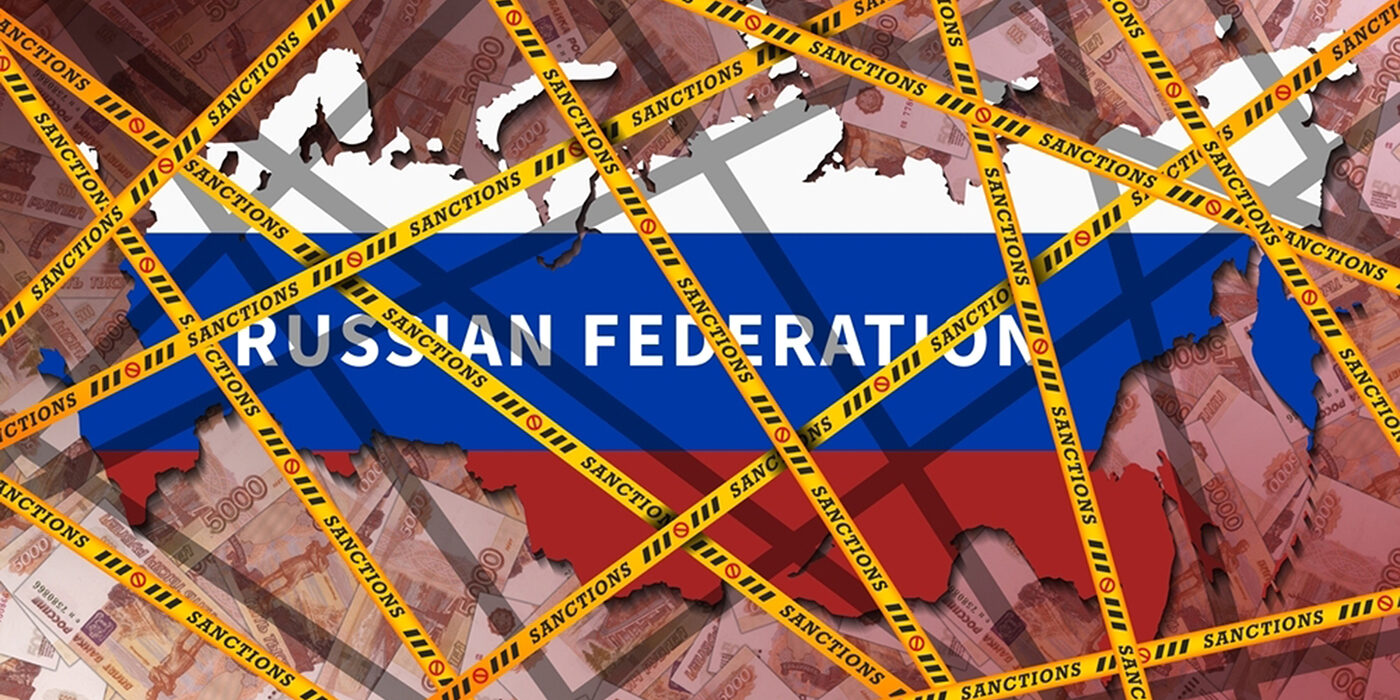
    Established under the Sanctions and Anti-Money Laundering Act 2018 (SAMLA), the Regulations amended the Russia (Sanctions) (EU Exit) Regulations 2019 (Russia Regulations) to establish a clearer legislative basis to enable certain assets to remain frozen/immobilised until Russia pays compensation to Ukraine “for damage, loss or injury suffered by Ukraine as a result of Russia’s invasion of Ukraine on or after 24 February 2022.”

    Existing finance, shipping, and trade sanctions have also been extended under the Regulations.

    The new sanctions relate to non-government controlled Ukrainian territory “the Autonomous Republic of Crimea” and city of Sebastopol and non-government-controlled areas of the Kherson and Zaporizhzhia oblasts (administrative district or region) of Ukraine.

    These reflect the changing demographics now under Ukrainian control.

    The Regulations introduce a defence to the strict liability offence under section 68(1) of the Customs and Excise Management Act 1979 relating to the prohibition on exportation of certain goods to, or for use in, non-government-controlled areas of the Donetsk, Kherson, Luhansk, and Zaporizhzhia oblasts.

    What is the purpose of the Russia (Sanctions) (EU Exit) Regulations 2019?

    Before the amendment, the Russia Regulations were for the purposes of ‘encouraging Russia to cease actions destabilising Ukraine or undermining or threatening the territorial integrity, sovereignty, or independence of Ukraine.’
    The explanatory memorandum to the Russia Regulations states that they reflect the UK’s position that Russia is fully responsible for the war in Ukraine and the damage caused, including to Ukraine’s critical infrastructure.

    The amended sanctions are designed to contribute to the objective of ensuring Russia pays compensation for the damage it has caused.

    What is the defence to the strict liability offence under section 68(1) of the Customs and Excise Management Act 1979?

    Section 68(1) reads:

    68 Offences in relation to exportation of prohibited or restricted goods.

    (1) If any goods are—

    (a) exported or shipped as stores; or

    (b) brought to any place in the United Kingdom for the purpose of being exported or shipped as stores,

    and the exportation or shipment is or would be contrary to any prohibition or restriction for the time being in force with respect to those goods under or by virtue of any enactment, the goods shall be liable to forfeiture and the exporter or intending exporter of the goods and any agent of his concerned in the exportation or shipment or intended exportation or shipment shall each be liable on summary conviction to a penalty of three times the value of the goods or [F1level 3 on the standard scale], whichever is the greater.

    The defence under the Regulations in relation to section 68(1) is available in circumstances where a person had no knowledge or reasonable cause to suspect that the prohibited goods were destined for the non-government-controlled areas of the Donetsk, Luhansk, Kherson, and Zaporizhzhia oblasts.

    What are the anticipated future developments in sanctions against Russia?

    In a press release dated 19 June 2023, the British government affirmed its commitment to maintaining sanctions until Russia paid compensation to Ukraine for the damage caused by the Russian invasion.

    The statement confirmed that a legislative route was being introduced to ensure frozen Russian assets are donated to Ukraine to help fund reconstruction.
    Laws are also anticipated to mandate that “persons and entities in the UK, or UK persons and entities overseas, who are designated under the Russia financial sanctions regime, must disclose assets they hold in the UK.”

    Russians who are already subject to sanctions are now able to apply to have their frozen funds released for the express purposes of donating money to support reconstruction in Ukraine.

    It is important to note that no relief from sanctions will be offered in exchange for making donations.

    Wrapping up

    Sanctions involve a complex web of domestic and international law, much of which is beyond the scope of this article. Therefore, it is imperative to check each transaction related to Russia or any other country subject to sanctions individually and seek legal advice as to you and/or your organisation’s legal position.

    To discuss any points raised in this article, please call us on +44 (0) 203972 8469 or email wt@eldwicklaw.com

    Note: The points in this article reflect sanctions in place at the time of writing, 13th July 2023. This article does not constitute legal advice. For further information, please contact our office.

  • Crypto – the Prodigal Asset?

    Crypto – the Prodigal Asset?

    As Heraclitus said: “There is nothing permanent except change.”

    Every innovation is met with suspicion if not derision. Planes and trains were seen as the work of the Devil, whilst some wanted the car outlawed- ironically the very early vehicles were battery not gasoline powered.

    There was marked antipathy to UK commercial TV when launched in the 1955. Some thought it would not last and that all we needed was the BBC. Wind the clock forward and it’s the BBC having to find its niche in a world of multi-providers and new technologies providing novel ways to view programmes and pay for them. Content has changed exponentially courting questions as to what are the boundaries of free speech?

    The internet and social media have yet to be tamed and regulated. The UK’s Online Safety Bill 2022 shows the tension between free speech and protecting the vulnerable.

    Crypto and its supporting technologies are the latest to be under the gaze. Admittedly crypto has scored some own goals thanks to the gung-ho anti-regulatory mentality of FTX (and fall out consequences like Block Fi). Whilst ‘the fake it until you make it’ maxim now looks like a route map to prison food given the conviction of Elizabeth Holmes, founder of Theranos.

    Whilst we can be scathing of crypto let’s not forget it is only about 14 years that established ‘analogue’ banking was under scrutiny and pushed capitalism to the brink. The effects are still being felt economically, socially and legally.

    Crypto has the potential to be the fundamental catalyst in changing capitalism, and in the right hands (human and AI) the capacity to further democratise society.

    However, to do so it needs several important elements.

    The first important aspect is to ensure trust and transparency. Crypto using more acronyms than a tin of alphabet soup only antagonises matters and shrouds matters in mysticism when the sector should be earning trust as well as broad acceptance. Even Tesla’s Elon Musk resisted calling tyres ‘rotating mobility aids.’

    Make sure the adults are in the room. And by that I do not mean tropes of yesteryear but like-minded people from all backgrounds, ages and nationalities who are willing to embrace change but not change for changes sake. Also, don’t regard regulation and accountability as a death knell to creativity and innovation.

    The courts and lawyers accept that there is risk to everything. What you regulate is ensuring people know what they are letting themselves in for and that there is proper transparency and accountability. We should not protect people from failing but we should protect them from people who make failing inevitable whether because their approach to crypto business is fraudulent or just damn feckless.

    Legislators need to understand blockchain and crypto. Also, regulation should be agile and responsive. Also, keep it simple. The more complex and unfathomable the laws the more chances of creating uncertainty and loopholes that undermine the purpose of the legislation. If existing legislation works then just adapt to crypto.

    As with climate change and the Internet, crypto is a borderless market yet most legislation is derived from jurisdictions. There is already divergence on definitions of crypto assets, for instance between the proposed EU Markets in Crypto-Assets (MiCA), and the UK’s proposed amendments to the Financial Services and Markets Bill (FSMB).

    The FSMB defines a crypto asset as: 

    “Crypto asset’ means any cryptographically secured digital representation of value or contractual rights that:

    • Can be transferred, stored or traded electronically, and
    • That uses technology supporting the recording or storage of data (which may include distributed ledger technology).”

    Whilst MiCA adopts a more forensic analysis and definitions will cover certain types of NFTs (non-fungible tokens).

    Seemingly, the FSMB will not cover NFTs whilst the UK’s Digital, Culture, Media and Sport Committee launching an enquiry how best to regulate NFTs. 

    The US securities law such as the Securities and Exchange Commission (SEC) may treat certain types of NFT as securities. 

    NFTs play an increasing role in the creative industries but their application exceeds these valuable sectors.

    Ideally, crypto needs international courts and universal standards- but given the NFTs examples above it is not likely to happen any time soon. 

    Common Law should provide consistency but variation occurs, for instance compare Australia and UK court decisions as to whether crypto assets are a form of property. 

    Ensure that blockchain and also crypto are green using renewable energy. 

    The biggest goal for crypto is to re-define the application of business and also give choice as to the type of money or unit of value we use.

    We would be aghast if there was only one type of fashion, car, phone or cheese; we have choice and so it should be with money and its utility.

    Central governments and banks fear that they will lose control over collecting taxes, monetary policy and so forth; an immutable blockchain should make tax collection easier! 

    The right utility weighting can ensure crypto money has real value and not something built on quicksand. The current mantra of we value it because we do can only be taken so far.

    Currently, the wealth of a country or person is based on fairly crude profit and loss principles. 

    Smart blockchain technology can trace and account for specified qualities and once verified a value can be attributed, for instance, if a company has an excellent employment record then a value is attributed. 

    Likewise, if you can show that production does not include use of carbon or a supply chain does not exploit children then a value can be given. As such, profitability is measured in terms of additional identifiable qualities rather than just what is produced or services provided.

    Such an approach helps productivity, help stem inflation as each crypto assets would be linked and valued against identifiable parameters not just on market whim. 

    The legal groundwork exists. For instance, S414 C (7) Companies Act 2006 says companies need to take account of factors such as such as environmental matters, including the impact of the company’s business on the environment. Also, requires consideration of social, community and human rights issues. 

    Whilst the Directive on Corporate Sustainability Due Diligence and Amending Directive (EU) 2019/1937 will apply to EU and non-EU companies generating a net turnover of more than €150m in the EU in the financial year preceding the last financial year. The Directive is likely to be adopted by 2023 and take effect during the next three to five years.

    Blockchain will be a significant driver in the application of these laws and influence how companies are perceived and valued.

    This does not prevent central governments imposing rules of engagement.

    It is easy to look backwards through rose tinted glasses and resist change.  As Leo Tolstoy said: ‘Everyone thinks of changing the world, but no one thinks of changing himself” 

    One way we could change ourselves is to embrace blockchain and crypto and, like a child, nurture them so they become inspirational and constructive adults.

    Julian Wilkins of Eldwick Law

    Consultant Solicitor and Notary Public

    Member of the Chartered Institute of Arbitrators

    CEDR Accredited Mediator

  • How Russian Sanctions May Affect Your Business

    How Russian Sanctions May Affect Your Business

    Note: The points in this article reflect sanctions in place at the time of writing, 12th April 2022. This article does not constitute legal advice. For further information, please contact our London office.

    We recently discussed the effectiveness of targeted sanctions when it comes to dealing with rogue states such as Russia and North Korea and argued that although sanctions provide the impression to voters that their government is taking affirmative action, there is little evidence they influence the inner circle of a country’s leadership. Regardless of their effectiveness, however, targeted sanctions have been used by the UK, EU, and US against Russian individuals and businesses in response to Russia’s invasion of Ukraine. Many companies have been caught up in the sanctions regime and/or want to launch new ventures in Russia. This article explains the type of sanctions in place and the risk assessments and due diligence organisations must apply before, during, and after doing business in Russia in order to protect their best interests. And although this article focuses on Russian sanctions, the information contained below applies to doing business in any sanctioned jurisdiction.

    To begin, let us look at what Russian sanctions may apply to your organisation.

    What is the scope of UK, EU, and Russian sanctions?

    UK sanctions

    UK sanctions apply to all British citizens, British overseas citizens, and any entity incorporated in the UK. They also cover any actions taken by someone in the UK (either wholly or partly) or in UK territorial waters.

    EU sanctions

    EU citizens, incorporated entities, anyone on board an aircraft or ship travelling within the jurisdiction of an EU Member State, and anyone conducting business wholly or partly within the EU is subject to EU sanctions.

    US sanctions

    Like US taxes, US sanctions can ensnare the unwary. Not only do US sanctions apply to US citizens and incorporated businesses, as well as anyone conducting business wholly or partly within US territory, under the Countering America’s Adversaries Through Sanctions Act (CAATSA) non-US citizens can also be caught by US sanctions.

    Given the wide catchment of UK, EU, and US sanctions, people and organisations doing or planning to do business in Russia and/or any other country where sanctions have been imposed need to undertake comprehensive due diligence and risk management to ensure they are fully compliant with any sanctions imposed. Non-compliance can lead to significant legal, financial, practical, and reputational implications for UK organisations. Below is a brief guide to ensuring you do not inadvertently breach not only the legal aspect of international sanctions but the spirit in which they have been applied, the latter being something that the public will neither forgive nor forget if your business is subjected to a ‘trial by social media’.

    Be mindful that the situation can change rapidly and without warning, therefore, it is vital to take experienced legal advice regarding the below guidelines.

    Check your commercial contracts

    If you have commercial contracts with people or organisations in a sanctioned country you must review the terms of the agreement to ensure the goods and services they cover do not fall within current sanctions. Never take the wording of sanctions at face value – the EU has sanctioned ‘luxury goods’ such as alcoholic spirits, sporting equipment, perfumes, handbags, and clothes. These items are defined as ‘luxury’ if their value exceeds €300, hardly an outrageous sum.

    You may wish to simply cancel any contracts that have connections with a sanctioned state, however, unless the terms of the contract allow for such a step, for example, there is a force majeure clause that permits termination in the case of sanctions, you will be in breach of contract.

    If one or more of your contracts have become uneconomical, untenable, or both, you may be able to rely on the doctrine of frustration. Frustration was defined by Lord Radcliffe in Davis Contractors Ltd v Fareham UDC [1956] AC 696 (at 729) (emphasis added)

    “frustration occurs whenever the law recognizes that without default of either party a contractual obligation has become incapable of being performed because the circumstances in which performance is called for would render it a thing radically different from that which was undertaken by the contract. Non haec in foedera veni. It was not this that I promised to do.”

    Generally speaking, the courts in England and Wales will ask the following questions to determine whether or not a contract has been frustrated:

    • Did the event occur after the contract was formed?
    • If so, does it strike at the heart of the contract and is it entirely beyond what was contemplated by the parties when the agreement was entered into?
    • Is either party at fault?
    • Does the frustrating event render further performance impossible, illegal, or transform performance into something radically different from that contemplated by the parties at the time of signing?

    Although the above questions provide a reliable guide to how the courts will evaluate whether or not the doctrine of frustration will apply, all cases will turn on their own facts.

    Undertake comprehensive due diligence and risk management exercises

    In circumstances where you or your organisation plan to launch a new venture into a territory subject to UK, EU, or US sanctions, a meticulous due diligence and risk management exercise must be completed. Factors to consider include:

    • The legal jurisdiction governing any agreements and disputes.
    • Payment terms such as late payments and letters of credit which may be considered loans and therefore prohibited by certain sanctions.
    • The ability to secure adequate insurance and onboard suppliers/distributors.
    • Including contractual terms to allow for a rapid exit, for example, a detailed force majeure clause and sanction-specific termination clauses.
    • Undertaking Know Your Customer/Business Partner checks to establish whether or not an entity is owned or controlled by a sanctioned person, or a designated person is effectively also sanctioned but does not appear on a sanctions’ list.

    Wrapping up

    Sanctions involve a complex web of domestic and international law, much of which is beyond the scope of this article. Therefore, it is imperative to check each transaction related to Russia or any other country subject to sanctions individually and seek legal advice as to you and/or your organisation’s legal position.

    Below are some websites you may find helpful:

    You can also contact the Export Support Service on 0300 303 8955.

    To discuss any points raised in this article, please call us on +44 (0) 203972 8469 or email us at mail@eldwicklaw.com.

    Written by Waleed Tahirkheli

  • EncroChat Hack: What next?

    EncroChat Hack: What next?

    Last week, the NCA announced that over 800 people were arrested across Europe and the world after French and Dutch authorities intercepted messages on “EncroChat“, an encrypted messaging platform. The National Crime Agency (“NCA“) have been leading efforts in the UK, hailing “Operation Venetic” as  the broadest and deepest ever operation into serious organised crime.

    What are Encrophones?

    Encrypted phones – or “Encrophones” – are mobile devices that use sophisticated algorithms to prevent messages or phone calls being read or listened in to if they are intercepted. Encrophones offer high levels of privacy.

    Are Encrophones Illegal?

    To be clear; Encrophones are not illegal, and being in possession of an Encrophone is not a criminal offence.

    What is EncroChat?

    EncroChat is a company that sold custom-made, encrypted handsets. These phones have private messaging applications and are capable of making calls that are not traceable using conventional ‘Cell-Site’ technology (to locate the handset). These phones had their GPS, camera and microphone removed and had the ability to have all its data deleted by entering an emergency PIN-code. EncroChat operated a subscription service which could cost their users as much as £1,600 per month and are popular with high net worth individuals and celebrities.

    The Police Operation

    The EncroChat system was hosted in France. French and Dutch authorities launched a joint-operation to successfully infiltrate the system. They collected intelligence on the users of EncroChat, and discovered that many users appeared to be organised criminals; brazenly engaging in criminal enterprise from the transportation and sale of drugs to ordering killings and co-coordinating violent criminal acts.

    Reports indicate that the police had been using the intelligence harvested from their surveillance of the EncroChat system to apprehend organised criminals, using the intercepted messages to execute targeted raids and arrests while taking great care to not give away the source of their information. This all came to an end on the 13th June 2020, however, when the operators of the EncroChat platform discovered the hack, and sent a warning to all their subscribers that their privacy may have been compromised.

    European law enforcement agencies have seized a large number of Encrophones, and have made some 800 or so arrests – including arrests of corrupt law enforcement officers. It is estimated that £54million in cash has been seized as the proceeds of crime as well as 77 firearms and 1.5 tonnes of cocaine.

    Read more about Encrochat and the investigation process on our article published on Al Jazeera: The EncroChat police hacking sets a dangerous precedent

    How Can We Assist?

    Our fraud and economic crime solicitors are experts in dealing with complex criminal investigations. We have extensive experience of successfully defending individuals and organisations accused of all manner of criminal offences, and work with some of the world’s leading digital forensic experts and barristers. We are currently exploring arguments about the way in which these police operations have been conducted and the admissibility of any evidence obtained.

    If any of the issues raised in this article are relevant to you, or you have any questions about the use of an Encrophone, you should seek advice from an experienced team of solicitors immediately: Mohammed Sarwar Khan and Abbas Nawrozzadeh. Seeking advice early can make all the difference, and may circumvent the need for an arrest.

    If you are arrested, what you say or do at the interview can determine the outcome of your case. Always exercise your right to have legal representation.


  • Guidance from the CMA on Cartel Investigations

    Guidance from the CMA on Cartel Investigations

    The Competition and Markets Authority (“CMA”) recently published a blog with their guidance on cartel investigations entitled, How the CMA investigates cartels. This explains what the CMA frequently does as part of its evidence-gathering process, including, for example, undertaking covert surveillance, or executing dawn raids. This is a good read for solicitors and other practitioners undertaking work in this area, as well as businesses at risk of such regulatory interventions and criminal investigations.

    The CMA has set out details of how cartel investigations commence, for example, from organic intelligence-gathering and tip-offs to self-reporting. They outline their powers, including with regard to dawn raids, interviews, and compelling organisations to produce information. The CMA then go on to outline the process of setting out a “Statement of Objections” – that is, the CMA’s initial findings from their cartel investigation. Subjects have an opportunity to reply to this. The matter may then proceed to a final, published CMA decision.

    Where criminal sanctions are being entertained, the CMA will also carry out an assessment on whether there are sufficient grounds for individuals or businesses to be charged and prosecuted in the criminal courts.

    The CMA also outline the exercising of their discretion in applying to the Court for the directors of companies guilty of cartel behaviour to be disqualified from acting as company directors (for up to 15 years).

    All in all, worth a read!

    Abbas Nawrozzadeh is the Head of Regulatory and White Collar Crime at Eldwick Law. If you and/or your business are being investigated by the CMA or require expert advice, then please do not hesitate to email an@eldwicklaw.com and/or telephone 0207 887 6525.

  • Case Study: Energie Direct Franchising Limited v Star Gym Limited

    Case Study: Energie Direct Franchising Limited v Star Gym Limited

    Case Background

    The background to the claim is that the Defendant, Mr Nabi (a franchisee of Energie) was unhappy with the service being provided by energie Fit4Less, in particular their in-house software system called “Elan”. Mr Nabi was a vocal critic within the Energie franchisee network and felt that he was being bullied and intimated by Energie’s chief executive Mr Jan Spaticchia for voicing his concerns.

    There was then a significant deterioration in the relationship between Mr Spaticchia and Mr Nabi. Energie eventually terminated their Franchise Agreement with Mr Nabi on 28 April 2017. Under clause 25.3 of that Franchise Agreement, Energie exercised its option to take over the lease of the club, to purchase its assets including fitness equipment and to have assigned or novated to it any other contracts.

    Energie appointed three surveyors to provide opinions on the open market value of the lease. All three surveyors opined that the lease had little value and produced an “average-of-averages figure of £8,344” which was offered to Mr Nabi as the value of the lease. Mr Nabi rejected the valuations on the basis that Energie’s valuers were biased and the valuations were therefore not independent. This then led to a period where Mr Nabi continued to operate the club, even though the Franchise Agreement had been terminated (the “Interim Arrangement”). During the Interim Arrangement, Energie unilaterally ceased making payments received by Star Gym’s members, “purportedly so that it could if and when necessary pay for the Club’s staff, members and landlord.” After several months of negotiations, whilst Energie continued to withhold Mr Nabi’s payments, the club was closed down and Mr Nabi “flipped the signs” and handed the club to a company called HRPMoon Limited, of which Mr Nabi’s wife was the sole director.

    Energie Fit4Less brought a claim for breach of the Franchise Agreement, breach of confidence, procuring breaches of contract and unlawful means conspiracy. They also sought an injunction for specific performance, springboard injunctions against HRPMoon Limited, delivery up of confidential data, database, contact details and unquantified damages.

    Mr Murray Rosen QC (sitting as a Judge in the High Court) heard evidence from Mr Nabi, Mr Spattichia, Mr Simon Horner of GCW Retail Property Consultants (Energie’s appointed surveyor), Mr David Waugh of Elan (and Energie’s Systems and Technology Director) and other Energie representatives.

    The Judge’s Comments

    “I am bound to record that neither Mr Spaticchia nor Mr Horner impressed me as reliable witnesses, especially in attempting to minimise the relationship between Energie and GCW and explain Mr Horner’s role.”

    “Mr Spaticchia also seemed to me readily prepared to assume and hypothesise, if not invent, to make up for gaps in his recollection. I do not accept that he had a sufficient grasp of the details of his dealings with the Defendants to gainsay the documentary evidence and obvious inferences therefrom.

    As for Mr Nabi, whilst many aspects of his evidence seemed consistent with the documents or otherwise plausible – especially as regards the attempts to dominate the Defendants as franchisees by Energie – his account of how HRPMoon came to operate the Club – under his wife’s independent initiative, and with “accidental” access to the Member Information on his laptop – was incredible. This necessarily cast doubt over other controversial aspects of his testimony.”

    After a trial of 7 days, Mr Rosen QC dismissed Energie’s claims for specific performance and for damages (save as to nominal damages).

  • Is the UK Going to Finally Legalise Cannabis?

    Is the UK Going to Finally Legalise Cannabis?

    Eldwick Law’s commercial solicitors comment on the legalisation of cannabis.

    Cannabis in the form of Cannabidiol, also known as CBD has become legalised since 1 November 2018 in the UK. The turning point that outraged the public and commanded change (more…)