
Tag: Russia

  • Court Grants Anti-Suit Injunction To Stop Sanctioned Entities Bringing Russian Proceedings

    Court Grants Anti-Suit Injunction To Stop Sanctioned Entities Bringing Russian Proceedings

    In 2020, the Russian legislative body made amendments to the Russian Arbitrazh (Commercial) Procedural Code (APC) to establish the exclusive jurisdiction of Russian Arbitrazh Courts in cases involving individuals and entities subject to sanctions. According to the newly introduced Article 248.1 of the APC, Russian courts would exercise exclusive jurisdiction over disputes involving sanctioned individuals and entities; unless there exists an agreement between the parties stating otherwise. The exclusive jurisdiction of Russian courts under Article 248.1(4) is triggered if:

    • The dispute resolution clause states that a dispute must be resolved in an overseas court or through arbitration.
    • The clause becomes inoperative due to sanctions against a party, creating obstacles to access to justice for that party.

    If proceedings are either pending or about to commence in a foreign court or arbitration, the sanctioned individual has the option to petition the Russian court to issue an anti-suit injunction against the opposing party, as outlined in Article 248.2 of the APC.

    In the recent case of Renaissance Securities (Cyprus) Ltd v Chlodwig Enterprises Ltd & Others [2023] EWHC 2816 (Comm), the English High Court granted an anti-suit injunction (ASI) and an anti-anti-suit injunction (AASI) to a company for the purposes of preventing the defendants in the case, who were subject to UK and US sanctions, from bringing proceedings in Russia under Article 248 of the APC.

    Background to the decision

    Renaissance Securities (Cyprus) Limited (RenSec), an investment services company, executed Investment Services Agreements (ISAs) with the defendants, who included companies under the control of a Russian person designated as a sanctioned person by OFSI in the UK as well as a person subject to US OFAC sanctions. These companies were designated as holding assets for trusts benefiting sanctioned persons. In the case of a dispute, the ISAs, subject to English law, stipulated for LCIA arbitration with a seat in London.

    RenSec managed substantial sums and securities for each defendant. When the defendants requested the transfer of assets held by RenSec, blocked due to sanctions, to Russian bank accounts, RenSec declined, citing potential breaches of US, EU, and/or UK sanctions. In response, the defendants threatened legal action in the ‘appropriate forum.’

    Shortly thereafter, RenSec discovered that the defendants had initiated proceedings in the Russian courts, seeking damages equivalent to its blocked assets in Russia. Subsequently, RenSec applied for an ASI and an AASI in the English Court.

    The application was conducted without notifying the defendants and in private, as there was a genuine concern that the defendants might seek their own ASI and/or AASI if informed. Such actions, along with potential publicity, would undermine the purpose of the application.

    What are the legal principles (England and Wales) regarding anti-suit injunctions?

    By issuing proceedings in a foreign court in situations where an Arbitration Agreement provides for arbitration to be conducted in England and Wales, the defendants were in breach of contract, and English courts can therefore grant an ASI preventing a party from bringing a claim in another jurisdiction. In The Angelic Grace [1995] 1 Lloyd’s Rep 87, Lord Millet robustly stated (at page 96):

    “There is no good reason for diffidence in granting an injunction to restrain foreign proceedings on the clear and simple ground that the defendant has promised not to bring them.”

    An AASI is designed to guarantee that actions taken by an applicant to safeguard and uphold its contractual rights, including the implementation of an ASI, are not made ineffective or futile by pre-emptive measures or counteractions taken by the respondent. The principles governing the issuance of an AASI closely mirror those applied to an ASI. In cases where foreign proceedings have been brought despite a clear Arbitration Agreement, the courts in England and Wales have granted an AASI to force the respondent to bring any commenced proceedings to a halt.

    What did the High Court decide in Renaissance Securities?

    After examining the evidence, Mrs Justice Dias ruled that the Russian proceedings were brought in “flagrant” breach of the Arbitration Agreement. Furthermore, this was a deliberate choice on the part of the defendants as they were under no legal obligation to bring proceedings under Article 248 of the APC. It was therefore just and convenient for the Court to grant the ASI because if the application in Russia was allowed to carry on, a ruling in the defendants favour could allow them to bypass the sanctions regime by obtaining judgment in Russia and then enforcing it against RenSec’s assets which were currently frozen in that jurisdiction.

    In addition, Mrs Justice Dias observed that:

    “…evidence is that the Russian courts are unlikely to consider foreign sanctions a legitimate excuse for RenSec’s failure to comply with the Defendants’ instructions. Indeed, this is entirely plausible given that the rationale for the introduction of Article 248 in the first place seems to have been to permit Russian entities to bypass the effects of sanctions. Accordingly, RenSec is unlikely to be able to rely on the imposition of sanctions as a defence to the Defendants’ claims in Russia, whereas this is a matter which an LCIA tribunal would no doubt at least take into account in considering whether RenSec was in breach of contract or not.”

    Given that the evidence showed it was likely that the defendants would try and obtain ASIs in the Russian courts in breach of the English court’s exclusive jurisdiction over any arbitration proceedings, Mrs Justice Dias granted an AASI to prevent the defendants from taking any such action.

    Concluding comments

    Due to the ASI and AASI being granted, the defendants will have no choice but to terminate any Russian proceedings under Article 248 of the APC. Failing to do so means that they risk contempt of court in England and Wales. This case illustrates that where an Arbitration Agreement is in place, an ASI and AASI provides a tactical tool for ensuring the terms of the agreement are upheld and can prevent sanctioned entities from circumventing the agreement via Article 248. In addition, Mrs Justice Dias’s decisions shows that the English High Court will grant an ASI and AASI to protect the interests of a non-sanctioned party who has assets in Russia which are vulnerable to enforcement of a Russian judgment granted in favour of a sanctioned entity.

    To discuss any points raised in this article, please call us on +44 (0) 203972 8469 or email us at mail@eldwicklaw.com.

    Note: The points in this article reflect sanctions in place at the time of writing, 30 November 2023. This article does not constitute legal advice. For further information, please contact our London office.


  • How The Court Decides On Sanction Judicial Review Challenges

    How The Court Decides On Sanction Judicial Review Challenges

    Introduction

    The recent case of Shvidler v Secretary of State for Foreign, Commonwealth and Development Affairs [2023] EWHC 2121 (Admin) provides a helpful example as to how the High Court decides on cases where the Claimant challenges the lawfulness of a decision by the Foreign Secretary (FS) to designate a person under the Russian sanctions regime.

    The Shvidler Case Background

    The Claimant was a UKUS dual national. In 1989 he moved from the former Soviet Union to the USA. In 2004, he moved to the UK, where he settled. He had a number of very substantial business interests and was considerably wealthy.

    He had never been a Russian citizen and had not visited Russia since 2007.

    On 24 March 2022 the Claimant was designated by the FS pursuant to regulation 5 of the Russia (Sanctions) (EU Exit) Regulations 2019 (the 2019 Regulations), made under section 1 of the Sanctions and AntiMoney Laundering Act 2018 (SAMLA). The FS made the decision to designate the Claimant on the basis that there were reasonable grounds to suspect that he was an “involved person”.

    On 11 November 2022, the grounds for the Claimant’s designation were varied following a Ministerial review. The basis for his designation was as follows:

    1. There were reasonable grounds to suspect that the Claimant was associated with Mr Roman Abramovich (an associated person) who is, or has been, involved in obtaining a benefit from, or supporting, the Russian Government, and
    2. There were reasonable grounds to suspect that the Claimant himself participated in obtaining a benefit from, or supporting, the Russian Government through working as a non-executive director of Evraz plc, an entity carrying on business in sectors of strategic significance to the Kremlin.

    The designation resulted in a worldwide freezing order over all the Claimant’s assets. His children were immediately excluded from their public schools, and he had to move to the US where he relied on friends for financial maintenance. His ability to conduct business was “destroyed” and his ex-wife found it difficult to access banking facilities.

    The Claimant argued that the designation amounted to disproportionate interference in his rights under the European Convention on Human Rights (ECHR), specifically Article 8 (right to private and family life) and Protocol 1 Article 1 (right to enjoy property peacefully).

    Key Statute Laws Relevant to the Shvidler Case

    The power to make sanctions regulations is contained in section 1 of SALMA.

    Regulation 6 of the 2019 Regulations states that the Secretary of State may not designate a person unless they have reasonable grounds to suspect the person is an “involved person”.

    Involved person” is defined in Regulation 6(2) as a person who:

    1. is or has been involved in—
    • destabilising Ukraine or undermining or threatening the territorial integrity, sovereignty or independence of Ukraine, or
    • obtaining a benefit from or supporting the Russian Government,

    2. is owned or controlled directly or indirectly by a person who is or has been so involved in the above, or

    3. is acting on behalf of or at the direction of a person who is or has been so involved, or

    4. is a member of, or associated with, a person who is or has been so involved.

    Regulation 6(3) provides that a person is “involved in destabilising Ukraine or undermining or threatening the territorial integrity, sovereignty or independence of Ukraine” if

    1. the person is responsible for, engages in, provides support for, or promotes any policy or action which destabilises Ukraine or undermines or threatens the territorial integrity, sovereignty or independence of Ukraine
    2. the person provides financial services, or makes available funds, economic resources, goods or technology, that could contribute to destabilising Ukraine or undermining or threatening the territorial integrity, sovereignty or independence of Ukraine;
    3. the person provides financial services, or makes available funds, economic resources, goods or technology, to –- a person who is responsible for a policy or action which falls within sub-paragraph (a), or
      – a person who provides financial services, or makes available funds, economic resources, goods or technology, as mentioned in sub paragraph (b);
    4. the person obstructs the work of international organisations in Ukraine;
    5. the person conducts business with a separatist group in the Donbas region;
    6. the person is a relevant person trading or operating in [non-government controlled Ukrainian territory];
    7. the person assists the contravention or circumvention of a relevant provision

    The Court’s decision

    Mr Justice Garnham referred to Lord Sumption’s test for proportionality set out in the Supreme Court case of Bank Mellat v HM Treasury (No 2) [2013] UKSC 39. When answering the question of whether a measure is proportionate, the Court must consider:

    1. Whether the objective of the measure being imposed is sufficiently important to justify the limitation of a fundamental right,
    2. Is the measure rationally connected to the objective,
    3. Could a less intrusive measure have been used, and
    4. Whether, having regard to the above and the severity of the consequences, a fair balance has been struck between the rights of the individual and the interests of the community.

    In evaluating the evidence presented by both sides, Mr Justice Garnham concluded that the test in Bank Mellat was satisfied. There was no doubt that the Claimant was a long term friend and business associate of Mr Abramovich. He was appointed Vice-President for Finance and then President of Sibneft, a company owned by Mr Abramovich between 1996 and 2005.

    The Claimant was also one of Mr Abramovich’s two nominee directors on the board of Evraz, a role for which he was paid $204,000 per year in the period 2013-2021. For these reasons, both grounds for the designations were ruled to be well founded.

    A rational connection between making the Claimant a designated person and the objective of the sanction regime was also found. Mr Justice Garnham stated that the evidence reviewed by the FS when he made the decision to designate the Claimant justified the conclusion made by the FS that Mr Abramovich had a continuing relationship of trust and confidence with President Putin. Regarding the ability of the Claimant to influence Mr Abramovich, the Court stated:

    “As a matter of common experience, an individual may more readily act when it is at the request, or in the interests, of his friends and colleagues than when it is only in his own interests. In any event, the availability of a more direct means of putting pressure on Mr Abramovich does not undermine the value of additional pressure provided by the Claimant.”

    The Court rejected the Claimant’s argument that sanctions cannot be imposed for past acts, now regarded as objectionable and that he had done everything possible to withdraw from his association with the Russian Government and denounce the invasion of Ukraine. Mr Justice Garnham said that a sanctions regime is likely to be backward looking, concentrating on past behaviour that was not considered unlawful at the time.

    Furthermore, the 2019 Regulations refer expressly to past conduct as providing the ground for designation. To be effective, sanctions need to send messages to the designated person, and others in a similar position, that the conduct in question is unacceptable.

    On the issue of whether or not alternative measures could have been applied to the Claimant, Mr Justice Garnham deferred to the FS, stating that “the relative benefits, disadvantages and effectiveness of different measures taken in pursuit of foreign policy objectives is not one on which the Court can second-guess the Foreign Office.”

    Finally, in considering whether a fair balance had been struck, the Court concluded that the FS had had full regard of the impact sanctions would have on the Claimant and his family. Although they suffered economic loss and inconvenience, neither their life nor freedom was threatened. In addition, the Claimant had not been permanently deprived of his property. The deprivation was only for as long as he remained a designated person.

    The Judicial Review was therefore dismissed. The Claimant has said he will appeal the decision.

    Comments on Judicial Review Applications

    This case highlights the high hurdles a Claimant must jump to succeed in a Judicial Review application concerning the Russian sanctions regime. Mr Justice Garnham concluded that the Court could review the reasonableness of the Secretary of State’s analysis in deciding to make someone a designated person; however, it is clear that any unreasonableness or disproportionality would not be something the Courts would readily find.

    Given the difficulty of succeeding in a Judicial Review challenge in sanctions cases, it is vital to instruct a legal team that has experience in this area of law.

    To discuss any points raised in this article, please call us on +44 (0) 203972 8469 or email us at mail@eldwicklaw.com.

    Note: The points in this article reflect sanctions in place at the time of writing, 12 October 2023. This article does not constitute legal advice. For further information, please contact our London office.
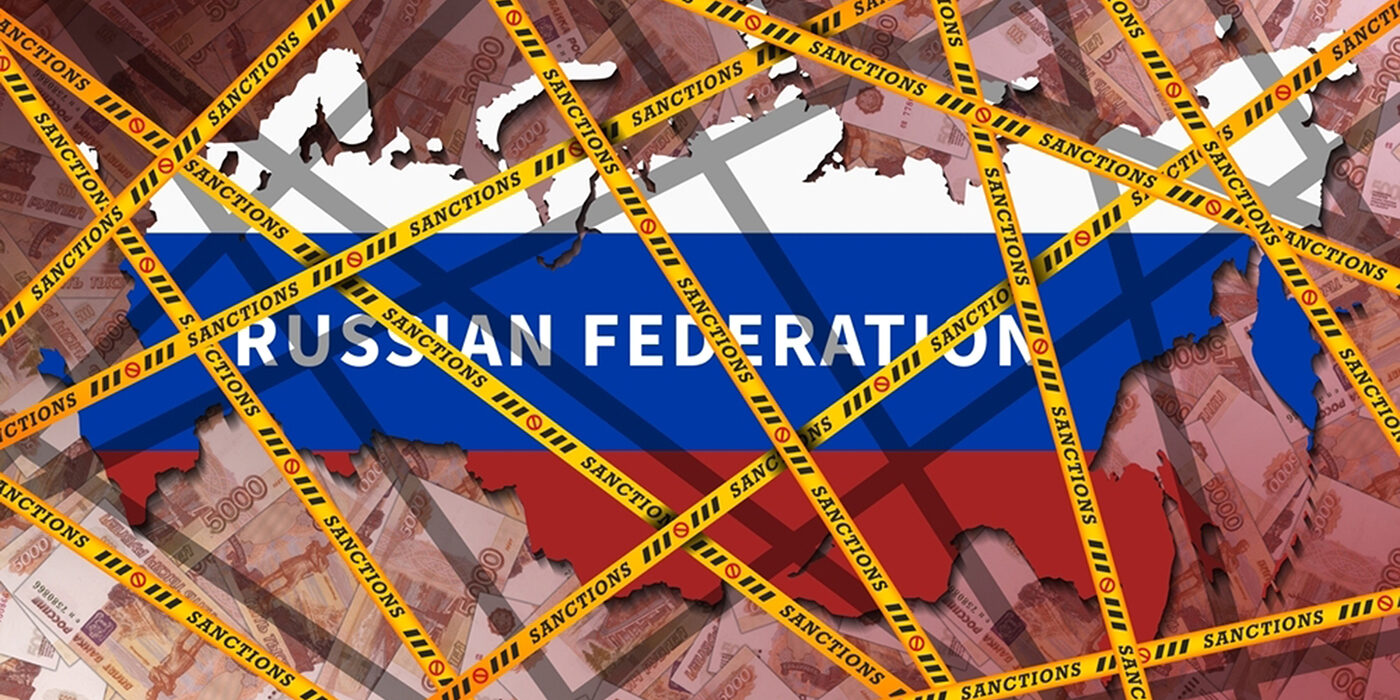
  • UK’s Sanctions Post-Brexit Regimes on Russian Financial Institutions

    UK’s Sanctions Post-Brexit Regimes on Russian Financial Institutions

    UK Sanctions Do Not Prevent Access To Justice

     In the case of  PJSC National Bank Trust and another v Mints and others [2023] EWHC 118 (Comm), the High Court held that UK sanctions in force against Russian banks did not prevent the banks from:

    • Lawfully satisfying adverse cost orders,
    • Providing security for costs, or
    • Paying any damages that might be awarded on cross-undertakings given by the Defendants.

    This judgment is important as it is one of the first to consider issues around the post-Brexit UK sanction regimes and the impact these sanctions have on litigation proceedings concerning UK asset freeze targets. In addition, Mrs Justice Cockerill also provided commentary on when an entity is considered ‘owned or controlled’ by a designated person.

    Background to the UK Sanctions Case: Russian Banks’ Challenges

    The proceedings were brought by two Russian banks for US$850 million. The Claimants, PJSC National Bank Trust (NBT) and PJSC Bank Otkritie Financial Corporation (Otkritie), argued that the Defendants, Otkritie’s former co-founder, Boris Mints, and his sons (among others) conspired with bank representatives to replace loans with worthless bonds.

    In 2019, the Claimants obtained worldwide freezing orders against the Defendants, who gave cross-undertakings in damages. The banks were ordered to fortify the cross-undertakings by providing security.

    Following Russia’s invasion of Ukraine, the UK Government imposed an asset freeze on Otkritie pursuant to the Russia (Sanctions) (EU Exit) Regulations 2019 (the UK Regulations). As a result, UK persons were prohibited from:

    • dealing with funds or economic resources owned, held or controlled by Otkritie; and/or
    • making funds or economic resources available to or for the benefit of Otkritie.

    The Defendants claimed that NBT was subject to the same asset freeze because it was owned or controlled by at least two designated persons, namely the Russian President (P) and the Governor of the Bank of Russia (N). They sought a stay of proceedings (which had begun prior to the invasion) and for the undertakings against them to be released. This was on the grounds that, any judgment for the Claimants on the causes of action they were arguing would be unlawful as they would be in breach of the sanctions. In addition, some of the interlocutory stages were subject to Treasury licensing requirements, pursuant to the powers of the Office of Financial Sanctions Implementation (OFSI) under the UK Regulations. However, OFSI could not license several standard litigation steps including the satisfaction of adverse costs orders, the provision of security for costs, or the payment of any damages on the Claimants’ cross-undertaking.

    Sanctions and Legal Impediments: Key Issues Highlighted

    The High Court had three issues to consider, namely:

    1. Would a judgment for the Claimants be in breach of sanctions?
    2. Could OFSI issue a licence in relation to the satisfaction of adverse costs orders, the provision of security for costs, or the payment of any damages on the Claimants’ cross-undertaking?
    3. Is NBT owned and controlled by a designated person and therefore subject to UK sanctions?

    The High Court’s decision

    Issue one

    The Court accepted that a cause of action is an “economic resource” because it could be used to obtain funds or financial assets and goods and services. A judgment debt could also be construed as a “fund” as it puts an obligation on a debtor to pay a sum of money.

    Despite this, the Court concluded the entry of a favourable judgment was not caught by the restriction on dealing/making available. The reasoning behind this is that it was not clear that the legislation was designed to prohibit a designated person’s fundamental right to access to justice. This was despite the breadth of the UK Regulation’s wording and Parliament’s intention to allow a certain degree of curtailment of rights.

    Issue two

    Although OFSI had no power to license the entry of judgment in favour of designated persons no such licence was actually required. However, the High Court concluded that payment of an adverse costs order was licensable under Sch.5 Pt 1 para.3 of the UK Regulations. It therefore followed that OFSI could also issue a licence to permit the payment of security for costs for the purpose of meeting adverse costs orders, to enable the future payment of reasonable professional fees for the provision of legal services.

    Regarding the damages on the cross-undertaking, the Court stated that these were not ordinary or routine costs, rather they occur only after an inquiry has been made concerning liability.

    Further it follows logically from where the argument goes elsewhere. How could OFSI refuse a licence when ex hypothesi money is to be paid to someone (a defendant) who is not sanctioned and who is, on this hypothesis, entitled to compensation pursuant to a decision of the English court. This is the more so as the diminution of a designated person’s assets, with no conceivable exchange of value or quid pro quo , would further, rather than undermine, the object and purpose of the Regulations.” para 195

    Issue three

    The definition of ‘ownership or control’ under the UK Regulations is a contentious one. The UK Regulations state that an entity is owned or controlled directly or indirectly by another person in any of the following circumstances:

    • The person holds (directly or indirectly) more than 50% of the shares or voting rights in an entity,
    • The person has the right (directly or indirectly) to appoint or remove a majority of the board of directors of the entity; or
    • it is reasonable to expect that the person would be able to ensure the affairs of the entity are conducted in accordance with the person’s wishes.

    The Claimants’ argued that the UK Regulations should not be interpreted as covering control by reason of office or employment. The Court agreed with this, stating:

    “…it does appear to me to be significant that at the drafting level the sanctions were not drafted to take aim directly at the Russian State or its main entities — despite the fact that some earlier sanctions (e.g. against Iran, did do so). It also appears significant that the drafting so far as asset freeze is concerned appears to be primarily (though not exclusively) designed to operate at a personal level…” p 238

    Mrs Justice Cockerill went on to conclude:

    “It also seems implausible that it was intended that such major entities as banks (or other major entities such as Gazprom) were intended to be sanctioned by a sidewind, in circumstances where they would have no notice of the sanction and be unable themselves to challenge the designation under section 38 of the Act [UK Regulations] .” p 241

    Future Implications of Sanctions and Access to Justice

    Although Mrs Justice Cockerill’s remarks regarding ‘ownership or control’ were Obiter (meaning they were not essential to the overall decision), her comments indicate that the Courts seem prepared to view the meaning of ‘ownership or control’ narrowly. In addition, the judgment makes clear that sanctioned people and entities should not be denied access to the Court’s justice.

    This case is currently being appealed.

    To discuss any points raised in this article, please call us on +44 (0) 203972 8469 or email us at mail@eldwicklaw.com.

    Note: The points in this article reflect sanctions in place at the time of writing, 07 September 2023. This article does not constitute legal advice. For further information, please contact our London office.

  • How Russian Sanctions May Affect Your Business

    How Russian Sanctions May Affect Your Business

    Note: The points in this article reflect sanctions in place at the time of writing, 12th April 2022. This article does not constitute legal advice. For further information, please contact our London office.

    We recently discussed the effectiveness of targeted sanctions when it comes to dealing with rogue states such as Russia and North Korea and argued that although sanctions provide the impression to voters that their government is taking affirmative action, there is little evidence they influence the inner circle of a country’s leadership. Regardless of their effectiveness, however, targeted sanctions have been used by the UK, EU, and US against Russian individuals and businesses in response to Russia’s invasion of Ukraine. Many companies have been caught up in the sanctions regime and/or want to launch new ventures in Russia. This article explains the type of sanctions in place and the risk assessments and due diligence organisations must apply before, during, and after doing business in Russia in order to protect their best interests. And although this article focuses on Russian sanctions, the information contained below applies to doing business in any sanctioned jurisdiction.

    To begin, let us look at what Russian sanctions may apply to your organisation.

    What is the scope of UK, EU, and Russian sanctions?

    UK sanctions

    UK sanctions apply to all British citizens, British overseas citizens, and any entity incorporated in the UK. They also cover any actions taken by someone in the UK (either wholly or partly) or in UK territorial waters.

    EU sanctions

    EU citizens, incorporated entities, anyone on board an aircraft or ship travelling within the jurisdiction of an EU Member State, and anyone conducting business wholly or partly within the EU is subject to EU sanctions.

    US sanctions

    Like US taxes, US sanctions can ensnare the unwary. Not only do US sanctions apply to US citizens and incorporated businesses, as well as anyone conducting business wholly or partly within US territory, under the Countering America’s Adversaries Through Sanctions Act (CAATSA) non-US citizens can also be caught by US sanctions.

    Given the wide catchment of UK, EU, and US sanctions, people and organisations doing or planning to do business in Russia and/or any other country where sanctions have been imposed need to undertake comprehensive due diligence and risk management to ensure they are fully compliant with any sanctions imposed. Non-compliance can lead to significant legal, financial, practical, and reputational implications for UK organisations. Below is a brief guide to ensuring you do not inadvertently breach not only the legal aspect of international sanctions but the spirit in which they have been applied, the latter being something that the public will neither forgive nor forget if your business is subjected to a ‘trial by social media’.

    Be mindful that the situation can change rapidly and without warning, therefore, it is vital to take experienced legal advice regarding the below guidelines.

    Check your commercial contracts

    If you have commercial contracts with people or organisations in a sanctioned country you must review the terms of the agreement to ensure the goods and services they cover do not fall within current sanctions. Never take the wording of sanctions at face value – the EU has sanctioned ‘luxury goods’ such as alcoholic spirits, sporting equipment, perfumes, handbags, and clothes. These items are defined as ‘luxury’ if their value exceeds €300, hardly an outrageous sum.

    You may wish to simply cancel any contracts that have connections with a sanctioned state, however, unless the terms of the contract allow for such a step, for example, there is a force majeure clause that permits termination in the case of sanctions, you will be in breach of contract.

    If one or more of your contracts have become uneconomical, untenable, or both, you may be able to rely on the doctrine of frustration. Frustration was defined by Lord Radcliffe in Davis Contractors Ltd v Fareham UDC [1956] AC 696 (at 729) (emphasis added)

    “frustration occurs whenever the law recognizes that without default of either party a contractual obligation has become incapable of being performed because the circumstances in which performance is called for would render it a thing radically different from that which was undertaken by the contract. Non haec in foedera veni. It was not this that I promised to do.”

    Generally speaking, the courts in England and Wales will ask the following questions to determine whether or not a contract has been frustrated:

    • Did the event occur after the contract was formed?
    • If so, does it strike at the heart of the contract and is it entirely beyond what was contemplated by the parties when the agreement was entered into?
    • Is either party at fault?
    • Does the frustrating event render further performance impossible, illegal, or transform performance into something radically different from that contemplated by the parties at the time of signing?

    Although the above questions provide a reliable guide to how the courts will evaluate whether or not the doctrine of frustration will apply, all cases will turn on their own facts.

    Undertake comprehensive due diligence and risk management exercises

    In circumstances where you or your organisation plan to launch a new venture into a territory subject to UK, EU, or US sanctions, a meticulous due diligence and risk management exercise must be completed. Factors to consider include:

    • The legal jurisdiction governing any agreements and disputes.
    • Payment terms such as late payments and letters of credit which may be considered loans and therefore prohibited by certain sanctions.
    • The ability to secure adequate insurance and onboard suppliers/distributors.
    • Including contractual terms to allow for a rapid exit, for example, a detailed force majeure clause and sanction-specific termination clauses.
    • Undertaking Know Your Customer/Business Partner checks to establish whether or not an entity is owned or controlled by a sanctioned person, or a designated person is effectively also sanctioned but does not appear on a sanctions’ list.

    Wrapping up

    Sanctions involve a complex web of domestic and international law, much of which is beyond the scope of this article. Therefore, it is imperative to check each transaction related to Russia or any other country subject to sanctions individually and seek legal advice as to you and/or your organisation’s legal position.

    Below are some websites you may find helpful:

    You can also contact the Export Support Service on 0300 303 8955.

    To discuss any points raised in this article, please call us on +44 (0) 203972 8469 or email us at mail@eldwicklaw.com.

    Written by Waleed Tahirkheli