
Tag: sanctions

  • OFSI Licence Application Guide

    OFSI Licence Application Guide

    If a person, company, or entity is subject to UK financial sanctions under the Sanctions and Anti-Money Laundering Act 2018 (SAMLA), anyone who wishes to continue business dealings with the sanctions target must obtain a licence from the Office of Financial Sanctions Implementation (OFSI). This licence will provide an exception to the prohibition on making funds or economic resources available to businesses owned, held, or controlled by a designated person or entity.

    It is important to note that OFSI grants relatively few licences and scrutinises applications rigorously. Commenting to the Law Society Gazette concerning the granting of OFSI licences to legal professionals providing advice to those on the Russian sanctions list a Treasury spokesperson stated:

    “OFSI carefully scrutinises all applications made to assess whether they fall under the relevant licensing grounds as outlined in sanctions legislation. OFSI aims to engage with applicants on the substance of completed applications for specific licences within four weeks. A completed application is one where OFSI has received all the information needed to make a decision about whether there is a legal basis to grant a licence.”

    Below is a brief guide to obtaining an OFSI licence to conduct business dealings with a sanctioned person or entity.

    What is an OFSI licence?

    At its essence, an OFSI licence is written permission to carry out functions that would otherwise be in breach of UK financial sanctions. If you are granted a licence, it is unlikely to provide a carte blanch to undertake any transaction you wish with the designated person, company, or entity. Instead, the OFSI licence will contain specific permissions and conditions that control the boundaries of your activities.

    How do I apply?

    You need to fill out an application form. This must be done correctly, incomplete forms will slow down the review process. You will need to provide information and evidence concerning:

    • How much you will be paid for your work.
    • The intended purpose of the transaction/funds.
    • The intended payment route(s).
    • Who will send and receive the funds, including any intermediaries and beneficiaries.
    • How the funds will be accounted for.
    • Evidence that the proposed payment is reasonable.
    • The urgency of the deadline relating to receiving the licence (if applicable).
    • The legal basis for your application.

    What is meant by the legal basis for an OFSI licence application?

    An OFSI licence can only be issued if there are legal grounds to do so. The grounds available under SAMLA for transactions involving a designated person, business, or entity include, but are not limited to:

    • Reasonable legal fees and expenses associated with providing legal advice.
    • The provision of basic needs such as food, shelter, and medicine.
    • Humanitarian assistance.
    • The meeting of obligations started before the sanctions were imposed.

    You will need to work with an experienced sanctions solicitor to ensure you not only reference the correct legal grounds for obtaining a licence but also provide the evidence required to prove that granting a licence is lawful and reasonable.

    A list of legal grounds is available in the schedules of the regulations setting out financial sanction targets by regime. For example, the legal grounds for licences concerning sanctions made against Iran can be found in schedule 4 of the Iran (Sanctions) (Human Rights) (EU Exit) Regulations 2019. Within the schedules, you will also find a list of prohibited transactions.

    How long does it take to get an OFSI licence?

    The OFSI aims to discuss applications with the sender within four weeks. Humanitarian applications and those involving life-threatening situations will be prioritised.

    If the OFSI decides to grant you a licence, it will share a draft copy of the document with you. The purpose of this is to check that the details are correct. It is not an opportunity to ask for substantive amendments. To ensure the licence provides the coverage you need to undertake necessary transactions with a designated person, business, or entity, it is best practice to have the draft checked by a solicitor experienced in sanction licence law.

    Wrapping up 

    Applying for an OFSI licence is far from straightforward, however, there are several things you can do to expedite the process and increase your chances of making a successful application, including:

    • Carefully study the government guidelines and the legal grounds for making your particular application.
    • Submit your application as early as possible, reviews can take longer than four weeks.
    • Do not undertake any transactions unless you have a valid licence, otherwise you risk being in breach of sanctions and could face serious penalties.
    • Provide as much evidence and information as you can in your initial application and ensure it is completed correctly.
    • Expect questions from the OFSI – they will likely need to clarify certain points.
    • Instruct an experienced solicitor to advise and represent you throughout the application process.

    To discuss any points raised in this article, then please contact the author Waleed Tahirkheli who is a partner in Civil Fraud at Eldwick Law. For more information on sanctions related topics, please follow the News page where the following articles maybe of interest to you:

  • How The Court Decides On Sanction Judicial Review Challenges

    How The Court Decides On Sanction Judicial Review Challenges

    Introduction

    The recent case of Shvidler v Secretary of State for Foreign, Commonwealth and Development Affairs [2023] EWHC 2121 (Admin) provides a helpful example as to how the High Court decides on cases where the Claimant challenges the lawfulness of a decision by the Foreign Secretary (FS) to designate a person under the Russian sanctions regime.

    The Shvidler Case Background

    The Claimant was a UKUS dual national. In 1989 he moved from the former Soviet Union to the USA. In 2004, he moved to the UK, where he settled. He had a number of very substantial business interests and was considerably wealthy.

    He had never been a Russian citizen and had not visited Russia since 2007.

    On 24 March 2022 the Claimant was designated by the FS pursuant to regulation 5 of the Russia (Sanctions) (EU Exit) Regulations 2019 (the 2019 Regulations), made under section 1 of the Sanctions and AntiMoney Laundering Act 2018 (SAMLA). The FS made the decision to designate the Claimant on the basis that there were reasonable grounds to suspect that he was an “involved person”.

    On 11 November 2022, the grounds for the Claimant’s designation were varied following a Ministerial review. The basis for his designation was as follows:

    1. There were reasonable grounds to suspect that the Claimant was associated with Mr Roman Abramovich (an associated person) who is, or has been, involved in obtaining a benefit from, or supporting, the Russian Government, and
    2. There were reasonable grounds to suspect that the Claimant himself participated in obtaining a benefit from, or supporting, the Russian Government through working as a non-executive director of Evraz plc, an entity carrying on business in sectors of strategic significance to the Kremlin.

    The designation resulted in a worldwide freezing order over all the Claimant’s assets. His children were immediately excluded from their public schools, and he had to move to the US where he relied on friends for financial maintenance. His ability to conduct business was “destroyed” and his ex-wife found it difficult to access banking facilities.

    The Claimant argued that the designation amounted to disproportionate interference in his rights under the European Convention on Human Rights (ECHR), specifically Article 8 (right to private and family life) and Protocol 1 Article 1 (right to enjoy property peacefully).

    Key Statute Laws Relevant to the Shvidler Case

    The power to make sanctions regulations is contained in section 1 of SALMA.

    Regulation 6 of the 2019 Regulations states that the Secretary of State may not designate a person unless they have reasonable grounds to suspect the person is an “involved person”.

    Involved person” is defined in Regulation 6(2) as a person who:

    1. is or has been involved in—
    • destabilising Ukraine or undermining or threatening the territorial integrity, sovereignty or independence of Ukraine, or
    • obtaining a benefit from or supporting the Russian Government,

    2. is owned or controlled directly or indirectly by a person who is or has been so involved in the above, or

    3. is acting on behalf of or at the direction of a person who is or has been so involved, or

    4. is a member of, or associated with, a person who is or has been so involved.

    Regulation 6(3) provides that a person is “involved in destabilising Ukraine or undermining or threatening the territorial integrity, sovereignty or independence of Ukraine” if

    1. the person is responsible for, engages in, provides support for, or promotes any policy or action which destabilises Ukraine or undermines or threatens the territorial integrity, sovereignty or independence of Ukraine
    2. the person provides financial services, or makes available funds, economic resources, goods or technology, that could contribute to destabilising Ukraine or undermining or threatening the territorial integrity, sovereignty or independence of Ukraine;
    3. the person provides financial services, or makes available funds, economic resources, goods or technology, to –- a person who is responsible for a policy or action which falls within sub-paragraph (a), or
      – a person who provides financial services, or makes available funds, economic resources, goods or technology, as mentioned in sub paragraph (b);
    4. the person obstructs the work of international organisations in Ukraine;
    5. the person conducts business with a separatist group in the Donbas region;
    6. the person is a relevant person trading or operating in [non-government controlled Ukrainian territory];
    7. the person assists the contravention or circumvention of a relevant provision

    The Court’s decision

    Mr Justice Garnham referred to Lord Sumption’s test for proportionality set out in the Supreme Court case of Bank Mellat v HM Treasury (No 2) [2013] UKSC 39. When answering the question of whether a measure is proportionate, the Court must consider:

    1. Whether the objective of the measure being imposed is sufficiently important to justify the limitation of a fundamental right,
    2. Is the measure rationally connected to the objective,
    3. Could a less intrusive measure have been used, and
    4. Whether, having regard to the above and the severity of the consequences, a fair balance has been struck between the rights of the individual and the interests of the community.

    In evaluating the evidence presented by both sides, Mr Justice Garnham concluded that the test in Bank Mellat was satisfied. There was no doubt that the Claimant was a long term friend and business associate of Mr Abramovich. He was appointed Vice-President for Finance and then President of Sibneft, a company owned by Mr Abramovich between 1996 and 2005.

    The Claimant was also one of Mr Abramovich’s two nominee directors on the board of Evraz, a role for which he was paid $204,000 per year in the period 2013-2021. For these reasons, both grounds for the designations were ruled to be well founded.

    A rational connection between making the Claimant a designated person and the objective of the sanction regime was also found. Mr Justice Garnham stated that the evidence reviewed by the FS when he made the decision to designate the Claimant justified the conclusion made by the FS that Mr Abramovich had a continuing relationship of trust and confidence with President Putin. Regarding the ability of the Claimant to influence Mr Abramovich, the Court stated:

    “As a matter of common experience, an individual may more readily act when it is at the request, or in the interests, of his friends and colleagues than when it is only in his own interests. In any event, the availability of a more direct means of putting pressure on Mr Abramovich does not undermine the value of additional pressure provided by the Claimant.”

    The Court rejected the Claimant’s argument that sanctions cannot be imposed for past acts, now regarded as objectionable and that he had done everything possible to withdraw from his association with the Russian Government and denounce the invasion of Ukraine. Mr Justice Garnham said that a sanctions regime is likely to be backward looking, concentrating on past behaviour that was not considered unlawful at the time.

    Furthermore, the 2019 Regulations refer expressly to past conduct as providing the ground for designation. To be effective, sanctions need to send messages to the designated person, and others in a similar position, that the conduct in question is unacceptable.

    On the issue of whether or not alternative measures could have been applied to the Claimant, Mr Justice Garnham deferred to the FS, stating that “the relative benefits, disadvantages and effectiveness of different measures taken in pursuit of foreign policy objectives is not one on which the Court can second-guess the Foreign Office.”

    Finally, in considering whether a fair balance had been struck, the Court concluded that the FS had had full regard of the impact sanctions would have on the Claimant and his family. Although they suffered economic loss and inconvenience, neither their life nor freedom was threatened. In addition, the Claimant had not been permanently deprived of his property. The deprivation was only for as long as he remained a designated person.

    The Judicial Review was therefore dismissed. The Claimant has said he will appeal the decision.

    Comments on Judicial Review Applications

    This case highlights the high hurdles a Claimant must jump to succeed in a Judicial Review application concerning the Russian sanctions regime. Mr Justice Garnham concluded that the Court could review the reasonableness of the Secretary of State’s analysis in deciding to make someone a designated person; however, it is clear that any unreasonableness or disproportionality would not be something the Courts would readily find.

    Given the difficulty of succeeding in a Judicial Review challenge in sanctions cases, it is vital to instruct a legal team that has experience in this area of law.

    To discuss any points raised in this article, please call us on +44 (0) 203972 8469 or email us at mail@eldwicklaw.com.

    Note: The points in this article reflect sanctions in place at the time of writing, 12 October 2023. This article does not constitute legal advice. For further information, please contact our London office.

  • UK’s Sanctions Post-Brexit Regimes on Russian Financial Institutions

    UK’s Sanctions Post-Brexit Regimes on Russian Financial Institutions

    UK Sanctions Do Not Prevent Access To Justice

     In the case of  PJSC National Bank Trust and another v Mints and others [2023] EWHC 118 (Comm), the High Court held that UK sanctions in force against Russian banks did not prevent the banks from:

    • Lawfully satisfying adverse cost orders,
    • Providing security for costs, or
    • Paying any damages that might be awarded on cross-undertakings given by the Defendants.

    This judgment is important as it is one of the first to consider issues around the post-Brexit UK sanction regimes and the impact these sanctions have on litigation proceedings concerning UK asset freeze targets. In addition, Mrs Justice Cockerill also provided commentary on when an entity is considered ‘owned or controlled’ by a designated person.

    Background to the UK Sanctions Case: Russian Banks’ Challenges

    The proceedings were brought by two Russian banks for US$850 million. The Claimants, PJSC National Bank Trust (NBT) and PJSC Bank Otkritie Financial Corporation (Otkritie), argued that the Defendants, Otkritie’s former co-founder, Boris Mints, and his sons (among others) conspired with bank representatives to replace loans with worthless bonds.

    In 2019, the Claimants obtained worldwide freezing orders against the Defendants, who gave cross-undertakings in damages. The banks were ordered to fortify the cross-undertakings by providing security.

    Following Russia’s invasion of Ukraine, the UK Government imposed an asset freeze on Otkritie pursuant to the Russia (Sanctions) (EU Exit) Regulations 2019 (the UK Regulations). As a result, UK persons were prohibited from:

    • dealing with funds or economic resources owned, held or controlled by Otkritie; and/or
    • making funds or economic resources available to or for the benefit of Otkritie.

    The Defendants claimed that NBT was subject to the same asset freeze because it was owned or controlled by at least two designated persons, namely the Russian President (P) and the Governor of the Bank of Russia (N). They sought a stay of proceedings (which had begun prior to the invasion) and for the undertakings against them to be released. This was on the grounds that, any judgment for the Claimants on the causes of action they were arguing would be unlawful as they would be in breach of the sanctions. In addition, some of the interlocutory stages were subject to Treasury licensing requirements, pursuant to the powers of the Office of Financial Sanctions Implementation (OFSI) under the UK Regulations. However, OFSI could not license several standard litigation steps including the satisfaction of adverse costs orders, the provision of security for costs, or the payment of any damages on the Claimants’ cross-undertaking.

    Sanctions and Legal Impediments: Key Issues Highlighted

    The High Court had three issues to consider, namely:

    1. Would a judgment for the Claimants be in breach of sanctions?
    2. Could OFSI issue a licence in relation to the satisfaction of adverse costs orders, the provision of security for costs, or the payment of any damages on the Claimants’ cross-undertaking?
    3. Is NBT owned and controlled by a designated person and therefore subject to UK sanctions?

    The High Court’s decision

    Issue one

    The Court accepted that a cause of action is an “economic resource” because it could be used to obtain funds or financial assets and goods and services. A judgment debt could also be construed as a “fund” as it puts an obligation on a debtor to pay a sum of money.

    Despite this, the Court concluded the entry of a favourable judgment was not caught by the restriction on dealing/making available. The reasoning behind this is that it was not clear that the legislation was designed to prohibit a designated person’s fundamental right to access to justice. This was despite the breadth of the UK Regulation’s wording and Parliament’s intention to allow a certain degree of curtailment of rights.

    Issue two

    Although OFSI had no power to license the entry of judgment in favour of designated persons no such licence was actually required. However, the High Court concluded that payment of an adverse costs order was licensable under Sch.5 Pt 1 para.3 of the UK Regulations. It therefore followed that OFSI could also issue a licence to permit the payment of security for costs for the purpose of meeting adverse costs orders, to enable the future payment of reasonable professional fees for the provision of legal services.

    Regarding the damages on the cross-undertaking, the Court stated that these were not ordinary or routine costs, rather they occur only after an inquiry has been made concerning liability.

    Further it follows logically from where the argument goes elsewhere. How could OFSI refuse a licence when ex hypothesi money is to be paid to someone (a defendant) who is not sanctioned and who is, on this hypothesis, entitled to compensation pursuant to a decision of the English court. This is the more so as the diminution of a designated person’s assets, with no conceivable exchange of value or quid pro quo , would further, rather than undermine, the object and purpose of the Regulations.” para 195

    Issue three

    The definition of ‘ownership or control’ under the UK Regulations is a contentious one. The UK Regulations state that an entity is owned or controlled directly or indirectly by another person in any of the following circumstances:

    • The person holds (directly or indirectly) more than 50% of the shares or voting rights in an entity,
    • The person has the right (directly or indirectly) to appoint or remove a majority of the board of directors of the entity; or
    • it is reasonable to expect that the person would be able to ensure the affairs of the entity are conducted in accordance with the person’s wishes.

    The Claimants’ argued that the UK Regulations should not be interpreted as covering control by reason of office or employment. The Court agreed with this, stating:

    “…it does appear to me to be significant that at the drafting level the sanctions were not drafted to take aim directly at the Russian State or its main entities — despite the fact that some earlier sanctions (e.g. against Iran, did do so). It also appears significant that the drafting so far as asset freeze is concerned appears to be primarily (though not exclusively) designed to operate at a personal level…” p 238

    Mrs Justice Cockerill went on to conclude:

    “It also seems implausible that it was intended that such major entities as banks (or other major entities such as Gazprom) were intended to be sanctioned by a sidewind, in circumstances where they would have no notice of the sanction and be unable themselves to challenge the designation under section 38 of the Act [UK Regulations] .” p 241

    Future Implications of Sanctions and Access to Justice

    Although Mrs Justice Cockerill’s remarks regarding ‘ownership or control’ were Obiter (meaning they were not essential to the overall decision), her comments indicate that the Courts seem prepared to view the meaning of ‘ownership or control’ narrowly. In addition, the judgment makes clear that sanctioned people and entities should not be denied access to the Court’s justice.

    This case is currently being appealed.

    To discuss any points raised in this article, please call us on +44 (0) 203972 8469 or email us at mail@eldwicklaw.com.

    Note: The points in this article reflect sanctions in place at the time of writing, 07 September 2023. This article does not constitute legal advice. For further information, please contact our London office.

  • Freezing Orders: Russian Oligarch Gets A Second Chance

    Freezing Orders: Russian Oligarch Gets A Second Chance

    People planning to contest account freezing orders (AFOs) will welcome the recent High Court decision in National Crime Agency v Westminster Magistrates Court, 2022 EWHC 2631 Admin where Justice Rowena Collins Rice upheld a challenge by Ingliston Management Ltd (IML) and Lodge Security Team Ltd (LST), who managed the UK personal finances of a Russian oligarch, Petr Aven, whose British assets were frozen in February 2022. Mr Aven is alleged to be close to President Vladimir Putin.

    Background to the High Court decision

    Shortly before sanctions were imposed on Mr Aven, the National Crime Agency (NCA) was informed by several banks to an ‘unusual’ pattern of activity” in nine UK bank accounts held by six persons and companies connected to Mr Aven. The HSBC accounts of IML and LST were among them. The NCA obtained, on a without-notice basis, freezing orders in relation to all nine accounts, and then a search warrant, and began further investigations.

    IML and LST applied to the court to have the AFOs set aside. The District Court Judge declined to do this, however, the freezing orders were varied to allow for personal expenditure to be paid from the accounts.

    The two companies proceeded with a judicial review challenging the lawfulness of refusal to set the orders aside. The NCA brought its own challenge against the lawfulness of the decision to vary them.

    The applicable law on account freezing orders

    To assist with understanding why the High Court criticised the District Court Judge’s decision to refuse to set the AFO aside, it is useful to set out, in non-technical terms, the applicable law that both courts had to consider.

    The Proceeds of Crime Act 2002 (POCA) sets out a complex regime which allows for prosecutors to confiscate any assets purchased with the proceeds from criminal activity.

    Under section 303Z1, the NCA can apply to a Magistrates’ Court for an AFO ‘if an enforcement officer has reasonable grounds for suspecting that money held in an account maintained with a relevant financial institution (a) is recoverable property’ – that is, in effect, the proceeds of crime – ‘or (b) is intended by any person for use in unlawful conduct’. This is referred to as the threshold question.

    An AFO prevents withdrawals and payments being made from the account.

    By subsection (4) of section 303Z1, an application for an AFO may be made without notice (ex-parte) ‘if the circumstances of the case are such that notice of the application would prejudice the taking of any steps under this Chapter to forfeit money…’.

    Section 303Z4 of the Proceeds of Crime Act 2002 (POCA) empowers a court at any time to set aside or vary an AFO. Section 303Z5 provides the court can, when exercising its power under section 303Z47, make exclusions from the prohibition on making withdrawals or payments from the frozen account. Exclusions ‘may (amongst other things) make provision for the purpose of enabling a person by or for whom an account is operated (a) to meet the person’s reasonable living expenses, or (b) to carry on any trade, business, profession or occupation’. This amounts to a variation of the AFO.

    Exclusions can be made subject to conditions. By subsection (8), the power to make exclusions must be exercised: with a view to ensuring, so far as practicable, that there is not undue prejudice to the taking of any steps under this Chapter to forfeit money that is recoverable property or intended by any person for use in unlawful conduct.

    The Russia (Sanctions) (EU Exit) Regulations 2019, regulation 11 provides for an ‘asset-freeze’ in relation to persons designated for the purpose of attracting financial restrictions. It makes it a criminal offence for anyone to ‘deal with funds or economic resources owned, held or controlled by a designated person’ if they know or have reasonable grounds to suspect that they are doing so.

    The High Court decision in National Crime Agency v Westminster Magistrates Court

    IML and LST argued that the NCA’s without notice application when applying for the AFO had been ‘muddled, misleading and inadequate.’ Furthermore, the NCA had failed in its duty of candour and the Magistrates’ Court would probably have refused the without notice AFO if they had been made aware of the true facts.

    In making his decision not to set aside the AFO, the District Court Judge drew an analogy between the AFO provisions and statutory regimes under the Sexual Offences Act 2003 and Civil Procedure Rule 3.1(7). This led him to conclude that for an AFO to be set aside, a change of circumstances must be present. The High Court rejected this, commenting that it read into the POCA a non-existent restriction on the court’s powers.

    Justice Rowena Collins Rice stated that when deciding whether or not to set aside an AFO, the court must consider the threshold questions (see above). However, she ruled that this was not the case when considering an application for variation. Instead, the provisions in Section 303Z5 (see above) should be deliberated. She went on to say that the District Court Judge made a “clear error of law” in deciding to vary but not set aside restrictions on the company accounts. The High Court Judge considered “the errors and omissions . . .. to be fundamental to the extent of making [the decision] wrong, unfair, and excessively speculative.” She said the case “needs to be considered afresh, and the decision taken properly.”

    Comment on freezing orders

    This case illustrates how difficult it is for the NCA to proactively enforce sanctions. It is worth reminding you, dear reader, freezing orders are considered the law’s ‘nuclear weapon’ and the judiciary is exceptionally sensitive to any laxity in the application for an AFO and will meticulously consider setting aside and varying applications. For example, when commenting on the court’s obligations under section 303Z5 and in particular, subsection (8), Justice Rowena Collins Rice observed:

    “These tests again require close attention to the factual matrix and an evaluative decision to be taken in all the circumstances, including giving careful attention to the scheme of the Act. What constitutes someone’s reasonable living expenses? What, apart from the absence of a variation order, is stopping the person being enabled to meet those expenses? What would be the prejudicial effect of making exclusions on the taking of taking further steps towards forfeiture? And if there is a prejudicial effect, does the court assess it to be undue, and if so why?”

    It is also important to note that the fact an applicant for a setting aside order has been sanctioned does not change the court’s approach. Instead, the circumstances surrounding the sanction will provide further information for the court to consider. For example, as an alternative to the often costly and complex AFO setting aside application, a more straightforward OFSI licence covering assets not subject to the AFO may provide a better solution.

    What matters most is that if you are subject to an AFO or UK, EU, or US sanctions you must instruct an experienced solicitor to advise you. Not only will they be alive to NCA tactics, but they can also develop a strategy that has the best chance of lifting an AFO and/or sanctions and protecting your personal and professional reputation.

  • How Russian Sanctions May Affect Your Business

    How Russian Sanctions May Affect Your Business

    Note: The points in this article reflect sanctions in place at the time of writing, 12th April 2022. This article does not constitute legal advice. For further information, please contact our London office.

    We recently discussed the effectiveness of targeted sanctions when it comes to dealing with rogue states such as Russia and North Korea and argued that although sanctions provide the impression to voters that their government is taking affirmative action, there is little evidence they influence the inner circle of a country’s leadership. Regardless of their effectiveness, however, targeted sanctions have been used by the UK, EU, and US against Russian individuals and businesses in response to Russia’s invasion of Ukraine. Many companies have been caught up in the sanctions regime and/or want to launch new ventures in Russia. This article explains the type of sanctions in place and the risk assessments and due diligence organisations must apply before, during, and after doing business in Russia in order to protect their best interests. And although this article focuses on Russian sanctions, the information contained below applies to doing business in any sanctioned jurisdiction.

    To begin, let us look at what Russian sanctions may apply to your organisation.

    What is the scope of UK, EU, and Russian sanctions?

    UK sanctions

    UK sanctions apply to all British citizens, British overseas citizens, and any entity incorporated in the UK. They also cover any actions taken by someone in the UK (either wholly or partly) or in UK territorial waters.

    EU sanctions

    EU citizens, incorporated entities, anyone on board an aircraft or ship travelling within the jurisdiction of an EU Member State, and anyone conducting business wholly or partly within the EU is subject to EU sanctions.

    US sanctions

    Like US taxes, US sanctions can ensnare the unwary. Not only do US sanctions apply to US citizens and incorporated businesses, as well as anyone conducting business wholly or partly within US territory, under the Countering America’s Adversaries Through Sanctions Act (CAATSA) non-US citizens can also be caught by US sanctions.

    Given the wide catchment of UK, EU, and US sanctions, people and organisations doing or planning to do business in Russia and/or any other country where sanctions have been imposed need to undertake comprehensive due diligence and risk management to ensure they are fully compliant with any sanctions imposed. Non-compliance can lead to significant legal, financial, practical, and reputational implications for UK organisations. Below is a brief guide to ensuring you do not inadvertently breach not only the legal aspect of international sanctions but the spirit in which they have been applied, the latter being something that the public will neither forgive nor forget if your business is subjected to a ‘trial by social media’.

    Be mindful that the situation can change rapidly and without warning, therefore, it is vital to take experienced legal advice regarding the below guidelines.

    Check your commercial contracts

    If you have commercial contracts with people or organisations in a sanctioned country you must review the terms of the agreement to ensure the goods and services they cover do not fall within current sanctions. Never take the wording of sanctions at face value – the EU has sanctioned ‘luxury goods’ such as alcoholic spirits, sporting equipment, perfumes, handbags, and clothes. These items are defined as ‘luxury’ if their value exceeds €300, hardly an outrageous sum.

    You may wish to simply cancel any contracts that have connections with a sanctioned state, however, unless the terms of the contract allow for such a step, for example, there is a force majeure clause that permits termination in the case of sanctions, you will be in breach of contract.

    If one or more of your contracts have become uneconomical, untenable, or both, you may be able to rely on the doctrine of frustration. Frustration was defined by Lord Radcliffe in Davis Contractors Ltd v Fareham UDC [1956] AC 696 (at 729) (emphasis added)

    “frustration occurs whenever the law recognizes that without default of either party a contractual obligation has become incapable of being performed because the circumstances in which performance is called for would render it a thing radically different from that which was undertaken by the contract. Non haec in foedera veni. It was not this that I promised to do.”

    Generally speaking, the courts in England and Wales will ask the following questions to determine whether or not a contract has been frustrated:

    • Did the event occur after the contract was formed?
    • If so, does it strike at the heart of the contract and is it entirely beyond what was contemplated by the parties when the agreement was entered into?
    • Is either party at fault?
    • Does the frustrating event render further performance impossible, illegal, or transform performance into something radically different from that contemplated by the parties at the time of signing?

    Although the above questions provide a reliable guide to how the courts will evaluate whether or not the doctrine of frustration will apply, all cases will turn on their own facts.

    Undertake comprehensive due diligence and risk management exercises

    In circumstances where you or your organisation plan to launch a new venture into a territory subject to UK, EU, or US sanctions, a meticulous due diligence and risk management exercise must be completed. Factors to consider include:

    • The legal jurisdiction governing any agreements and disputes.
    • Payment terms such as late payments and letters of credit which may be considered loans and therefore prohibited by certain sanctions.
    • The ability to secure adequate insurance and onboard suppliers/distributors.
    • Including contractual terms to allow for a rapid exit, for example, a detailed force majeure clause and sanction-specific termination clauses.
    • Undertaking Know Your Customer/Business Partner checks to establish whether or not an entity is owned or controlled by a sanctioned person, or a designated person is effectively also sanctioned but does not appear on a sanctions’ list.

    Wrapping up

    Sanctions involve a complex web of domestic and international law, much of which is beyond the scope of this article. Therefore, it is imperative to check each transaction related to Russia or any other country subject to sanctions individually and seek legal advice as to you and/or your organisation’s legal position.

    Below are some websites you may find helpful:

    You can also contact the Export Support Service on 0300 303 8955.

    To discuss any points raised in this article, please call us on +44 (0) 203972 8469 or email us at mail@eldwicklaw.com.

    Written by Waleed Tahirkheli

  • Are Targeted Sanctions Effective In Dealing With Rogue States?

    Are Targeted Sanctions Effective In Dealing With Rogue States?

    As the war in Ukraine continues, sanctions imposed by Western governments and the impact of hundreds of companies pulling out of the country are starting to negatively affect the daily life of the Russian people. Prices are increasing, shortages are being reported, and the rouble has plummeted.

    Never before has such a large, modern economy been cut off from most of the world so swiftly. Unfortunately, there is ample proof that state and even UN sanctions are not effective in coercing a government deemed to be breaking international law to change its behaviour. What sanctions are extremely good at achieving is punishing innocent civilians. The horror placed upon ordinary Iraqi people following crippling sanctions in response to Saddam Hussain’s invasion of Kuwait in 2003 led to sanctions being focused more on individuals and companies rather than the misbehaving state itself. These are known as smart or targeted sanctions and they are also being used by Western governments, including the UK, to punish Russia. Evidence shows, however, that targeted sanctions also achieve little in relation to dealing with rogue states. Worse still, innocent people can become caught up in freezing orders and other sanction tactics whilst the individuals targeted often use their wealth and power to avoid most of the negative consequences.

    Before looking at the details of the sanctions imposed by the British Government on Russia, it is useful to define what sanctions actually are.

    What are sanctions?

    Sanctions are a range of measures put in place by individual governments, regional groups (for example the European Union or the African Union) or the United Nations to achieve one or more of the following:

    • Prevent escalation of or settle conflicts.
    • Curtail nuclear proliferation.
    • Deal with terrorism and human rights violations.

    Types of sanctions include:

    • Economic – impose commercial and financial penalties, for example levying import duties and/or blocking exports of certain goods.
    • Diplomatic – reducing or recalling diplomats or cancelling high-profile international meetings.
    • Sport – preventing the sanctioned country’s athletes from competing in international events.
    • Targeted/smart sanctions – imposes travel bans and asset freezing orders on individuals, companies, or other entities such as terrorist organisations.
    • Military sanctions – these are used as a last resort and can involve targeted military strikes and arms embargoes.

    Russians affected by UK sanctions following the invasion of Ukraine

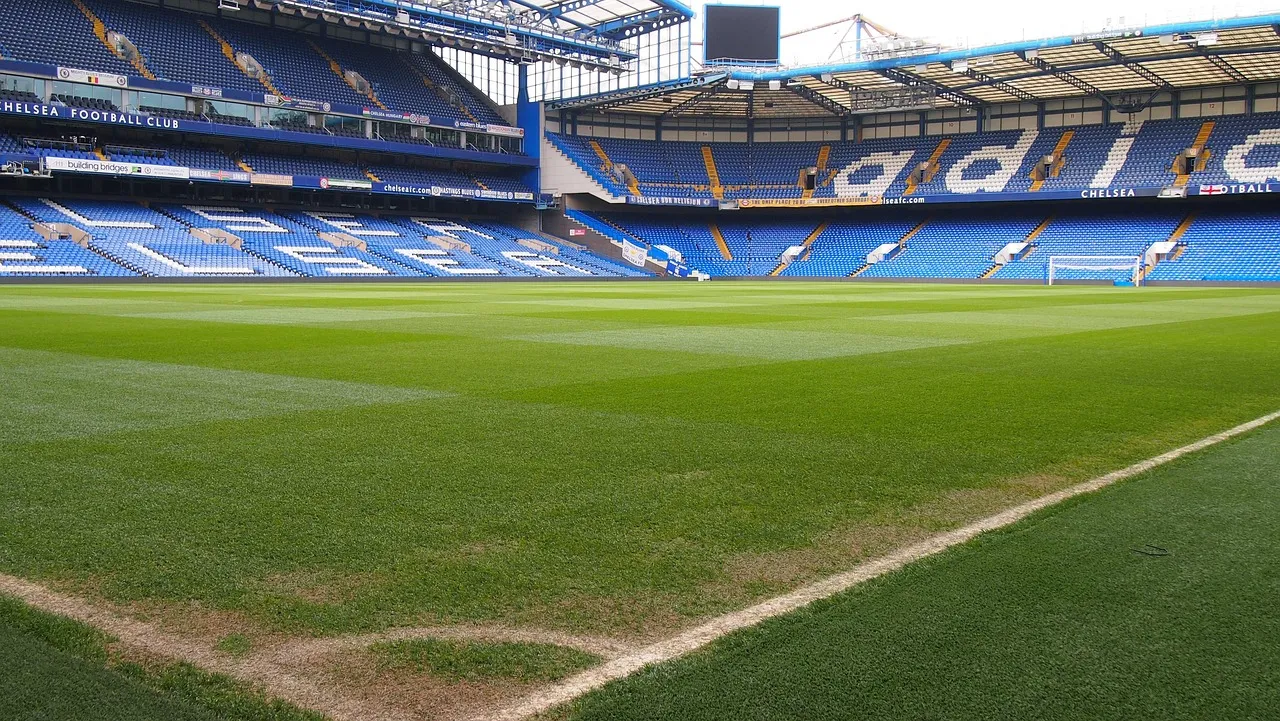
    The UK has long been criticised for turning a blind eye to international money laundering within its territories. Many Russian oligarchs have invested heavily in UK luxury homes, businesses, and even football clubs. Following the invasion of Ukraine, the UK, alongside the EU and US, imposed sanctions on hundreds of members of the Russian regime, including wealthy Russian oligarchs such as Chelsea FC owner Roman Abramovich and ex-Arsenal shareholder, Alisher Usmanov as well as others who are considered to be close to the Kremlin, for example, former Russian president Dmitry Medvedev and Defence Minister Sergei Shoigu, plus a further 386 members of the Russian parliament.

    The problem with imposing targeted sanctions on Russian oligarchs

    Countries such as the US have had sanctions in place against many Russian billionaires since the annexation of Crimea in 2014. These appeared to do nothing to deter President Vladimir Putin from a full-scale invasion of Ukraine eight years later. This may be because despite being once close to the Kremlin, most of the recognised oligarchs now seem to have little influence, or even contact with President Putin and his inner circle.

    In 2000, at a meeting with 21 business tycoons, President Putin made himself abundantly clear regarding his attitude to the oligarchs – they could remain in business but they were to stay out of politics. And he backed this up with action – Mikhail Khodorkovsky, once Russia’s richest man as head of oil giant Yukos and a fierce critic of the President, spent 10 years in prison for tax evasion and theft after funding opposition parties.

    With Mr Khodorkovsky’s fate still fresh in their minds, almost all oligarchs now stay well clear of politics. Although some have condemned the war, none have directly criticised President Putin. Mikhail Fridman told Bloomberg that “to say anything to Putin against the war, for anybody, would be kind of suicide.”

    It seems, therefore, that although imposing sanctions on the business and personal interests of oligarchs may appease the public by giving the impression that those who made billions out of the collapse of the USSR are finally being penalised, in reality, they no longer have any ability to influence the Kremlin’s actions. And even if they did, a 2019 paper concerning the effectiveness of targeted business sanctions concluded:

    “Through empirical analysis, significant evidence was found in support of the hypothesis that targeting military interests will result in more successful outcomes than targeting other interest groups or comprehensive sanctions. Evidence regarding the targeting of business interests presented a far less compelling case of this line of sanctioning’s efficacy relative to comprehensive sanctions.”

    Final words

    Although more research is required to judge the effectiveness of smart sanctions, the initial evidence does not appear promising. Furthermore, smart sanctions are even less likely to achieve the aim of the government or group that imposes them if they are not targeting people and/or business interests that can actually influence the rogue state’s leadership. I will leave the final word to Mohamed ElBaradei, an Egyptian law scholar and diplomat, former Director-General of the International Atomic Energy Agency, and Nobel Peace Prize recipient:

    “People talk about smart sanctions and crippling sanctions. I’ve never seen smart sanctions, and crippling sanctions cripple everyone, including innocent civilians, and make the government more popular.”

    Written by Waleed Tahirkheli

    To discuss any points raised in this article, please call us on +44 (0) 203972 8469 or email us at mail@eldwicklaw.com.