Note: The points in this article reflect sanctions in place at the time of writing, 12th April 2022. This article does not constitute legal advice. For further information, please contact our London office.
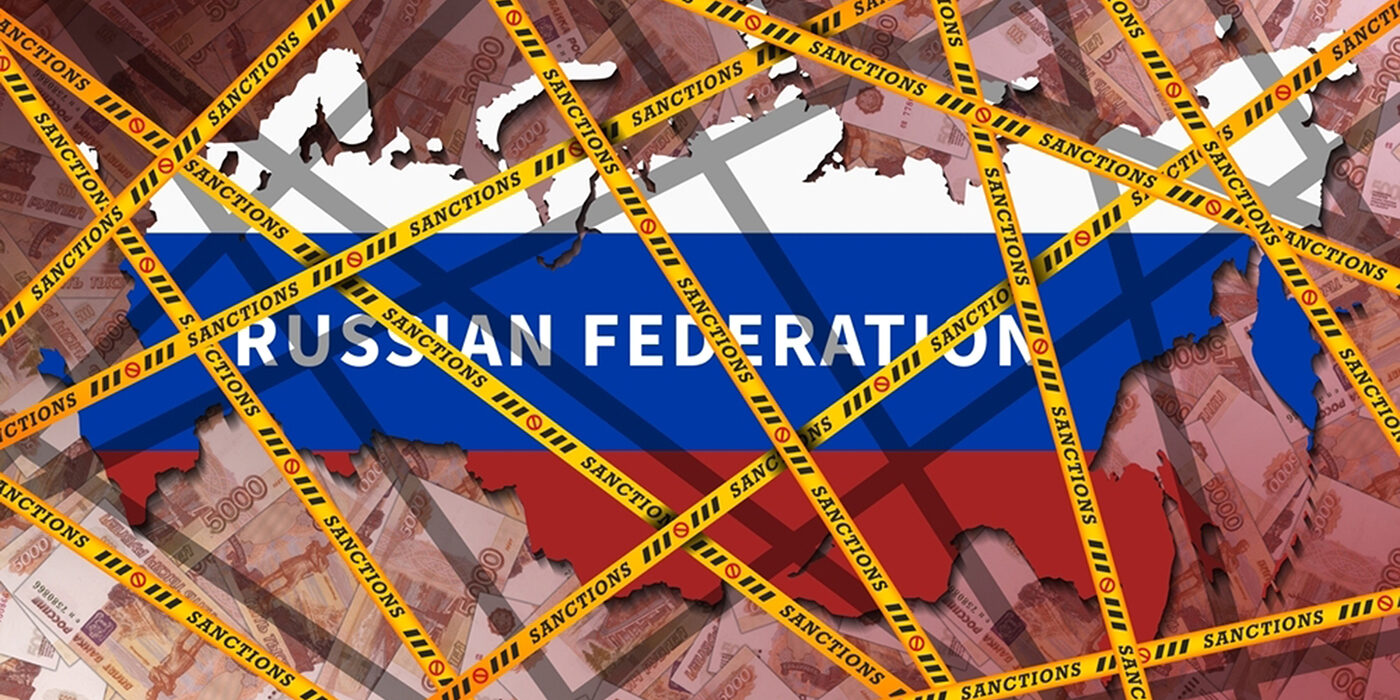
We recently discussed the effectiveness of targeted sanctions when it comes to dealing with rogue states such as Russia and North Korea and argued that although sanctions provide the impression to voters that their government is taking affirmative action, there is little evidence they influence the inner circle of a country’s leadership. Regardless of their effectiveness, however, targeted sanctions have been used by the UK, EU, and US against Russian individuals and businesses in response to Russia’s invasion of Ukraine. Many companies have been caught up in the sanctions regime and/or want to launch new ventures in Russia. This article explains the type of sanctions in place and the risk assessments and due diligence organisations must apply before, during, and after doing business in Russia in order to protect their best interests. And although this article focuses on Russian sanctions, the information contained below applies to doing business in any sanctioned jurisdiction.
To begin, let us look at what Russian sanctions may apply to your organisation.
What is the scope of UK, EU, and Russian sanctions?
UK sanctions
UK sanctions apply to all British citizens, British overseas citizens, and any entity incorporated in the UK. They also cover any actions taken by someone in the UK (either wholly or partly) or in UK territorial waters.
EU sanctions
EU citizens, incorporated entities, anyone on board an aircraft or ship travelling within the jurisdiction of an EU Member State, and anyone conducting business wholly or partly within the EU is subject to EU sanctions.
US sanctions
Like US taxes, US sanctions can ensnare the unwary. Not only do US sanctions apply to US citizens and incorporated businesses, as well as anyone conducting business wholly or partly within US territory, under the Countering America’s Adversaries Through Sanctions Act (CAATSA) non-US citizens can also be caught by US sanctions.
Given the wide catchment of UK, EU, and US sanctions, people and organisations doing or planning to do business in Russia and/or any other country where sanctions have been imposed need to undertake comprehensive due diligence and risk management to ensure they are fully compliant with any sanctions imposed. Non-compliance can lead to significant legal, financial, practical, and reputational implications for UK organisations. Below is a brief guide to ensuring you do not inadvertently breach not only the legal aspect of international sanctions but the spirit in which they have been applied, the latter being something that the public will neither forgive nor forget if your business is subjected to a ‘trial by social media’.
Be mindful that the situation can change rapidly and without warning, therefore, it is vital to take experienced legal advice regarding the below guidelines.
Check your commercial contracts
If you have commercial contracts with people or organisations in a sanctioned country you must review the terms of the agreement to ensure the goods and services they cover do not fall within current sanctions. Never take the wording of sanctions at face value – the EU has sanctioned ‘luxury goods’ such as alcoholic spirits, sporting equipment, perfumes, handbags, and clothes. These items are defined as ‘luxury’ if their value exceeds €300, hardly an outrageous sum.
You may wish to simply cancel any contracts that have connections with a sanctioned state, however, unless the terms of the contract allow for such a step, for example, there is a force majeure clause that permits termination in the case of sanctions, you will be in breach of contract.
If one or more of your contracts have become uneconomical, untenable, or both, you may be able to rely on the doctrine of frustration. Frustration was defined by Lord Radcliffe in Davis Contractors Ltd v Fareham UDC [1956] AC 696 (at 729) (emphasis added)
“frustration occurs whenever the law recognizes that without default of either party a contractual obligation has become incapable of being performed because the circumstances in which performance is called for would render it a thing radically different from that which was undertaken by the contract. Non haec in foedera veni. It was not this that I promised to do.”
Generally speaking, the courts in England and Wales will ask the following questions to determine whether or not a contract has been frustrated:
- Did the event occur after the contract was formed?
- If so, does it strike at the heart of the contract and is it entirely beyond what was contemplated by the parties when the agreement was entered into?
- Is either party at fault?
- Does the frustrating event render further performance impossible, illegal, or transform performance into something radically different from that contemplated by the parties at the time of signing?
Although the above questions provide a reliable guide to how the courts will evaluate whether or not the doctrine of frustration will apply, all cases will turn on their own facts.
Undertake comprehensive due diligence and risk management exercises
In circumstances where you or your organisation plan to launch a new venture into a territory subject to UK, EU, or US sanctions, a meticulous due diligence and risk management exercise must be completed. Factors to consider include:
- The legal jurisdiction governing any agreements and disputes.
- Payment terms such as late payments and letters of credit which may be considered loans and therefore prohibited by certain sanctions.
- The ability to secure adequate insurance and onboard suppliers/distributors.
- Including contractual terms to allow for a rapid exit, for example, a detailed force majeure clause and sanction-specific termination clauses.
- Undertaking Know Your Customer/Business Partner checks to establish whether or not an entity is owned or controlled by a sanctioned person, or a designated person is effectively also sanctioned but does not appear on a sanctions’ list.
Wrapping up
Sanctions involve a complex web of domestic and international law, much of which is beyond the scope of this article. Therefore, it is imperative to check each transaction related to Russia or any other country subject to sanctions individually and seek legal advice as to you and/or your organisation’s legal position.
Below are some websites you may find helpful:
- Russia sanctions: guidance
- Trade restrictions on exports
- Import controls
- Office of Financial Sanctions Implementation
- Subscribe to the Office of Financial Sanctions Implementation’s e-alerts
You can also contact the Export Support Service on 0300 303 8955.
To discuss any points raised in this article, please call us on +44 (0) 203972 8469 or email us at mail@eldwicklaw.com.
Written by Waleed Tahirkheli