Tag: White Collar Crime

  • EncroChat : How  France’s Supreme Court Decision affects the UK

    EncroChat : How France’s Supreme Court Decision affects the UK

    11 October 2022 – French Criminal Division of the Court of Cassation provided a landmark ruling on evidence from hacked EncroChat.
    It could affect hundreds of criminal investigations, prosecutions, and investigations in the UK.

    “If you have any questions regarding this article or require any advice relating to this article, please contact Eldwick’s Senior Partner, Mohammed Sarwar Khan who has developed a specialist practice in Encrochat

    The Court found that French investigators and prosecutors had failed to supply a certificate to authenticate intercepted phone data obtained from EncroChat phones as required by French law. It was also held that French police did not disclose, on the grounds of defence secrecy, how Dutch and French authorities undertook the hacking operation on EncroChat in which 120 million messages from more than 30,000 EncroChat phone users were recovered.

    The French decision has enormous implications for those in the UK who have been convicted or are currently being prosecuted or investigated because of information gained from the EncroChat hack. The general consensus is that if the evidence obtained through the hack is unlawful in France, then the UK courts are likely to reach a similar conclusion. This opinion is backed up by the fact that both Germany and Ireland have respectively suspended/ chosen not to use evidence obtained from EncroChat.

    What is EncroChat?

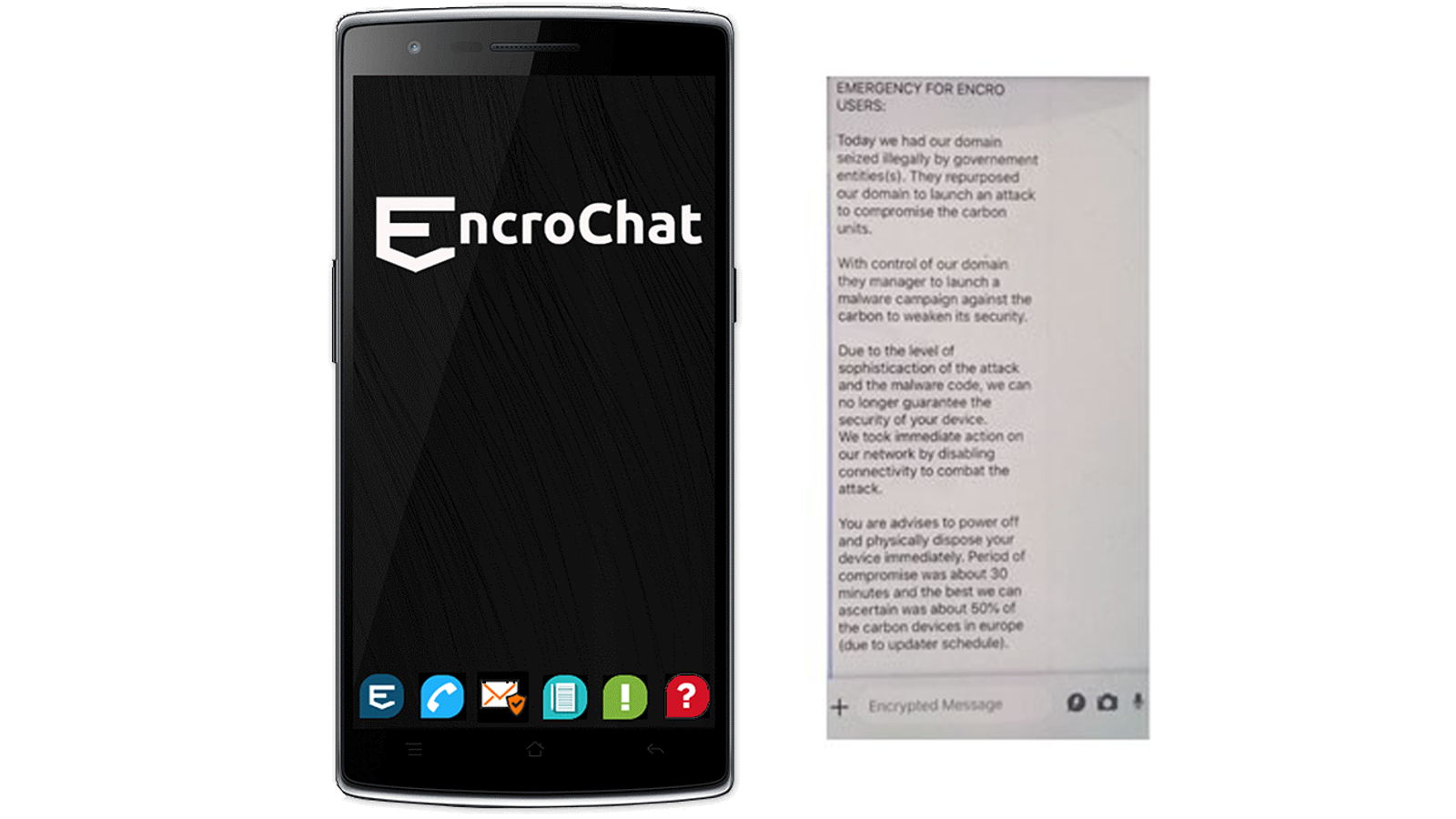
    EncroChat was a European communication network and service provider which allowed users who installed the software on their Android phones to make encrypted calls, send encrypted messages, and author encrypted notes. EncroChat software also provided a ‘panic’ button that when pressed would immediately erase the phone’s contents. A self-destruct function was also available.

    This all sounds very James Bondish and to an extent it is. EncroChat provided the seemingly secure communication platform that previous solutions such as burner phones and Pretty Good Privacy’ (PGP) could no longer give.

    It must be emphasised that EncroChat was not used exclusively by those involved in criminal activity. The encryption and panic button features proved useful for those engaging in infidelity or for people who, for lawful reasons, wanted to ensure secure communications.

    The French and Dutch hacking operation successfully blew EncroChat’s security apart. The question ever since has been “can the evidence obtained from the hacked data be challenged as unlawful”?

    Can Encrochat intercepted communications be relied on in UK criminal cases?

    Section 56(1) of the Investigatory Powers Act 2016 (IPA 2016) provides that evidence obtained from live monitored communications (for example phone tapping) is deemed unreliable if the interception was conducted in the UK and at least one of the parties to the communication is present in the country.
    To be relied on in a court in England and Wales, the prosecution will need to prove that any EncroChat interception took place in France. This is an extremely tricky undertaking, especially given that French authorities are refusing to disclose their methodology.

    Why did the French court rule that evidence can be challenged by the defence?

    The case arose from an appeal concerning the judgment of the Nancy Court of Appeal in the matter of Saïd Zaoui, who was arrested in June 2020 and indicted on charges of importing narcotics and possession of weapons and ammunition following the EncroChat hack. Because the investigative technique used by the police came under the category of national security, the defence was not able to assess how the hack was done. However, French law states that in such cases, the police must produce a ‘certificate of truthfulness’. The court in Nancy ruled that the police did not have to produce the certificate.

    The Court of Cassation stated the lower court erred in this decision and referred the case back to a Metz court to establish if a certificate of truthfulness exists.
    Highly reliable sources have indicated that there is no such certificate in existence.

    Solicitor encrochat law french ruling

    What will happen with UK cases involving EncroChat evidence?

    In September 2022, the Investigatory Powers Tribunal (IPT) heard that the National Crime Agency (NCA) “deliberately concealed” information when it applied for a warrant to access hundreds of thousands of intercepted messages and photographs from EncroChat. The inceptions were accessed as part of Operation Venetic which led to the arrest of 1,550 people across the UK plus the seizure of 115 firearms, £54m in cash, and substantial quantities of illegal drugs.

    Also, the Court of Appeal ruled that data acquired through EncroChat were admissible as evidence as they were accessed through equipment interference rather than interception, the latter of which would have triggered the provision contained in Section 56(1) of the IPA 2016 (see above). But criminal defence solicitors have argued in the IPT that the NCA failed to fully explain to the judge who authorised the EncroChat surveillance warrant how the French and Dutch authorities were obtaining the data. This allowed the NCA to acquire a Targeted Equipment Interference (TEI) warrant which ensured the evidence obtained was admissible in court. Defence solicitors told the IPT that the correct warrant for the EncroChat operation would have been a Targeted Intercept (TI) warrant. TI evidence can not be relied on in court.

    Concluding comments

    The French decision is likely to strengthen defence solicitors’ arguments against the NCA’s “tenuous basis” for a TEI warrant. UK solicitors have a basis to challenge any convictions, prosecutions, or investigations relying on hacked Encrochat evidence.

    If you have been convicted, arrested, or are currently being investigated regarding EncroChat data, you must contact us immediately. Our highly experienced criminal defence solicitors will advise you on what to do in light of the French court’s decision.

    For more information on this area, please read previous articles and/or watch videos we have published on the topic:

  • Freezing Orders: Russian Oligarch Gets A Second Chance

    Freezing Orders: Russian Oligarch Gets A Second Chance

    People planning to contest account freezing orders (AFOs) will welcome the recent High Court decision in National Crime Agency v Westminster Magistrates Court, 2022 EWHC 2631 Admin where Justice Rowena Collins Rice upheld a challenge by Ingliston Management Ltd (IML) and Lodge Security Team Ltd (LST), who managed the UK personal finances of a Russian oligarch, Petr Aven, whose British assets were frozen in February 2022. Mr Aven is alleged to be close to President Vladimir Putin.

    Background to the High Court decision

    Shortly before sanctions were imposed on Mr Aven, the National Crime Agency (NCA) was informed by several banks to an ‘unusual’ pattern of activity” in nine UK bank accounts held by six persons and companies connected to Mr Aven. The HSBC accounts of IML and LST were among them. The NCA obtained, on a without-notice basis, freezing orders in relation to all nine accounts, and then a search warrant, and began further investigations.

    IML and LST applied to the court to have the AFOs set aside. The District Court Judge declined to do this, however, the freezing orders were varied to allow for personal expenditure to be paid from the accounts.

    The two companies proceeded with a judicial review challenging the lawfulness of refusal to set the orders aside. The NCA brought its own challenge against the lawfulness of the decision to vary them.

    The applicable law on account freezing orders

    To assist with understanding why the High Court criticised the District Court Judge’s decision to refuse to set the AFO aside, it is useful to set out, in non-technical terms, the applicable law that both courts had to consider.

    The Proceeds of Crime Act 2002 (POCA) sets out a complex regime which allows for prosecutors to confiscate any assets purchased with the proceeds from criminal activity.

    Under section 303Z1, the NCA can apply to a Magistrates’ Court for an AFO ‘if an enforcement officer has reasonable grounds for suspecting that money held in an account maintained with a relevant financial institution (a) is recoverable property’ – that is, in effect, the proceeds of crime – ‘or (b) is intended by any person for use in unlawful conduct’. This is referred to as the threshold question.

    An AFO prevents withdrawals and payments being made from the account.

    By subsection (4) of section 303Z1, an application for an AFO may be made without notice (ex-parte) ‘if the circumstances of the case are such that notice of the application would prejudice the taking of any steps under this Chapter to forfeit money…’.

    Section 303Z4 of the Proceeds of Crime Act 2002 (POCA) empowers a court at any time to set aside or vary an AFO. Section 303Z5 provides the court can, when exercising its power under section 303Z47, make exclusions from the prohibition on making withdrawals or payments from the frozen account. Exclusions ‘may (amongst other things) make provision for the purpose of enabling a person by or for whom an account is operated (a) to meet the person’s reasonable living expenses, or (b) to carry on any trade, business, profession or occupation’. This amounts to a variation of the AFO.

    Exclusions can be made subject to conditions. By subsection (8), the power to make exclusions must be exercised: with a view to ensuring, so far as practicable, that there is not undue prejudice to the taking of any steps under this Chapter to forfeit money that is recoverable property or intended by any person for use in unlawful conduct.

    The Russia (Sanctions) (EU Exit) Regulations 2019, regulation 11 provides for an ‘asset-freeze’ in relation to persons designated for the purpose of attracting financial restrictions. It makes it a criminal offence for anyone to ‘deal with funds or economic resources owned, held or controlled by a designated person’ if they know or have reasonable grounds to suspect that they are doing so.

    The High Court decision in National Crime Agency v Westminster Magistrates Court

    IML and LST argued that the NCA’s without notice application when applying for the AFO had been ‘muddled, misleading and inadequate.’ Furthermore, the NCA had failed in its duty of candour and the Magistrates’ Court would probably have refused the without notice AFO if they had been made aware of the true facts.

    In making his decision not to set aside the AFO, the District Court Judge drew an analogy between the AFO provisions and statutory regimes under the Sexual Offences Act 2003 and Civil Procedure Rule 3.1(7). This led him to conclude that for an AFO to be set aside, a change of circumstances must be present. The High Court rejected this, commenting that it read into the POCA a non-existent restriction on the court’s powers.

    Justice Rowena Collins Rice stated that when deciding whether or not to set aside an AFO, the court must consider the threshold questions (see above). However, she ruled that this was not the case when considering an application for variation. Instead, the provisions in Section 303Z5 (see above) should be deliberated. She went on to say that the District Court Judge made a “clear error of law” in deciding to vary but not set aside restrictions on the company accounts. The High Court Judge considered “the errors and omissions . . .. to be fundamental to the extent of making [the decision] wrong, unfair, and excessively speculative.” She said the case “needs to be considered afresh, and the decision taken properly.”

    Comment on freezing orders

    This case illustrates how difficult it is for the NCA to proactively enforce sanctions. It is worth reminding you, dear reader, freezing orders are considered the law’s ‘nuclear weapon’ and the judiciary is exceptionally sensitive to any laxity in the application for an AFO and will meticulously consider setting aside and varying applications. For example, when commenting on the court’s obligations under section 303Z5 and in particular, subsection (8), Justice Rowena Collins Rice observed:

    “These tests again require close attention to the factual matrix and an evaluative decision to be taken in all the circumstances, including giving careful attention to the scheme of the Act. What constitutes someone’s reasonable living expenses? What, apart from the absence of a variation order, is stopping the person being enabled to meet those expenses? What would be the prejudicial effect of making exclusions on the taking of taking further steps towards forfeiture? And if there is a prejudicial effect, does the court assess it to be undue, and if so why?”

    It is also important to note that the fact an applicant for a setting aside order has been sanctioned does not change the court’s approach. Instead, the circumstances surrounding the sanction will provide further information for the court to consider. For example, as an alternative to the often costly and complex AFO setting aside application, a more straightforward OFSI licence covering assets not subject to the AFO may provide a better solution.

    What matters most is that if you are subject to an AFO or UK, EU, or US sanctions you must instruct an experienced solicitor to advise you. Not only will they be alive to NCA tactics, but they can also develop a strategy that has the best chance of lifting an AFO and/or sanctions and protecting your personal and professional reputation.

  • What Should I Do if My Assets are Frozen?

    What Should I Do if My Assets are Frozen?

    In April 2022, Swiss prosecutors announced that they would release around 400 million Swiss francs which had been frozen in a Swiss bank account for several years. The money belonged to five unidentified people who were being investigated by Swiss authorities on suspicion of money laundering. The original investigation concerned 14 people, among them members of the late former Egyptian President Hosni Mubarak’s circle. More than 210 million francs had been released at an earlier phase of the investigation. Prosecutors concluded after eleven years that there was not enough evidence to support claims that those under investigation were involved in organised crime and money laundering.

    Having property and/or assets frozen due to targeted sanctions or being investigated or prosecuted for criminal activity such as money laundering, fraud, terrorist financing, or other organised criminal activity can not only affect you personally, but also your family, employees, business partners, and suppliers. In this article, we explain what a freezing order/injunction is and what you can do to have the order lifted.

    What is a freezing order?

    A freezing order, also known as a Mareva injunction, is a court order which prevents the defendant from dealing with, or disposing of, property or assets mentioned in the order. It is important to note that, as confirmed in the Court of Appeal decision in Crowther v Crowther [2020] EWCA Civ 762, a freezing order is not meant to provide the applicant with security for their claim, instead, its purpose is to prevent a defendant from evading justice by disposing of an asset so that a future judgment against them cannot be satisfied.

    Freezing orders are not handed down lightly. They are known as the “nuclear weapon” of the law (Bank Mellat v Nikpour (1985) FSR 87) and the court will only use its discretion to grant a freezing order if it is just and convenient to do so.

    A freezing order can be made without you receiving any prior notice (known as ex-parte). It is important to understand that the injunction does not mean that you have been found liable or that your assets no longer belong to you. However, your day-to-day life will likely be immediately impacted by the order. Therefore, the first thing you must do is contact a solicitor who is experienced in the variation and discharging of freezing orders. They will examine the details of the injunction and advise you on what you can and cannot do with your assets.

    Within a week or so of the order being granted, you will be required to attend a hearing known as a ‘return date’. In practice, it is up to you to provide reasons that the injunction should be varied or discharged. Unless there is a clear reason for the injunction to be lifted, for example, it has been made against the wrong person, strategically it can be beneficial to allow the freezing order to remain in place whilst your solicitor gathers the evidence required to make a robust challenge. The priority at this stage is securing access to funds to pay your day-to-day living expenses and legal fees.

    What type of assets can be frozen?

    Most types of assets can be frozen, including cars, stocks and shares, property, art, cryptocurrency, business assets, and bank accounts. The order covers existing assets and those acquired whilst the freezing order is in place.

    A freezing order can apply within the UK and/or in specific foreign countries. It is even possible to obtain a worldwide freezing injunction.

    How are third parties affected by freezing orders?

    One of the main reasons the courts require vigorous evidence when it comes to granting freezing orders is that third parties such as banks, insurance companies, suppliers, and business partners (to name but a few) can be negatively affected.

    If a third party possesses assets which are subject to a freezing order they must comply with the injunction and ensure they do not allow the person subject to the order to commit a breach. Breaching the freezing order can result in a fine, asset seizure or imprisonment, not to mention the reputational damage if details of the breach are reported in the media.

    How can I have a freezing order varied or discharged?

    A freezing injunction can be varied or discharged either by consent or via a court application.

    Consent

    The freezing order may allow parties to agree to vary its terms or discharge it. The main benefit to variation or discharge by consent is that it is less expensive than making an application to the court and negotiations can remain confidential.

    Your solicitor will advise you as to whether the terms of the freezing injunction allow for variation or discharge by consent. If the claimant unreasonably withholds consent and an application to the court is required, the judge may order the claimant to pay your legal costs if you win your case.

    Application to the court

    The court can vary or discharge a freezing order following an application by you or a third party affected by the injunction because:

    • The claimant has not done what the court required them to do when granting the freezing order, for example providing the required information and authorisation to your bank to ensure you can access reasonable funds to cover living expenses.
    • The terms of the injunction are deemed oppressive.
    • The claimant is delaying pressing ahead with their claim. Lord Justice Glidewell stated in the case of Lloyds Bowmaker Ltd v Britannia Arrow Holdings [1988] 1 W.L.R. 1337, that “a plaintiff who succeeds in obtaining a Mareva injunction is in my view under an obligation to press on with his action as rapidly as he can so that, if he should fail to establish liability in the defendant, the disadvantage which the injunction imposes on the defendant will be lessened so far as possible.”
    • The claimant has not provided full disclosure to your legal team.

    When applying for a freezing order the claimant will normally be required to provide a ‘cross-undertaking’ (promise) to financially compensate you and any third parties affected by the freezing injunction should it turn out it was improperly obtained.

    Wrapping up

    Varying or discharging freezing orders requires your solicitor to engage in smart tactics and the ability to successfully do this only comes with experience. For example, putting a claimant on notice that you plan to sue for damages as evidence shows that the injunction should not have been granted often motivates the claimant to consent to a variation or discharge. Therefore, swiftly instructing an experienced litigation solicitor is key to dealing with all legal aspects of a freezing order.

  • Guidance from the CMA on Cartel Investigations

    Guidance from the CMA on Cartel Investigations

    The Competition and Markets Authority (“CMA”) recently published a blog with their guidance on cartel investigations entitled, How the CMA investigates cartels. This explains what the CMA frequently does as part of its evidence-gathering process, including, for example, undertaking covert surveillance, or executing dawn raids. This is a good read for solicitors and other practitioners undertaking work in this area, as well as businesses at risk of such regulatory interventions and criminal investigations.

    The CMA has set out details of how cartel investigations commence, for example, from organic intelligence-gathering and tip-offs to self-reporting. They outline their powers, including with regard to dawn raids, interviews, and compelling organisations to produce information. The CMA then go on to outline the process of setting out a “Statement of Objections” – that is, the CMA’s initial findings from their cartel investigation. Subjects have an opportunity to reply to this. The matter may then proceed to a final, published CMA decision.

    Where criminal sanctions are being entertained, the CMA will also carry out an assessment on whether there are sufficient grounds for individuals or businesses to be charged and prosecuted in the criminal courts.

    The CMA also outline the exercising of their discretion in applying to the Court for the directors of companies guilty of cartel behaviour to be disqualified from acting as company directors (for up to 15 years).

    All in all, worth a read!

    Abbas Nawrozzadeh is the Head of Regulatory and White Collar Crime at Eldwick Law. If you and/or your business are being investigated by the CMA or require expert advice, then please do not hesitate to email an@eldwicklaw.com and/or telephone 0207 887 6525.